In-car gaming looks like a gimmick, but it actually exposes everything that matters in a software-defined vehicle, so it has become a veritable proving ground for digital maturity (OTA capability), backend integration, platform logic, latency/bandwidth management, cockpit computing power, and security governance. It touches on cloud streaming, local high-performance computing, and real-time vehicle data integration.
Volkswagen Group offers AirConsole: browser-based casual games designed to scale without extra hardware. It’s intentionally simple – parked mode, central display, phone as controller – and the industrial signal is strong; since 2025, compatibility spans multiple models, and roughly 300,000 vehicles in Europe are said to be enabled. Audi embeds AirConsole into Android-based infotainment and enabling passenger-display gameplay under certain conditions, with a privacy mode.
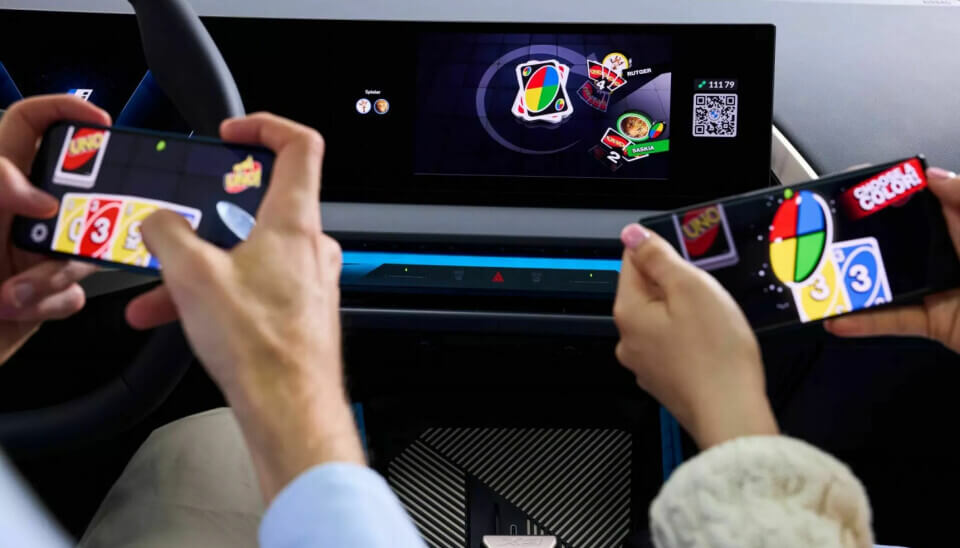
BMW demonstrates another layer of maturity: early integration through Startup Garage, a platform mindset (local game storage, OTA expansion), 10+ smartphones as controllers, and exclusive activations
Mercedes-Benz’s approach is cloud-first: partnership with Boosteroid, streaming titles through MBUX where the car is the high-res interface and compute lives in data centers. Here the KPI isn’t GPU horsepower, it’s connectivity, latency, backend orchestration, packaged as a subscription.
Porsche is fielding a digital-twin angle with Virtual Roads, and there’s Tesla (Steam) and Renault (sensor-based XR).
So, gaming is a technical showroom. If the cockpit can stream, sync, secure, and monetize smoothly without distracting drivers or crashing, then it can likely run the rest of the vehicle.


