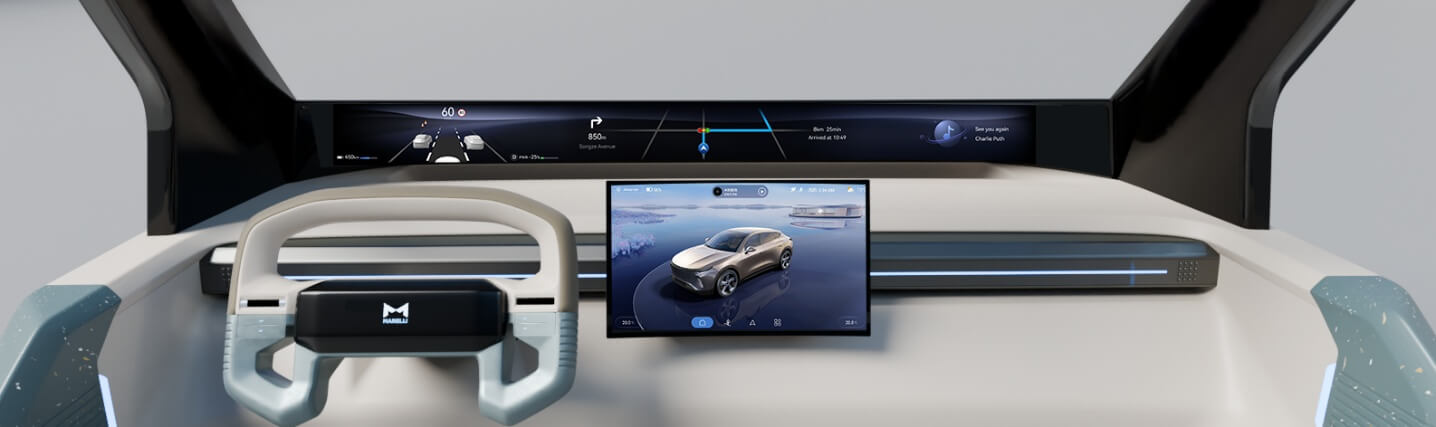
Marelli’s April 9 announcement matters because it shifts the cockpit discussion away from visible surfaces and toward architecture. The key point is not only the 44.8-inch HorizonView display projected across the base of the windshield, or the claimed brightness of up to 12,000 nits enabled by a MiniLED FALD LCD chain. The important point is the integration of compute, AI, graphics, HMI and interior functions into one cockpit logic, running on a QNX RTOS foundation capable of handling mixed-criticality domains, from IVI and cluster to cabin intelligence.
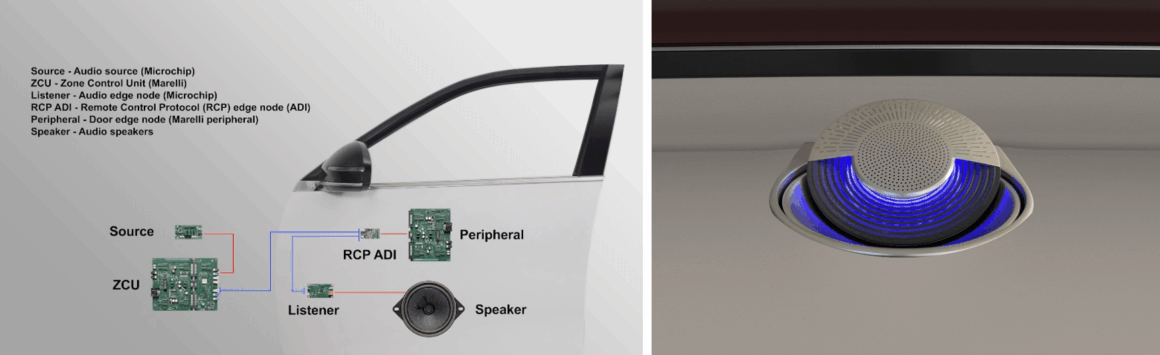
Marelli is explicitly framing the cockpit around a zonal E/E architecture intended to reduce ECU count and harness complexity, with MCU-Free Door and MCU-Free Seat modules moving window, mirror, seat and safety functions to the ZCU or central compute. For OEMs, that points to fewer local controllers, less copper, lower integration complexity and better compatibility with scalable global platforms.


