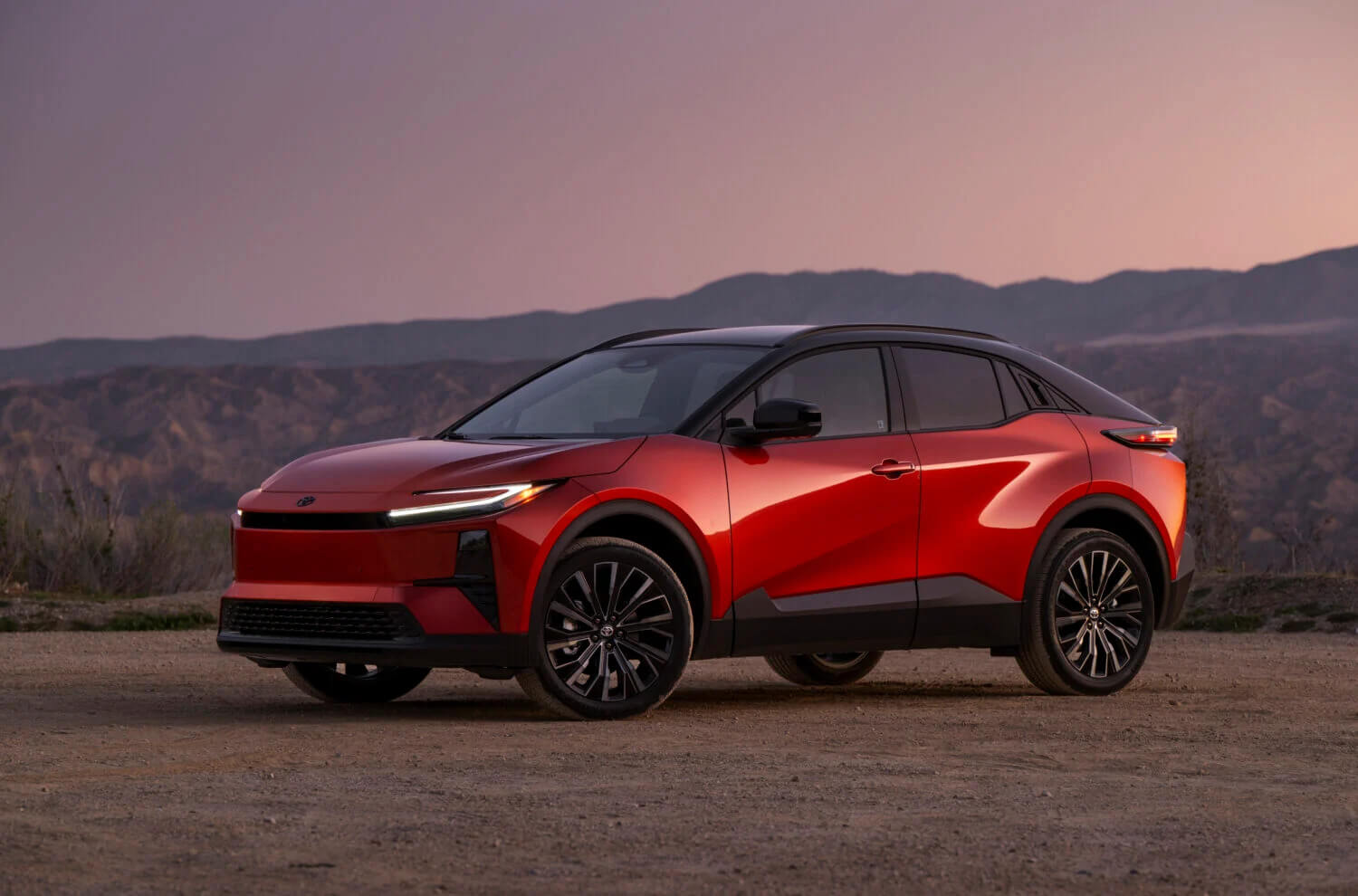
Toyota positions their 2026 electric C-HR as ‘useful tech’ rather than showroom tech. In the cabin, there’s a 14-inch touchscreen running Toyota Audio Multimedia paired with a digital gauge cluster, as well as dual Qi wireless chargers and USB-C ports.
The strategy is in the software behind the screen. Toyota highlights system development by their Texas-based software teams, and an embedded services stack: a 3-year Drive Connect trial bundling Intelligent Assistant, Cloud Navigation, and Destination Assist. “Hey Toyota” is framed as a practical voice layer (POI, directions, audio, climate), and Toyota emphasizes cloud-delivered map/traffic/routing freshness. POI search uses Google data, an explicit best-in-class-data decision.
Connectivity is treated as a cabin feature: wireless CarPlay/Android Auto, dual Bluetooth, a Wi-Fi Connect trial (AT&T hotspot for up to five devices), and Integrated Streaming to control Apple Music/Amazon Music from the vehicle UI. Safety/Service Connect trials include SOS and vehicle health features, anchoring the cockpit into an ownership experience rather than a one-time gadget.
The C-HR is a good example of a cockpit that doesn’t try to replace the smartphone. Instead, it aims to be a stable hub for cloud nav, streaming, and voice. It’s less about concept-car flash, and more aligned with real customer behavior.


