by Christian Eckert, NXT NXT Founder
For decades, car performance lived in a familiar space: acceleration, braking, range, efficiency. Clear engineering, clear metrics. But in software-defined vehicles, something else is becoming just as important – how the interior intelligence behaves across all the different states we move through,not just while we steer.
Most OEMs still look at the usual human-factors checklist: task time, glance duration, workload ratings. All useful, but they only answer yesterday’s question:is the system distracting the driver? The question we should be asking now is bigger: how does the cabin act as an intelligent ecosystem – during driving, automation, supervision, and all the non-driving moments that are becoming more common inside a modern vehicle?
To get there, it helps to look at how well the system actually understands the situation it’s in. Interpretation accuracysounds simple, but it’s basically the foundation. Modern cabins juggle so many signals – human state, environment, traffic, ADAS behavior, route tension. If the system misreads the moment, the experience won’t feel right: the timing is off, the guidance comes too early or too late, or the cabin just reacts in a way that doesn’t match what you need. When it reads the moment correctly, everything else flows more naturally.
Then there’s the question of stability. Cars today jump between manual driving, assisted modes, short bursts of autonomy, and plenty of stationary or passive scenarios. And yet many interiors still change’“personality’ when these modes shift. A truly intelligent cabin should feel coherent and calm whether you’re navigating a stressful merge or sitting back while the vehicle handles the next stretch. That steadiness is what creates trust.
Cognitive effort is another piece of the puzzle. In SDVs, the limiting factor isn’t how many controls you have – it’s how much mental load the cabin hands to you. The best systems quietly reduce the number of small decisions you need to make. That’s essentially what decision compression is about: taking work off your mind without taking control away from you.
Two areas feel especially important for where intelligent interiors are heading.
Adaptive personalization is one of them. And here I mean real personalization – not color themes or presets. It’s about the cabin adjusting its behavior to you: how quickly you react, how your focus rises and dips, how you move between work, relaxation, supervision, or passive travel. Small changes in timing, pacing, or modality can make the whole cabin feel more supportive and less demanding. When personalization works at this level, it becomes a
performance enhancer, not window dressing.
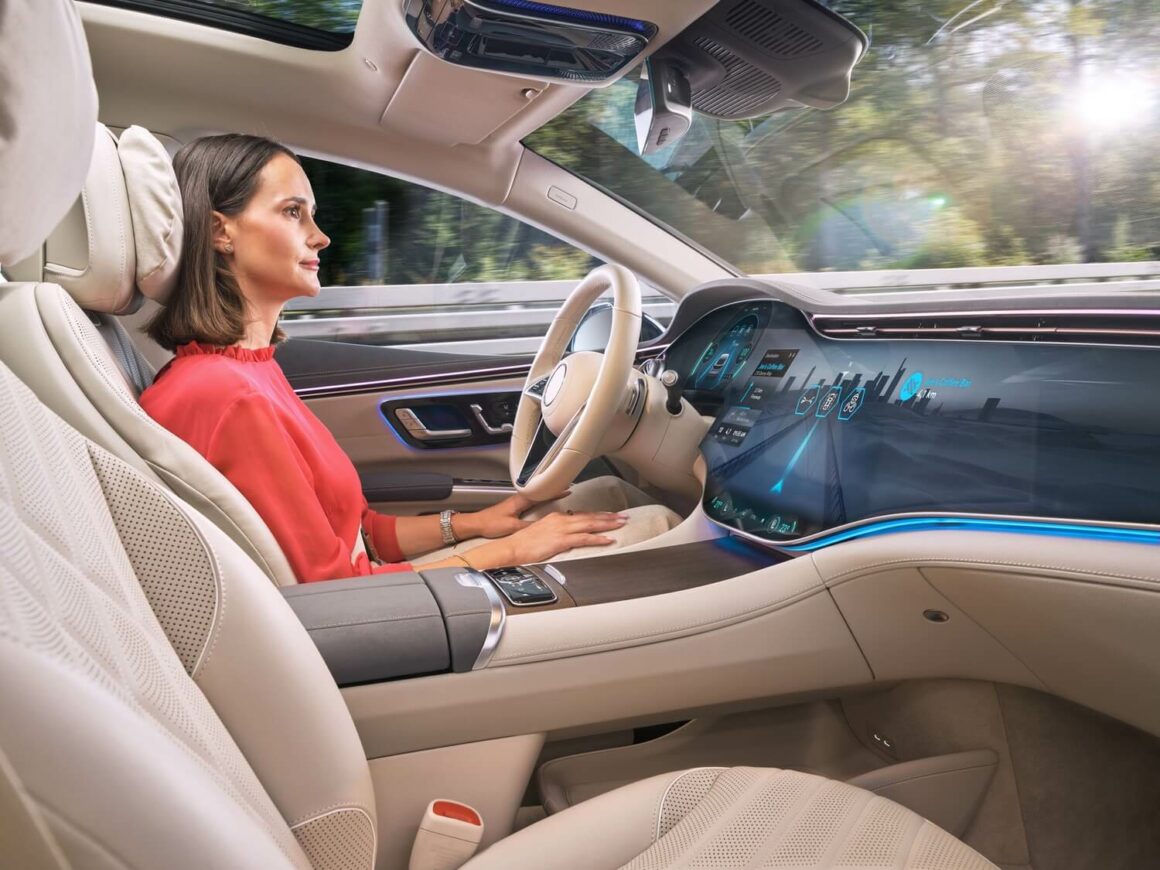
The other one is anticipation performance.A reactive system tells you what you need to know in the moment. An anticipatory system prepares you a few seconds (or a few steps) earlier. That might mean simplifying information before a tricky junction, pacing notifications differently during ADAS transitions, or gently easing you into a more relaxed mode once autonomy stabilizes. These subtle adjustments often decide whether a moment feels stressful or effortless. And the nice thing is: anticipation is measurable. It’s a real capability, not a gimmick.
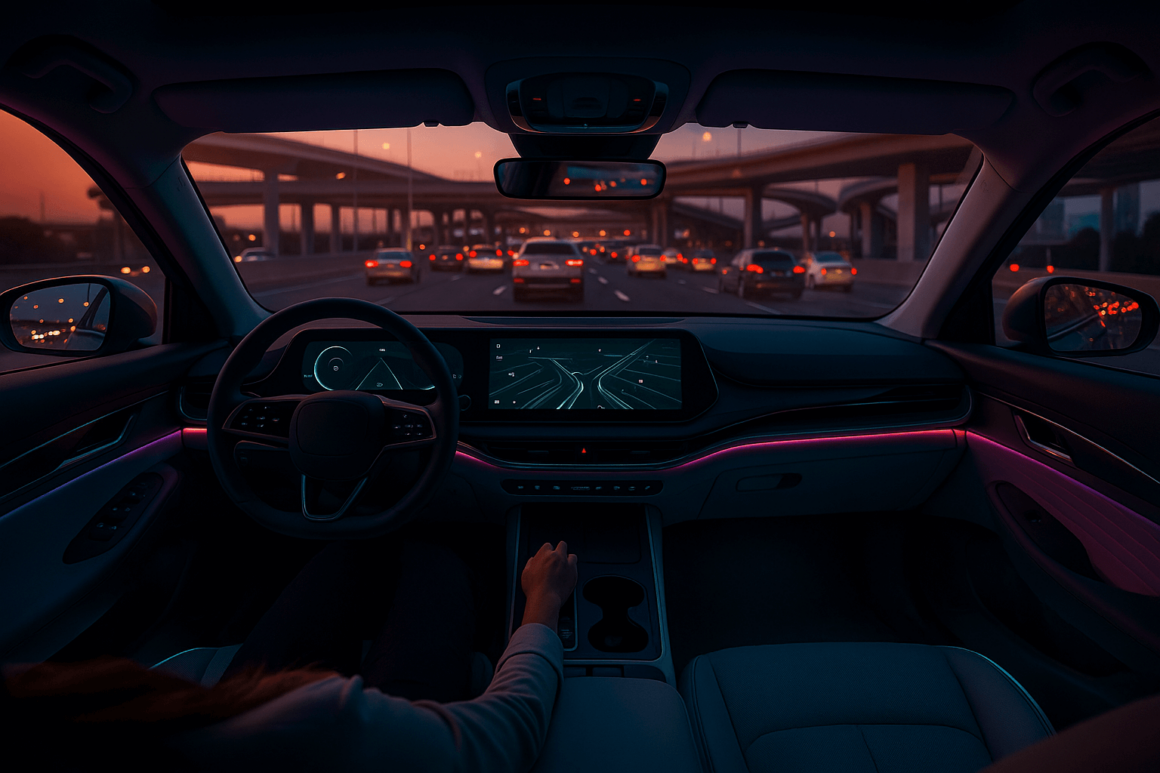
When you treat experience as a performance domain,things start to line up. Cabins become benchmarkable in new ways. SDV teams finally get a shared language. OTA updates can actually improve the behavior of the system, not just its feature list. And brand identity starts to shift from“how the car looks to something far more interesting: how its intelligence behaves – the timing, the calmness, the clarity, the sense that the vehicle is genuinely working with you.
In experience-defined vehicles, the interior becomes a living system.
And the way that system ‘thinks’ and responds becomes the truest expression of the brand.


