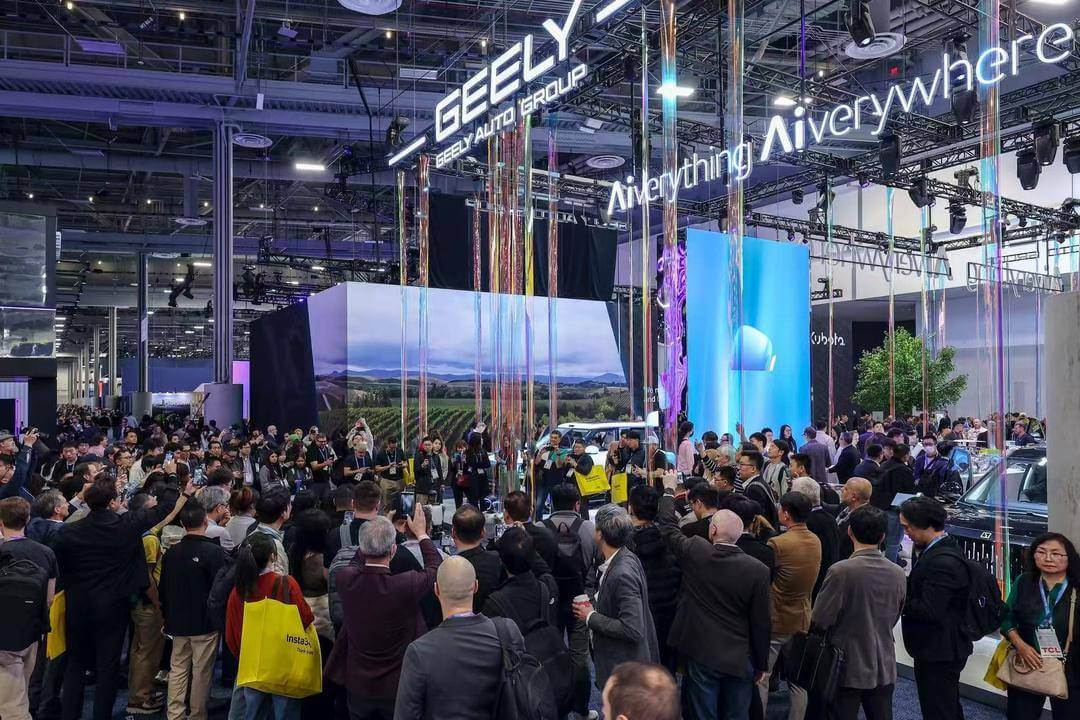
Geely Auto Group showcased a range of their latest EVs, including the Zeekr 9X and Galaxy M9, along with technologies like the Flyme Auto Intelligent Cockpit, and announced a series of major upgrades in software and AI architecture. This presentation clearly demonstrated the Group’s ambitious vision of transitioning from a car manufacturer to a ‘global smart technology mobility enterprise’.
The Eva Hyper-Realistic Emotion AI Agent introduced by Geely is an ‘intelligent vehicle brain’ with memory and ‘reasoning’ capabilities. Leveraging an end-to-end voice large model and dynamic memory technology, “Eva” will mimic “high emotional intelligence” and “common-sense-based” conversational abilities. Geely says it will also gain AI autonomous decision-making capabilities, enabling it to execute complex, ambiguous instructions such as “Help me plan a relaxing day trip suitable for the whole family this weekend.” It will autonomously handle the entire process, from querying and route planning to booking and vehicle scheduling.
At the event, Geely officially announced the English branding and software version naming for their Qianli Haohan Advanced Driving Assistance System: G-ASD (Geely Afari Smart Driving). The system uses a self-evolving World Action Model (WAM). Geely has established what they’re calling a ‘data flywheel’ foundation, encompassing data from 8.5 million vehicles, tens of billions of kilometers of driving mileage, 25 million data segments, and millions of incident records, enabling full lifecycle iterative evolution. The hardware platform remains at the forefront; there’s a Thor + dual Orin chipset along with 31 sensors in the H7 setup, while the H9 setup features a dual Thor chipset with 1,400 TOPS computing power and five lidar units, supporting 360° all-around coverage.
Geely also unveiled an aggressive roadmap for the deployment of intelligent driving features: subject to regulatory approvals, they plan to roll out highway L3 (conditional autonomous driving) and low-speed L4 (highly autonomous driving) functionalities within 2026, along with the operation of Robotaxi services.


