Baidu, the Chinese technology company specializing in Internet-related services and products and artificial intelligence, has self-driving technology development ambition.
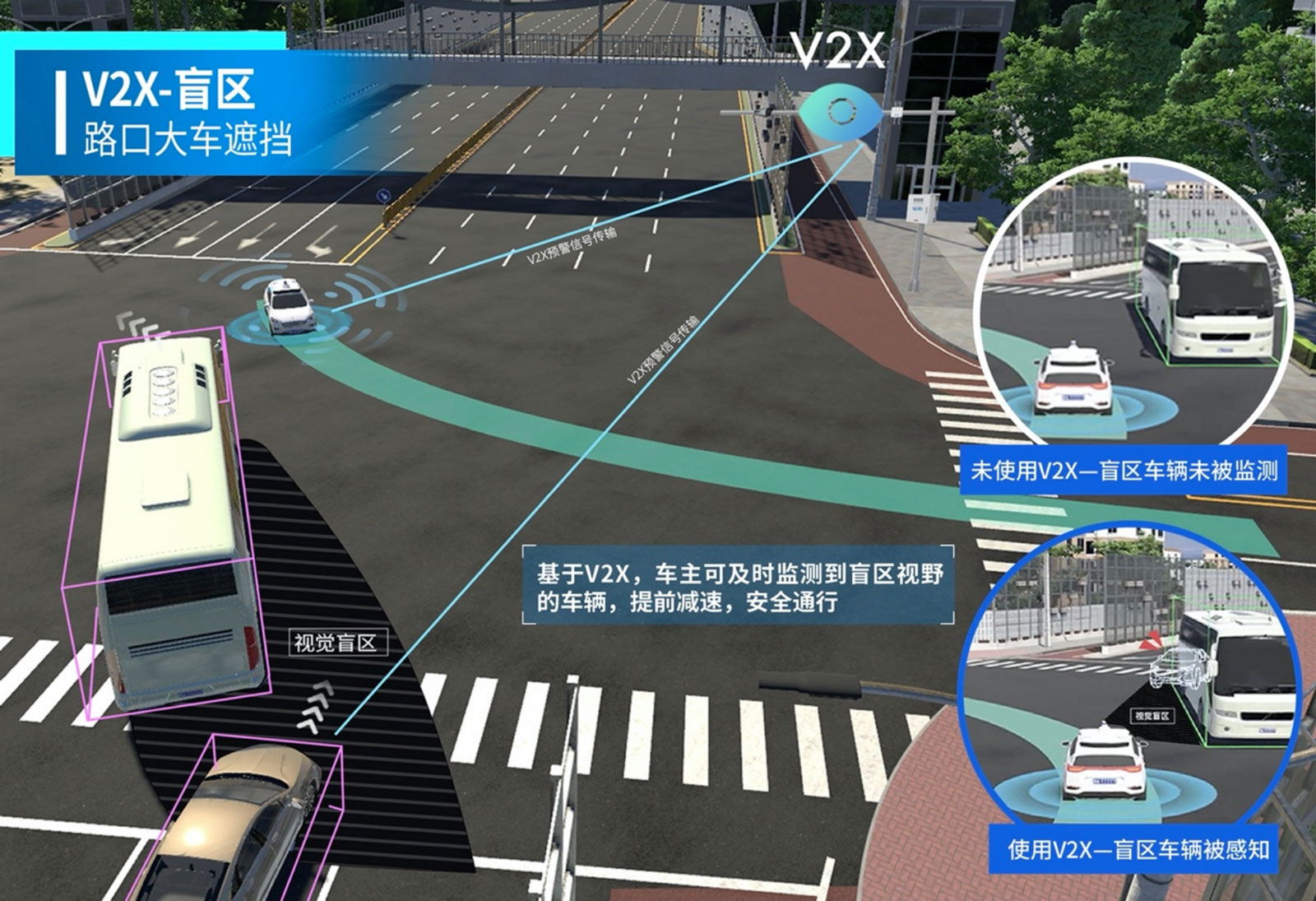
Baidu’s 5G-based V2X technology, named Apollo Air, has been devised and developed in partnership with the Institute for AI Industry Research (AIR) at Tsinghua University. It enables a high degree of coordination between vehicles and roads where sensors are installed, making it possible that cars could achieve high-level self-driving capabilities even without the usual object perception system that is normally made up of lidars, radars, cameras, and other sensors.
Last year, China’s NDRC (National Development and Reform Commission) and several other government agencies jointly released a development plan that places importance on “vehicle-road coordination technology” used to increase the interaction between smart road infrastructure and self-driving cars, which in turn enhances the safety of autonomous rides.
Baidu started driving test at several upgraded road intersections in the Chinese capital of Beijing, the southern China city of Guangzhou and the northern China city of Cangzhou, Baidu said last week.
“This novel approach will help the industry overcome existing challenges to safely scaling autonomous driving by providing a universal, shared infrastructure that can be applied to any smart transportation vehicle”, Baidu said.
It will be interesting to see what shakes out as the best safety and cost tradeoff between sensing technology in the vehicles versus in the roads—we’re betting on both!


