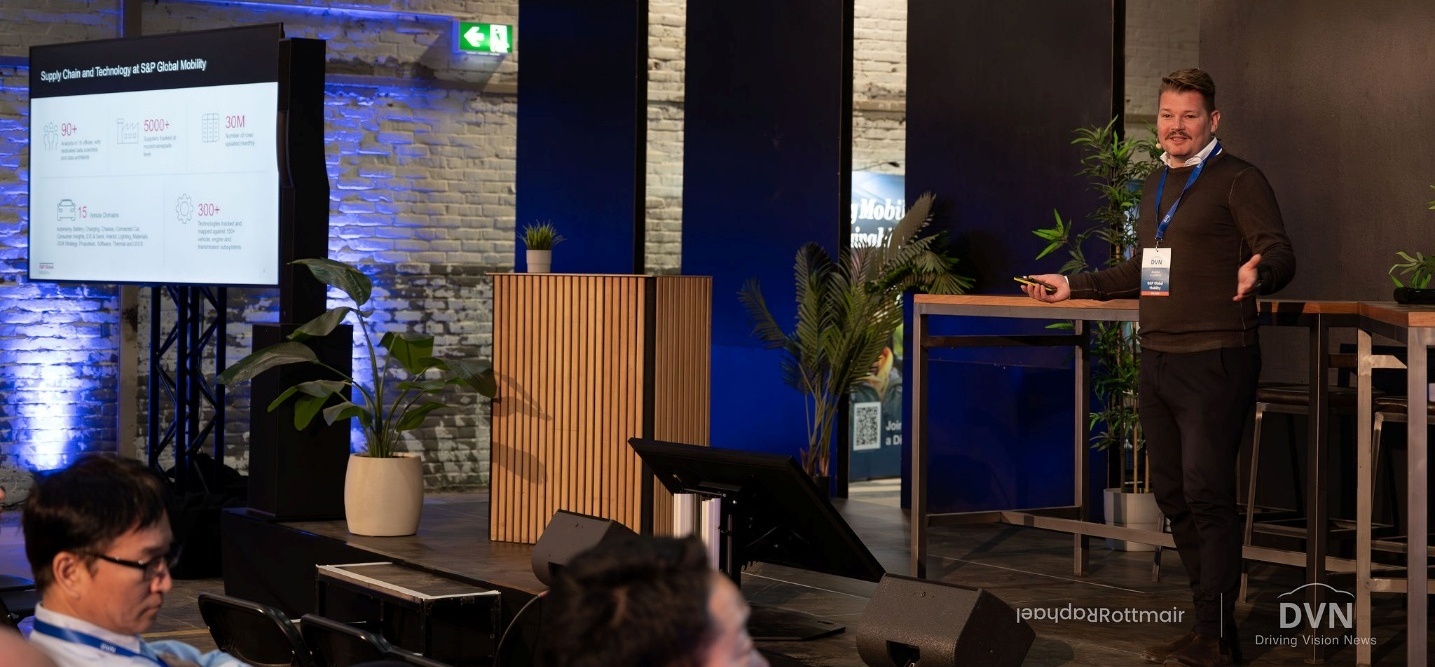
S&P Global Mobility’s presentation describes an automotive interior market caught between industrial cost pressure and the growing value of the in-cabin experience. The cabin has become a strategic space where design, comfort, technology, weight, margin and differentiation all meet.
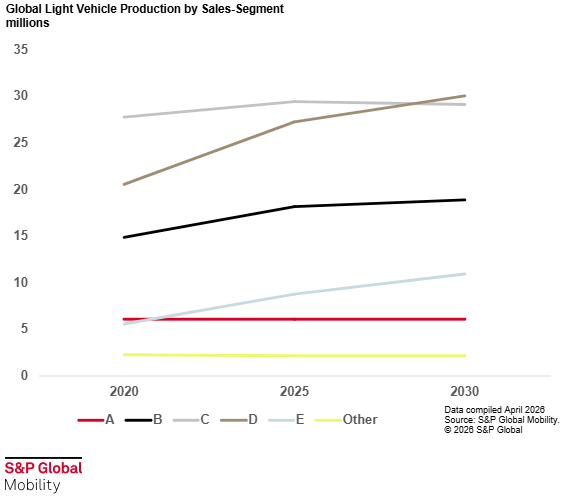
The global backdrop remains uneven. Economic growth is steady but not uniform, led by India, while China slows and developed markets such as Europe and Japan grow more moderately. In light vehicle production, Greater China remains the clear leader. Europe is still the second-largest market, but demand exceeds regional production capacity. In 2025, nearly two million vehicles were imported into Europe, while most of the top OEMs are reducing production levels in the region.
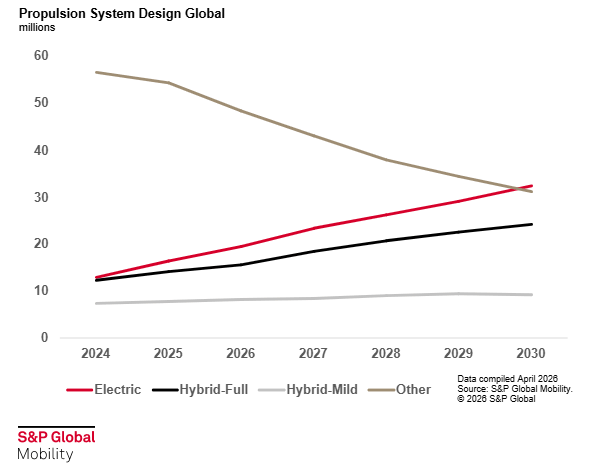
Electrification continues despite some regulatory ease-off in Europe and the Trump Administration’s cancellation of virtually all EV and clean-energy efforts in the US. In 2025, Volkswagen led BEV production in Europe, followed by BMW, while Renault and Mercedes-Benz also expanded electric vehicle output. Autonomous driving is gaining momentum, but advanced deployment remains limited: L4 light vehicles are expected to account for around 6 per cent of the market by 2037, with Greater China positioned as the dominant production region.
Inside the vehicle, value is increasingly created through what occupants see and touch. The door trim panel is no longer a basic plastic component. Surface materials contribute to comfort, perceived quality and cabin differentiation. Decorative elements once associated with high-end vehicles are now appearing more widely in mass-market cars. In this context, decor shapes how the vehicle is perceived.
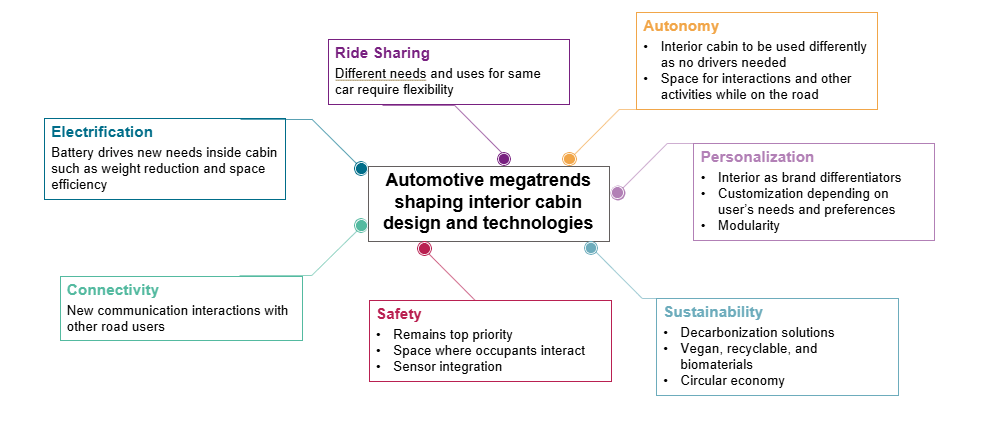
After years of centralizing controls in infotainment systems, S&P Principal Research Analyst (Interior & Lighting) Sascha Klapper points to a move toward a more decentralized approach to vehicle control.
The fixed panoramic roof is also reshaping the sunroof market. Switchable glass technologies add further momentum by turning a desirable design feature into a more functional one.
And seats are another major innovation area. As some of the heaviest interior components, they are natural targets for weight reduction, but they are also receiving more convenience features. While front seats have historically attracted most attention, the second row is now gaining more advanced functions and configurations.
Ambient lighting shows how quickly a perceived-quality feature can spread. Once a premium option, it is now common in high-volume models across Europe, China, and North America. South Asia, especially India, stands out as one of the fastest-growing regions. The overall message is clear: the automotive interior is not remaining a collection of commodity parts. On the contrary, it is one of the few places where customers immediately see, touch and judge the value of a vehicle.
Coming soon: a full report on our event!


