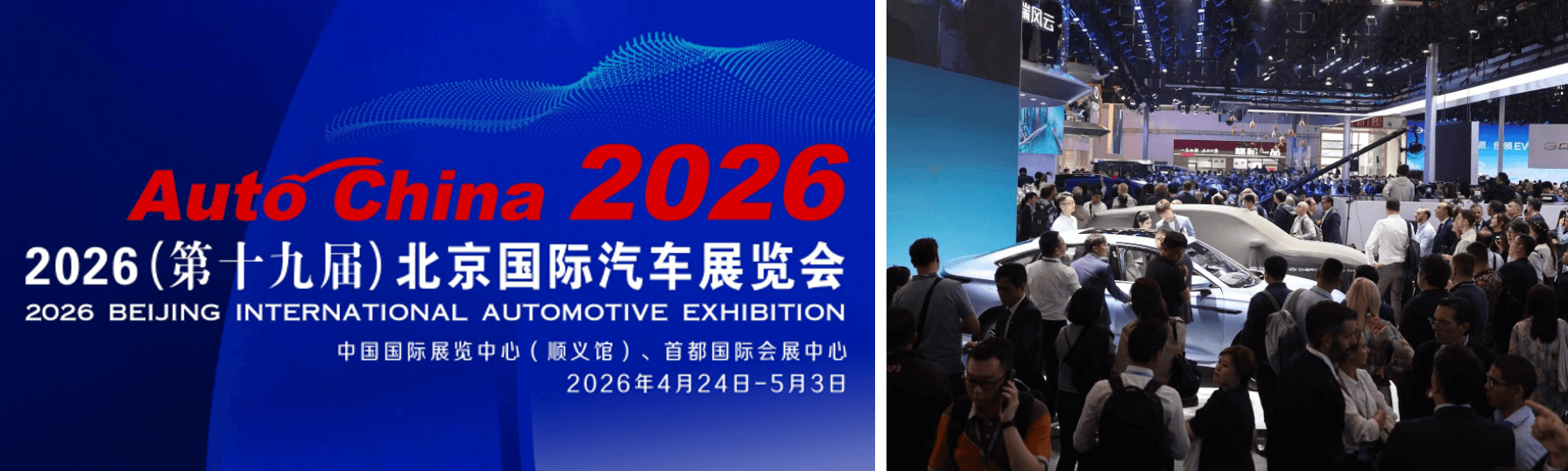
Auto China 2026, the 19th Beijing International Automotive Exhibition, runs from 24 April to 3 May. The show covers 380,000 m2, and there are 1,451 vehicles on display, including 181 world premieres and 71 concept cars, with participation from 21 countries and regions. There are well over 1,000 exhibitors – automakers, suppliers, and others.
The Chinese cockpit is no longer just a digital dashboard. It has become a complete use-case architecture combining seats, displays, ADAS, glazing, lighting, audio, refrigerator, AI assistant and comfort scenarios. China is defining luxury as the vehicle’s ability to orchestrate the in-cabin experience.
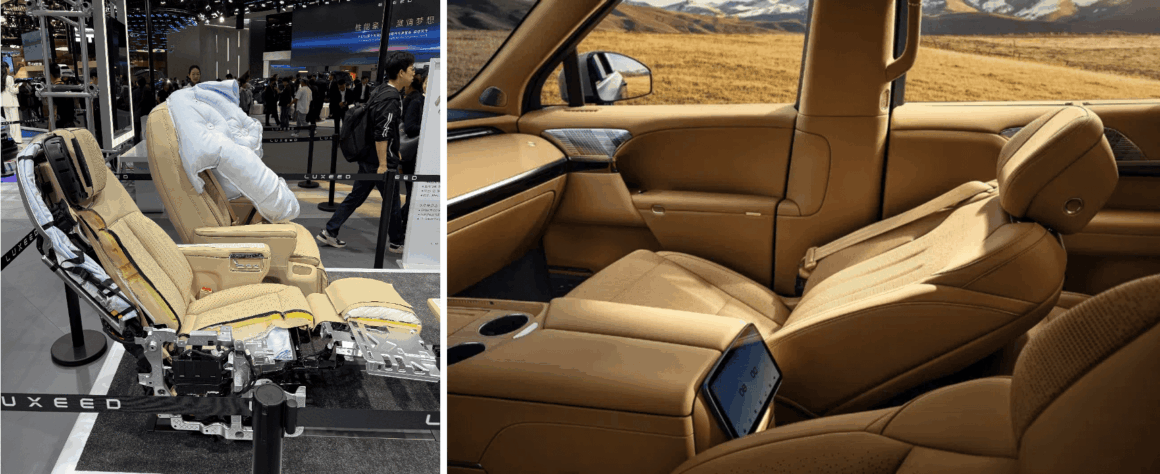
The first major shift is clear: the second row is the center of gravity – or, to put a finer point on it, the center of value. Luxeed’s V9 is the strongest example, with dual second-row zero-gravity seats, 123-degree recline, mechanical massage, active side bolsters, 45/90/180-degree rotation, 21.4-inch roof screen, detachable rear control tablet, and 10.9-liter refrigerator. It is a mobile lounge architecture, with the rear passenger treated as the primary customer.
The zero-gravity seat is becoming a Chinese premium commodity. Xpeng, Nio, Leapmotor, Luxeed, and others now treat relaxation, long rails, electric leg rests, massage, ventilation, privacy glass, and rear screens as structural product features. The next real challenge will be safety in non-nominal postures: belt geometry, pretensioning, side airbags, head/neck restraint, and interaction with console or screens.
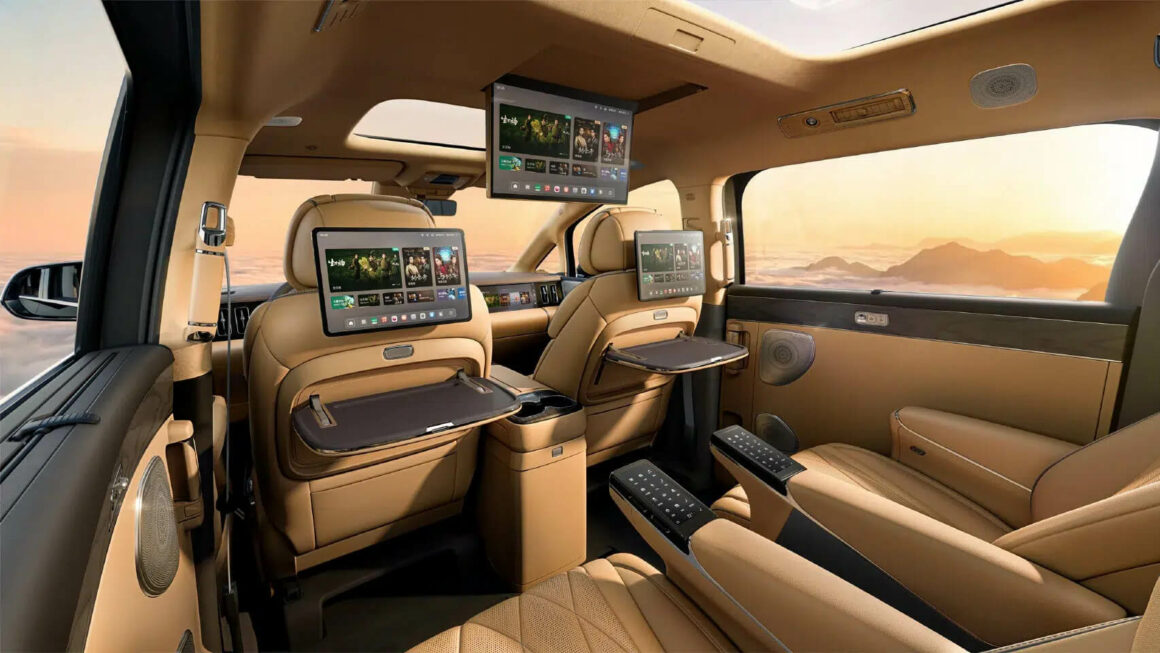
Second trend: displays are changing. China is moving beyond the simple large central screen. New architectures combine panoramic front displays, passenger screens, rear roof screens, rear control tablets, AR-HUDs, and camera-mirror displays. The screen distributes functional roles around the cabin. Front zone: driving, energy, navigation, ADAS supervision. Rear zone: cinema, climate, seat control, privacy, and family use.
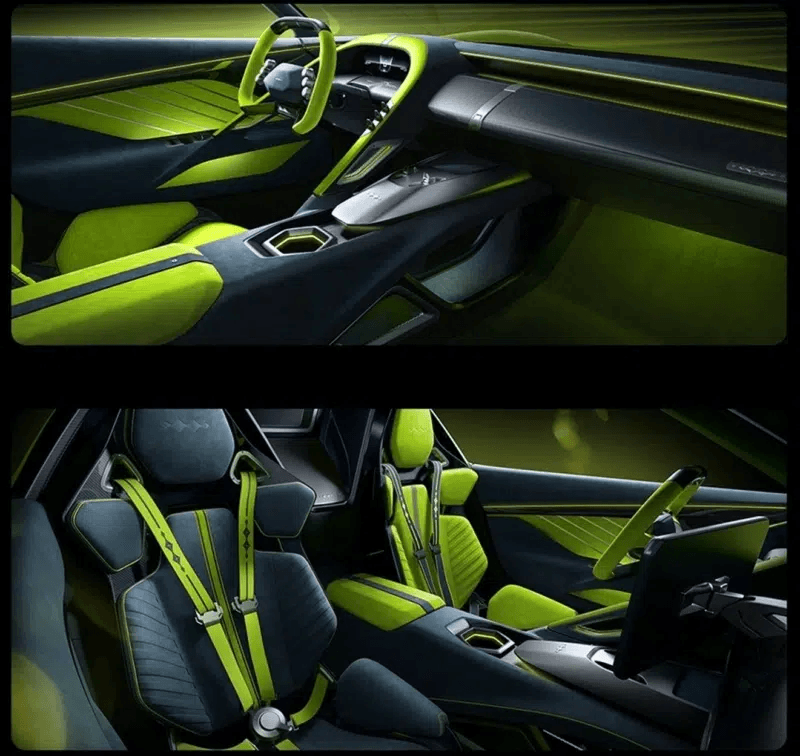
Third trend: CMF in terms of programmable atmosphere. Chinese brands are no longer limited to black/beige/grey interiors with decorative inserts. They combine Nappa leather, real or high-perceived-value wood, embroidery, Chinese cultural references, intelligent lighting, variable-tint glazing. CMF becomes scenography. Recycled or bio-based material sustainability is less visible. Sustainability is present, but it is not yet the strongest message on the stand.
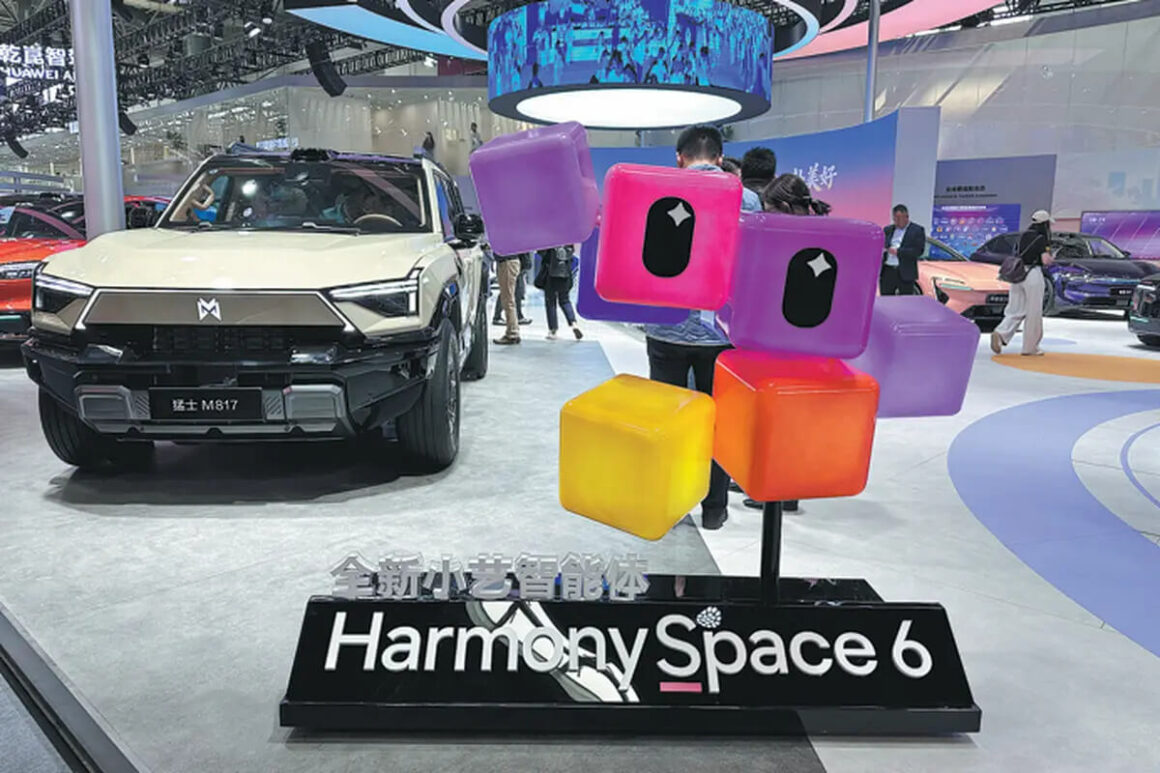
Fourth trend: cockpit and intelligent driving are merging. At Auto China, the dominant topic is onboard intelligence. Vehicles are becoming able to perceive, adapt displayed information, modulate ambience and anticipate needs. The next Chinese HMI must therefore be more than adaptive, it must be anticipatory: reduce information when cognitive load rises, move alerts from visual to audio, isolate a rear passenger, adjust glass and lighting, or prepare a seat for a maneuver or risk.
Watch for more in our uncoming report!
Contact Emilie Bonnet or Laurent Sérézat with questions or comments.
Take care,



