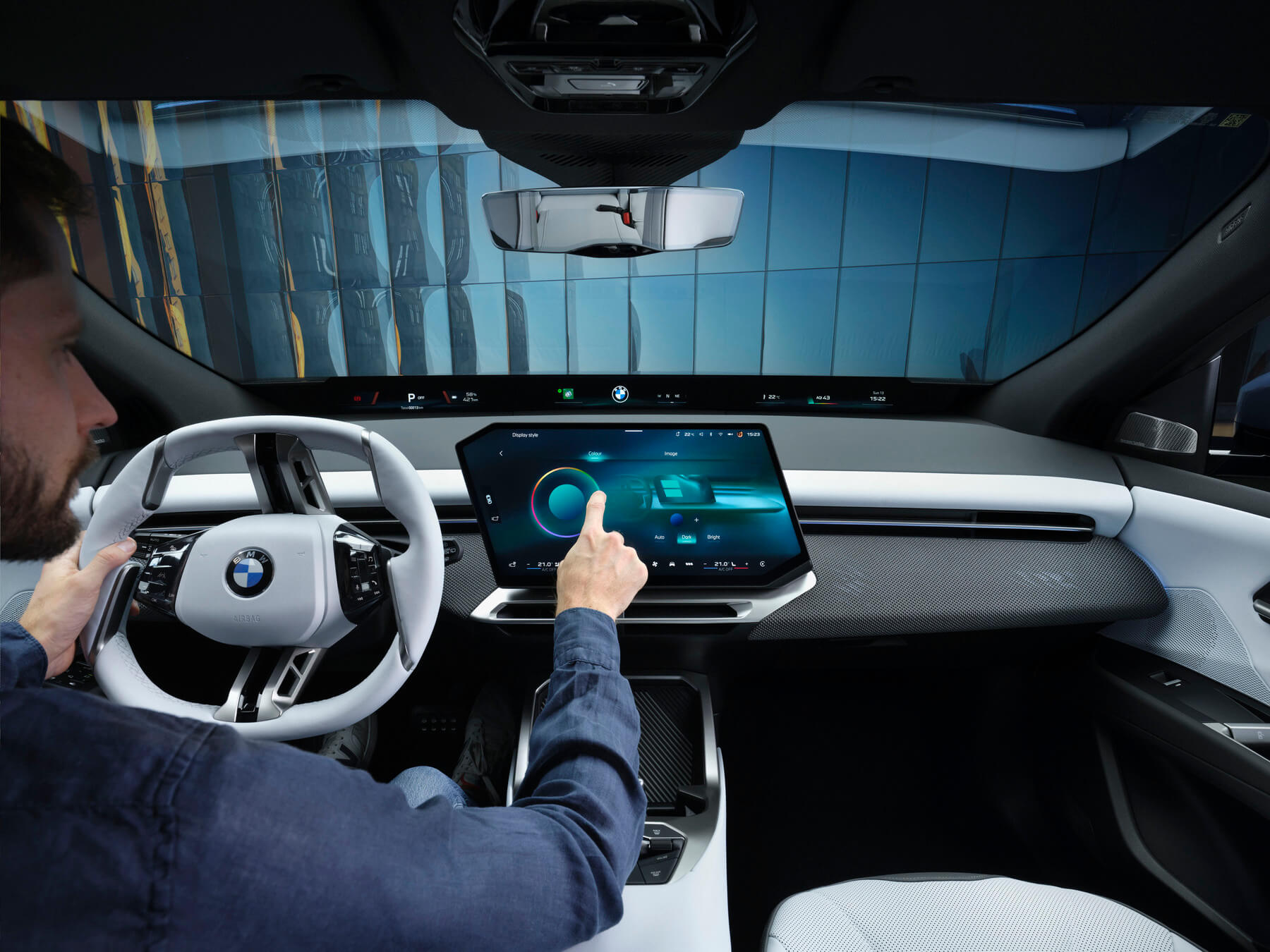
The first years of the digital car were characterized by touchscreen-mania. Tesla scraped all the physical controls off the dashboard and steering column and onto a central screen, and almost everyone else followed along. Increasingly-huge-and-numerous screens were put into cockpits and touch gestures replaced physical controls (in theory). It seems a trifle more thoughtful consideration might have been warranted, as there’s been backlash from users, consumer groups, safety organizations, and regulators. For many drivers, the depth of operation, menu complexity and distraction while driving have become a real problem.
Industry experts now also see a turning point. At IAA Mobility 2025 in Munich, two suppliers, Kostal and Preh, provided insights into how human-machine interfaces (HMI) are evolving and why the future is not either/or with screens or buttons, but both-and. In the automotive HMI context, safety also means operability. The more complex, the greater the distraction from traffic.
The Euro NCAP (European New Car Assessment Programme) is an independent assessment program for the safety of new cars in Europe. It has been awarding star ratings since 1996 and influences not only consumer behavior, but also design decisions and safety standards in the automotive industry. Euro NCAP is introducing specific test procedures for human-machine interfaces for the first time. Basic functions such as indicators, hazard warning lights, windscreen wipers or the horn must have physical or tactile controls – i.e. buttons, levers, switches or dials. In addition, the operability, positioning and feedback of control elements are given higher priority.
Ideally, such hybrid concepts combine haptic orientation with digital flexibility. Kostal, for example, develops switches with concealed functions that only become visible when required. Such concepts also open up new business models: function-on-demand makes features visible if and when they are activated via software. For manufacturers, this means the possibility of flexibly upgrading vehicles after delivery.
The second wave of digitalization in the car is therefore less characterized by show effects. Instead, usability, safety and differentiation are becoming more important. Pure touch surfaces are reaching their limits, while classic operating elements are regaining importance. They are not seen as a step backwards, but as part of hybrid operating concepts that combine digital and haptic elements.


