Samsung Semiconductor has over 15 years’ experience with OLED technology, mainly in the consumer goods market. Since 2007, Galaxy smartphones have been equipped with such displays, and Samsung stepped into the automotive industry in 2018. They’ve been supplying vehicle manufacturers with specially developed automotive OLEDs ever since. Vice President and Head of Display Marketing Zin-U Pak says, “While cell phones are all about energy efficiency and peak brightness, vehicles are all about robustness, durability and safety. That’s why we consider various aspects such as efficiency, durability and, of course, picture performance. Because the content in the car is now changing: You no longer just display navigation bars or speedometer needles, but now suddenly YouTube, Netflix and co. are also coming into the car”.
The automotive industry has also been experimenting with OLED internally for several years. The Lexus RX used an OLED panel in 2010, and Aston Martin was also an early adopter of the technology. However, the trend only became visible in series production in 2018, when Audi used Samsung OLED displays for the virtual exterior mirrors in mass production in the e-Tron. Since then, Audi has been using segmented OLED light sources for a striking design and new safety functions.
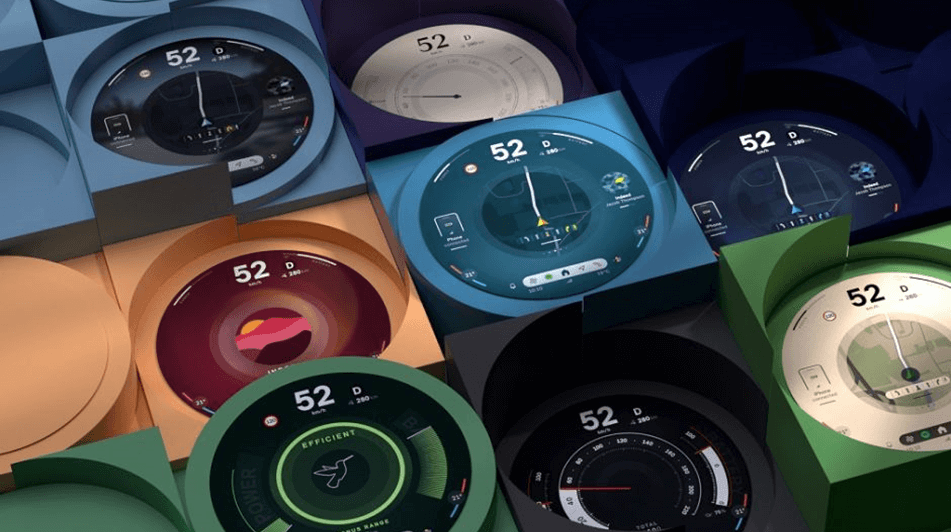
The two Korean companies Samsung Display and LG Display are dominant, and a prominent example from Samsung’s portfolio is the round display in the interaction unit of the Mini, which Pak says was developed in just a few months’ time. Pak says certain OLED properties make them ideal for vehicle interiors. ‘True black’, for example, is created by the fact that each pixel is self-illuminating and can be switched on or off individually. This means better energy efficiency, and also deep blacks and precise colors. Added to this is the design freedom made possible by the absence of backlighting. Displays can be realized in almost any shape – round or curved, as well as rectangular, and the structure of OLEDs enables extremely thin and light panels.
OLEDs offer high picture quality that does not lose color fidelity even at high brightness, which is also crucial for visibility in sunlight. And user expectations also come into play; anyone getting into a premium vehicle expects the display to at least match the quality of their own smartphone.
Cost remains an issue. Smaller quantities are produced compared to the smartphone market, so suppliers use a modular approach. Standard displays can be combined like modules and laminated under a cover glass to form a seamless unit. At the same time, the portfolio ranges from glass-based OLEDs to flexible and rollable displays that can be integrated into the interior when switched off.


