There are already 36 megacities worldwide with 10 million inhabitants and more. This rapid growth could lead to the necessary infrastructure lagging behind and the cities being threatened with collapse due to the overload of local traffic and public transport.
“Anyone who wants to develop mobility in a new way needs a clear vision, the necessary competences, innovative strength as well as the courage to break new ground” says Cosimo De Carlo, CEO of the Edag Group, in his essay from the series “Makers of Mobility”.
The transformation process of the automotive industry is in full swing. Software and digitalization are inexorably making their way into the industry as a megatrend. Digitalization means more than the electrification of the vehicle. It is the basis for turning the automobile into a fully integrated component of the mobility ecosystem “Mobility Environments”. It is about networking the vehicle with the rest of the world. The question of mobility of the future is much more multi-faceted. Thanks to technical developments, new mobility scenarios such as autonomous driving or large cities without traffic jams and parking problems are becoming increasingly important. However, today’s transport system does not exploit all the possibilities for increasing efficiency because it lacks a holistic and networked approach.
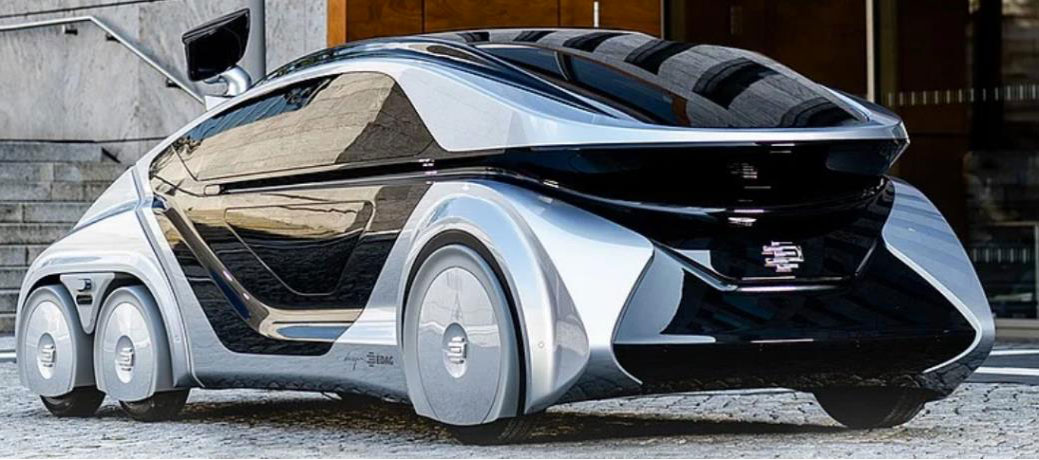
The mobility of the future is automated and networked. Based on this motivation, Edag has developed a holistic mobility concept with the Edag CityBot. The CityBot is a networked, autonomous, multifunctional and emission-free robot vehicle. One that can be used both as a passenger car and as a commercial vehicle in the logistics and service sector. The CityBot is a complete ecosystem for public transport or closed areas such as industrial plants.
The CityBots are part of a complete smart city operating system. In combination with the platform technology for the Internet of Things, Edag is not only launching new autonomous transport and work vehicles, but also possible new business models at the same time. For example, when the vehicles are automatically paid for their work assignments. Or when traffic flow software takes over route planning and coordinates the CityBot fleet. The entire traffic would then be in a permanent state of flux, maximally efficient and without traffic jams. The goal is to use the CityBot at airports from 2025 and in urban areas from 2030 and to generate new business areas and market volumes.


