(a designer’s look at our mobility-centric culture).
- The first segregation of mobility
Design professionals often think in terms of lines. Every line is a representation of motion on paper. Big gestures draw long and fast lines; small wrist-moves draw short arcs and a constant-speed trace with a ballpoint pen, while talking at the phone and doodling, lays down an infinite string of labyrinthine paths. Mobility can be traced in the same way, while people and vehicles move on a landscape. This is the first of a series of short essays aiming to describe and understand mobile trajectories as a shaping element of our environment.
Representations, scribbled by the traveler’s hand, during the 17th Century while commuting by carriage, soon developed into the first modern maps. Those linear paths of driving-riding and drawing various trajectories became the rough draft of our infrastructure, re-territorializing every era to our up-to-date footprint. By 1760, the outspread network in Europe was a mosaic of all sorts of trails drawn according to distance and territorial conditions, leading to crossroads, urbanization, congestion and a clear new typology of intersecting paths. They kept multiplying up to the 19th Century, following trajectories strictly related to topography.
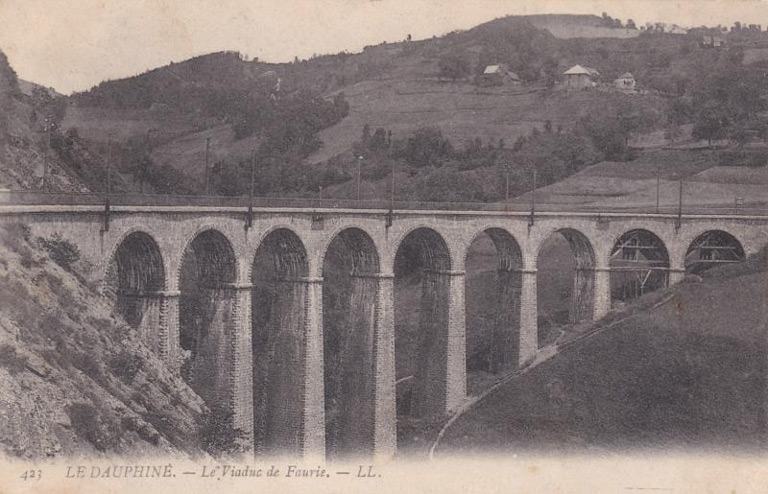
The appearance of railways brought upside-down all perceptions, segregating mobility by a new kind of travel that reduced time and space. High mountain or deep river was no reason for delays. Bridges, viaducts, and tunnels were painting the rigid trajectories of modern era and the technical landscape of the years to come. Travelers struggled to understand the fact that travel did not perfectly follow the topography of the land and often disobeyed to this basic rule of perception. At times went above and even through the land, showing an unquestioned obedience to its technical self!
By the middle of the 19th Century, with the expansion of both railway and horse-powered networks, linear constant-speed steam engine tracks often cut horse carriage paths, while in townships slow-moving carriages were mixed with scrambling and crossing pedestrians. We were entering the modern era of mobility and urban planning by the need of ranking all given means of transportation. A complex system of trajectories that would never stop augmenting and regenerating and soon gave place to a disruptive mode of urban planning.
to be continued…
INDUSTRIOUS_


