22. UX, a Universal eXperience _
(This story is part of an ongoing series introducing automotive interiors as an evolution of our habitat)
“A person’s perceptions and responses that result from the use or anticipated use of a product, system or service” is the ISO definition of human-system interaction (ISO 9241-210)
Speed, is the factor that changes perception of space in early 1900. Automobile introduces a completely new setting of cognitive rules redefining far and close. Signs, symbols, letters and all sorts of graphics become the ever-evolving aesthetic mood that frames mobility. Automobile evolves along with its surroundings, introducing a new optical language as an immaterial possession of progress. Our mobile lives, intertwined with graphic codes, reformed into a new era of visual communication.
Somewhere in today’s France (Lascaux), 17,000 years ago, humans have drawn on cave walls to communicate. History however begins much later with the first inscriptions; the moment drawings become a system of symbols/letters to express meaning. Today’s visual universe, mostly digital, introduces new aspects of expression were graphics and language merge. From Lascaux to our computer screen, all we try to do is control the outside world, get familiar with hazards and other outer powers, anticipating the outside dangers to come.
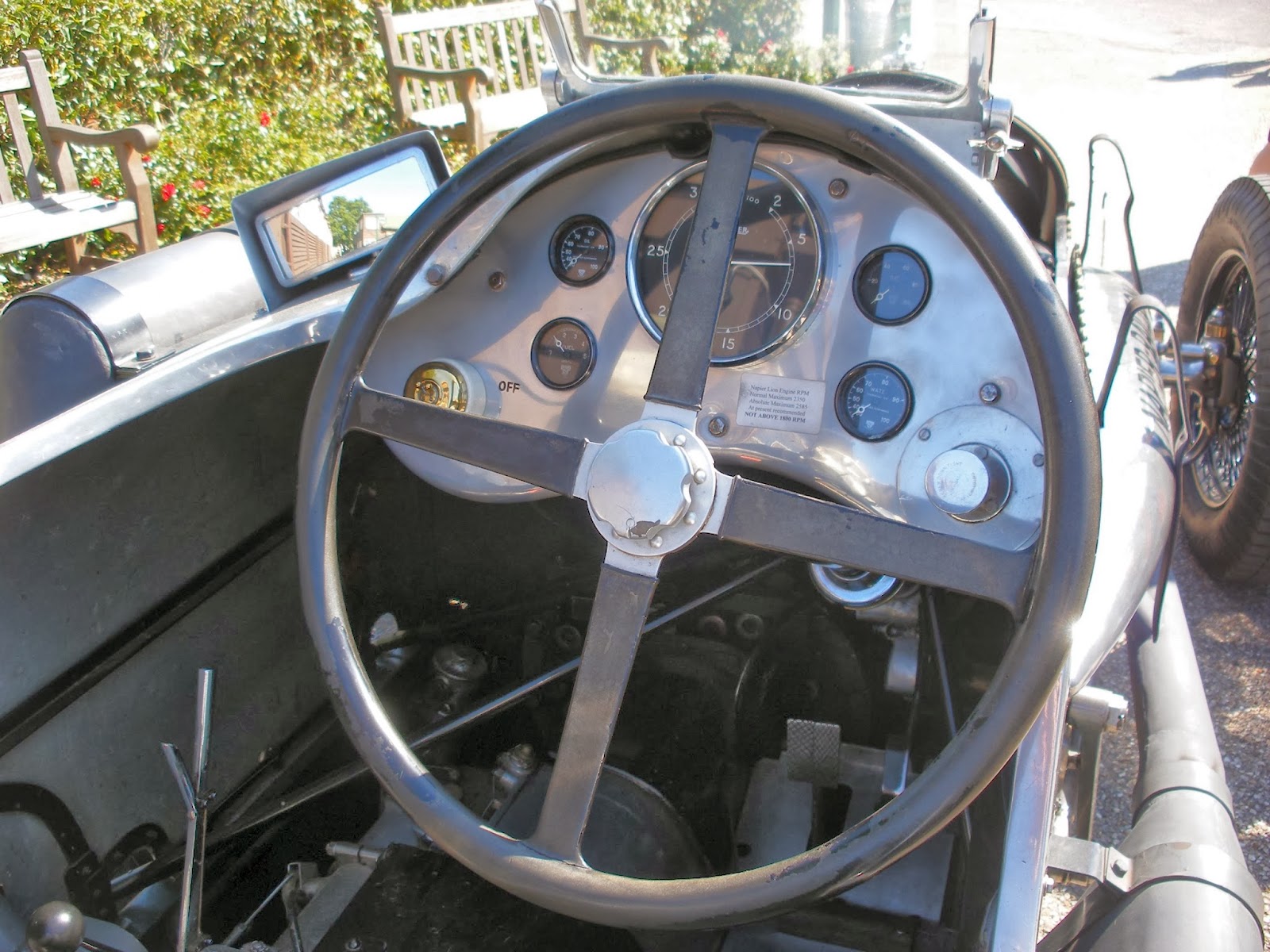
Mechanical precision in automotive interiors related always to symbols and letters, from speedometer dials to H-pattern gearboxes. Engine rev, oil pressure, battery voltage, water temperature gauges, in 50s racecars, constitute the man-versus-machine visual interface. Pilots had to know how to make sense of all watchmaking-type digits in order to take critical decisions during the race. ‘Hazard bulbs’ added light and color to the overall layout while in late 60s the big red and round kill-(engine)-button gives a special visual accent to race cockpits for almost a decade. The 80s are about speed, and toggle switches appear to regulate aerodynamics and suspensions. Carbon fiber makes everything more compact, cockpits as well and, warning-lights gradually replace gauges on the notion that driver needs to know only critical values. The more the warning lights the more the symbols; lights become symbols/letters. Soon, radio communication buttons appear and early computer screens follow with fuel-consumption calculations. The 1989 paddle-shift brings ‘everything’ into the cockpit and while it is all about space, the 90s bring the cosmic explosion of electronic technology. Real-time data allow driver to adjust accordingly the entire engine cartography and suspension. Ever grown numbers of buttons, dials and symbols are fighting for space in an ever-shrinking cockpit.
Adding yet another layer of complexity, screens come to transfer our visual memory from the toggle switch to its icon, by the virtual nature of the ‘symbol’, an active drawing, a utilitarian magic to increase chances of success. A toggle switch is used by a pilot but its digital twin by every pilot: the one (design) for all. Icons of motion become icons to activate motion hence, portraying a kind of universal semantic.
Design, a discipline that combines both rational and artistic skills, is called to resolve the conundrum on mainstream vehicles. The assignment is to make sense out of a vast set of parameters that cognitively developed over very long time. Designing an experience into the digital world, as a way to create meaning in a vast universe of new parameters, is difficult to comprehend with analog means. Languages, symbols, cultures merge into one and only sign that has to be significant and convey the exact same meaning for everyone.
Unlike physical objects, designs of digital experiences scale as big as inconceivable, from a low-key graphic telltale to the violation of a community’s standards. Design process itself diverts between designing for a specific market, segment or region and designing for the entire human race. After all, it is about ‘Lascaux’ but mostly the last two letters.
_to be continued…
__________________________________INDUSTRIOUS__


