20. Body of Knowledge
(this story is part of an ongoing series introducing automotive interiors as an evolution of our habitat)
All along their historical evolution, car interiors have established a common ground between habitat and mobility, difficult to find elsewhere in such degree of sophistication. Meanwhile, within our modern-day housing, there is a place in which both habitat and mobility are on hold, as hostages of one another. Parking garage holds the greatest concentration of technology, know-how and real estate, inactive nonetheless. It is an uninhabited space, occupied by a static car and its vacant interior. This accumulation of contradictions has triggered the idea of turning the excess capacity into shared-mobility assets; a genius approach backed by technology, bringing ‘there’ and ‘how to get there’ into one coherent notion.
Very early on, primitive habitat was put together or carved to suit the human body. A concave space was formed to provide the comfort of protection and the awareness of surroundings. To the opposite, modern habitat is built to suit a different set of needs such as status, which often reveals itself into a much bigger scale than the human body. Due to industrial formats, living spaces have rapidly converted into rectangular modules of types and sizes, losing any cave-like resemblance. Architecture rapidly evolved out of human measure leading into a monumental approach.
With the massive invasion of automobile filling the gaps of urban planning and architecture, mechanical culture became the symbol of solving any problem: just put a car in there. Thus, we have built a great life standard if you happened to be a car. Speed, which equals distance was an additional factor that led into novel perceptions of space, overwhelming any measure. A new set of problems appeared, further away, bigger, faster. Farther away from human scale and habitat, modernists have used helicopters to design cities (ie Brazilia) and the result was relevant to the means; the further away the better it looked, missing out everything that really mattered: the living spaces in-between the lines.
Now, in a completely different era with new technologic revelations we begin to realize, try to cure and partly regain the right to the lost ‘local’ dimension and living experience. However, while correcting and rescaling mistakes of the past, new ‘digital’ dragons have entered our habitat creating their own settlement in the process. Just like the automobile at its era, filling all gaps in our cubic living spaces, lead once again to the loss of the ability to build places for people.
Early humans had always very carefully picked the place to live as prospect and refuge, a spot where they could be protected and see what’s coming. Cubic spaces have neither of either, while car interiors to this day, maintain both.
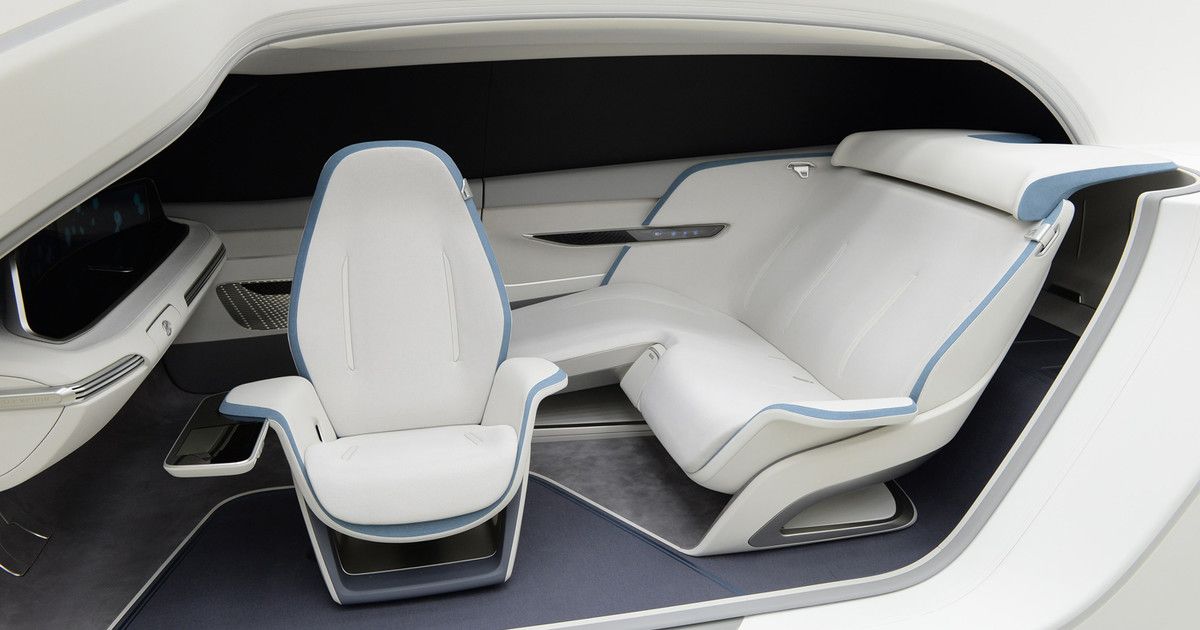
Indeed, car interiors are cave-like, organic forms of habitat shaped around human body. Due to progress and intellect, the instinctive trial-and-error process of development was very early disregarded. While itinerant habitat spaces escorted us all along our endeavor to conquer vast new territories, at the same time they evolved on the margin of the major arts and sciences (architecture) and survived by the basic notion of shelter and vision. So, today while we analyze ‘excess capacity’, ‘optimization’ and ‘resource overflow’, we might want to go back to our garage, turn the light on and, admire the most precious relic of human scale inhabited motion, ‘safeguarded’ in a metal car-body shell, specifically dedicated to the saga of mobility and habitat, in one and only tale. All this is still taking place in a space of our house that architects, up to this day, still don’t understand.
The principle of human scale, snubbed by urbanists and architects, is safeguarded, evolved and reborn at its best version in car interiors. We have to carefully consider them as living organisms that preserve our codes into one precise integral sample of human scale before we effortlessly instruct designers to convey them into hotel lounges of new mobility.
_to be continued…
__________________________________INDUSTRIOUS__


