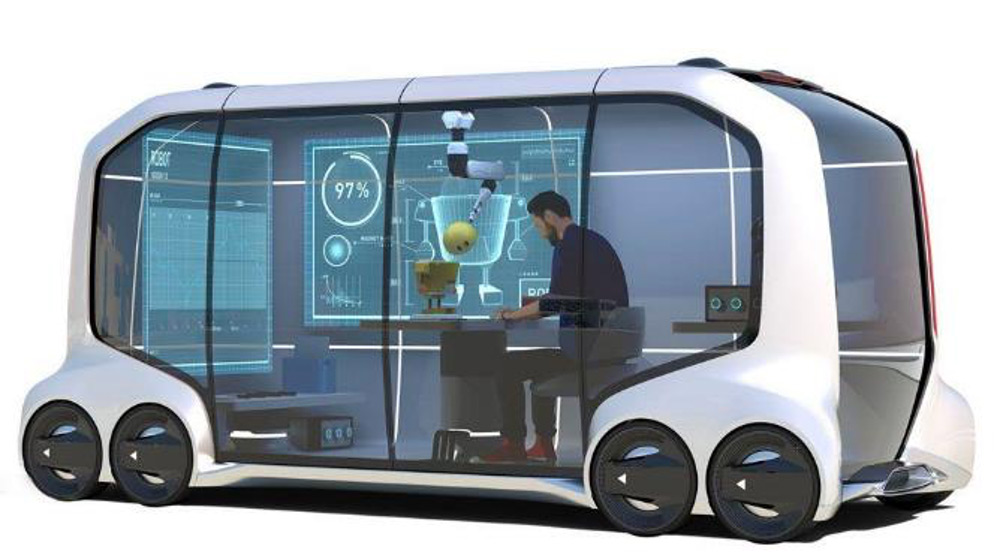
Between vehicle and landscape and beyond all measurable and objective achievements, there is a subjective parameter that forms the environment in motion as we understand it: our perception of space.
From the Renaissance spatial frame to the French-style garden and from the framed carriage window to railways and automobiles, we have built a reality of motion observation to the point where the vehicle becomes invisible and the experience turns into a purpose.
Our mobile selves evolve hand in hand with vehicle architecture, and every era has addressed our relationship to surrounding spaces. Any new mode of transport participated in a profound evolution of modern society and created strong links between man and his immediate environment. This factor is the constant catalyst of the perception of values and becomes an evaluation tool of our progress in any pivot moment in history.
For the last century we have lived in the most intense period of human mobility. Our modern mythology of motion exceeded all previous scenarios of speed, distance, and form. It has amplified our previous experience into an embedded muscle memory of movement. The automobile has been the center of our spatial observations up to now, and with the new tech it is rapidly transformed.
If our mobile anthropology is based on the distinction between being mobile and being transported, how does that change for future generations?
With COVID-19, we took a glimpse of the new era: transportation being the new frontier.


