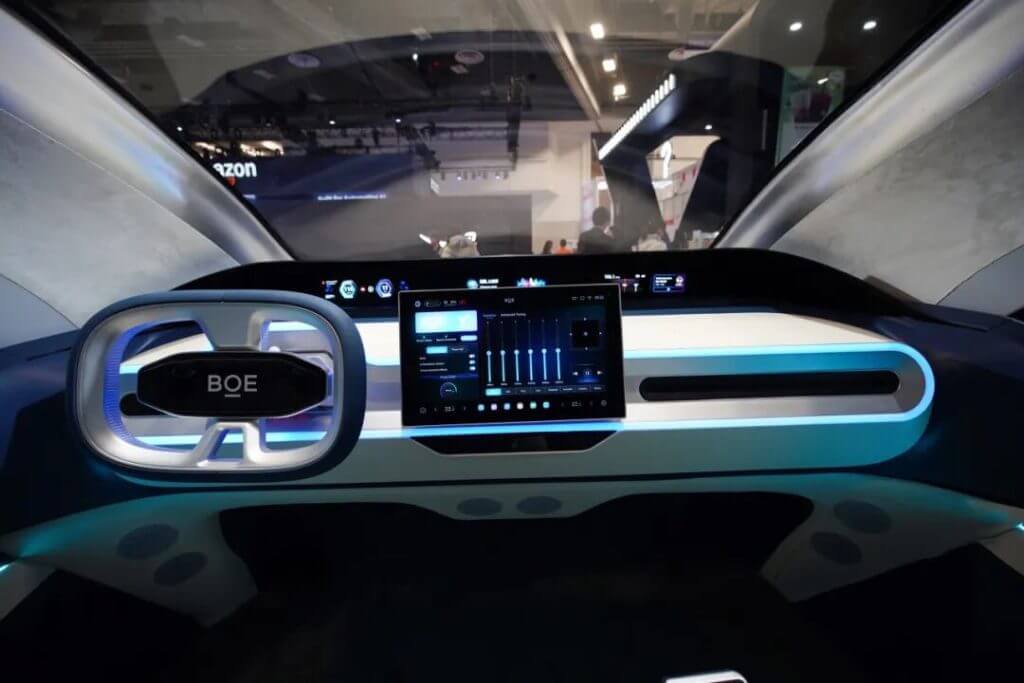
BOE, striving to move upstream from display supplier to cockpit system enabler, unveiled Hero 2.0, their newest smart cockpit platform, positioning displays as the core infrastructure connecting AI interaction, acoustics, and IoT services.
This system consists of a microLED panoramic PHUD with up to 50,000 cd/m2 brightness, supporting AI voice and gesture control. There’s a high-contrast, low-reflectance 15.6″ UB cell display, and a standalone in-vehicle amplifier to enable audio and emergency radio communication even without mobile network coverage.
Hero 2 provides for multimodal interaction with touch, voice, vision, gesture, and domain-based control, extended cabin scenarios via in-car projector and smart woodgrain display surfaces. It leverages a wide array of technology, including ADS Pro, f-OLED, α-MLED, rollable OLEDs, and hidden microLED displays. There’s strong emphasis on energy efficiency and low-carbon manufacturing, with up to 50 per cent power and carbon reduction in selected displays.
Instead of users navigating isolated systems, the cockpit acts as a coordinated domain where displays, audio, AI, and IoT respond contextually. Multimodal interaction reduces reliance on touchscreen operation, allowing users to choose the most natural input per scenario to improve safety and cognitive comfort.
The inclusion of off-network audio and emergency communication also reflects a more resilient, safety-oriented cockpit logic rather than just infotainment expansion.
BOE’s use of rollable OLEDs, hidden microLED woodgrain displays, and high-brightness PHUDs supports a future cockpit aesthetic where screens can appear, disappear, and adapt to context. This aligns with a growing preference, especially in China, for interiors that feel calm and materials-driven, with technology embedded rather than constantly exposed.


