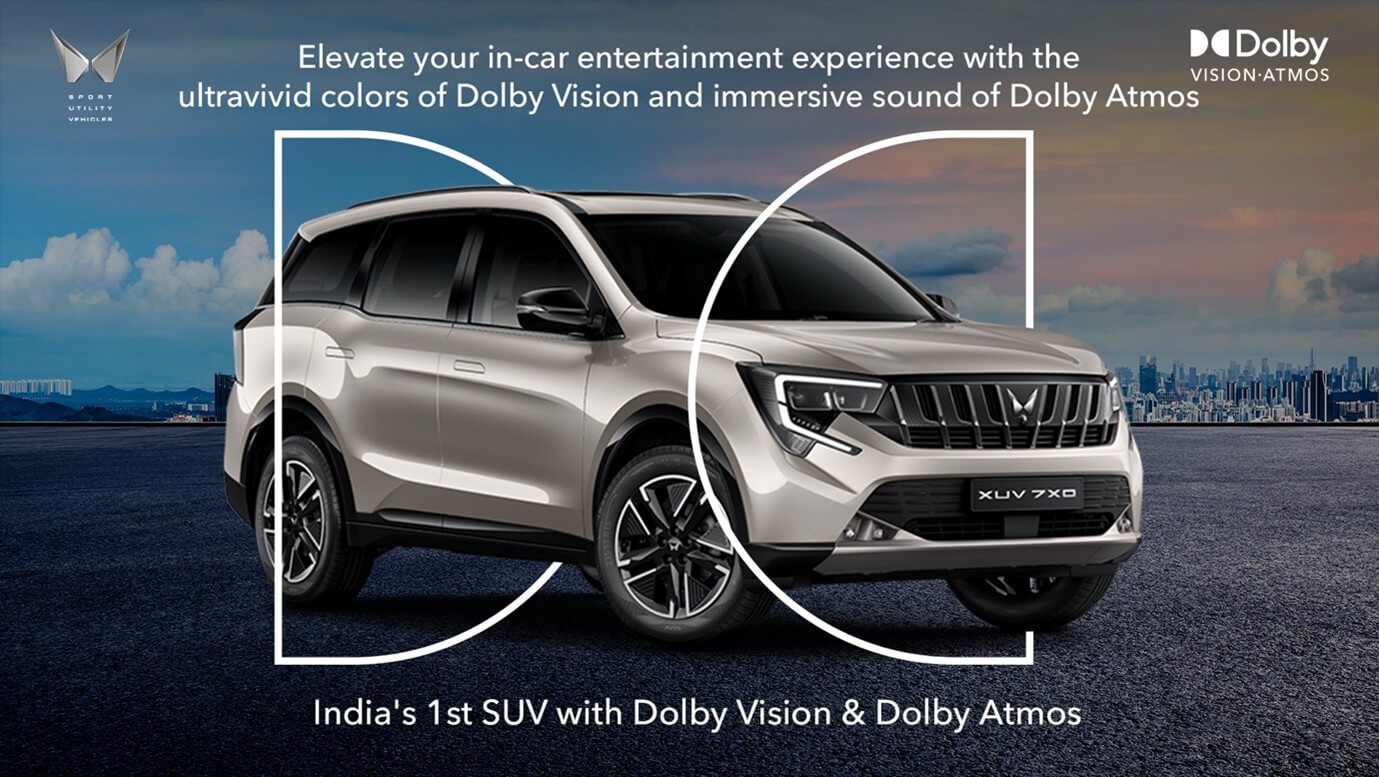
While Europe debates the right number of physical knobs and the U.S. argues about subscription features, India is quietly pushing a different cockpit priority: entertainment experience as a core value signal. Mahindra’s XUV 7XO has been promoted as India’s first vehicle to integrate both Dolby Vision and Dolby Atmos, positioning the cabin as a de luxe media environment rather than a purely functional transport space.
It reflects a global convergence: the infotainment bar is increasingly set by consumer electronics expectations for vivid picture processing, spatial audio, multi-screen layouts, and a living room vibe on wheels. Mahindra’s own communication frames the 7XO’s experiential suite around triple HD screens and a multi-speaker premium audio system featuring Dolby tech, plus a broader digital feature package. In a competitive SUV segment, that combination is a direct play for perceived modernity and premium feel.
From an editorial lens, the XUV 7XO story complements this week’s other signals. If the windshield is becoming a display plane and lighting is becoming a cognitive layer, then infotainment is becoming a theater and OEMs are learning that ‘premium’ is increasingly defined by how the cabin makes you feel, not just by torque curves. It also hints at how quickly emerging markets can leapfrog in cockpit expectations: customers who live with high-end displays and audio at home bring those demands into the vehicle purchase decision.
The cabin can be cinematic, but the driver still has to drive. Automakers who win will be those who make the experience rich and responsibly governed without turning the UX into a lecture.


