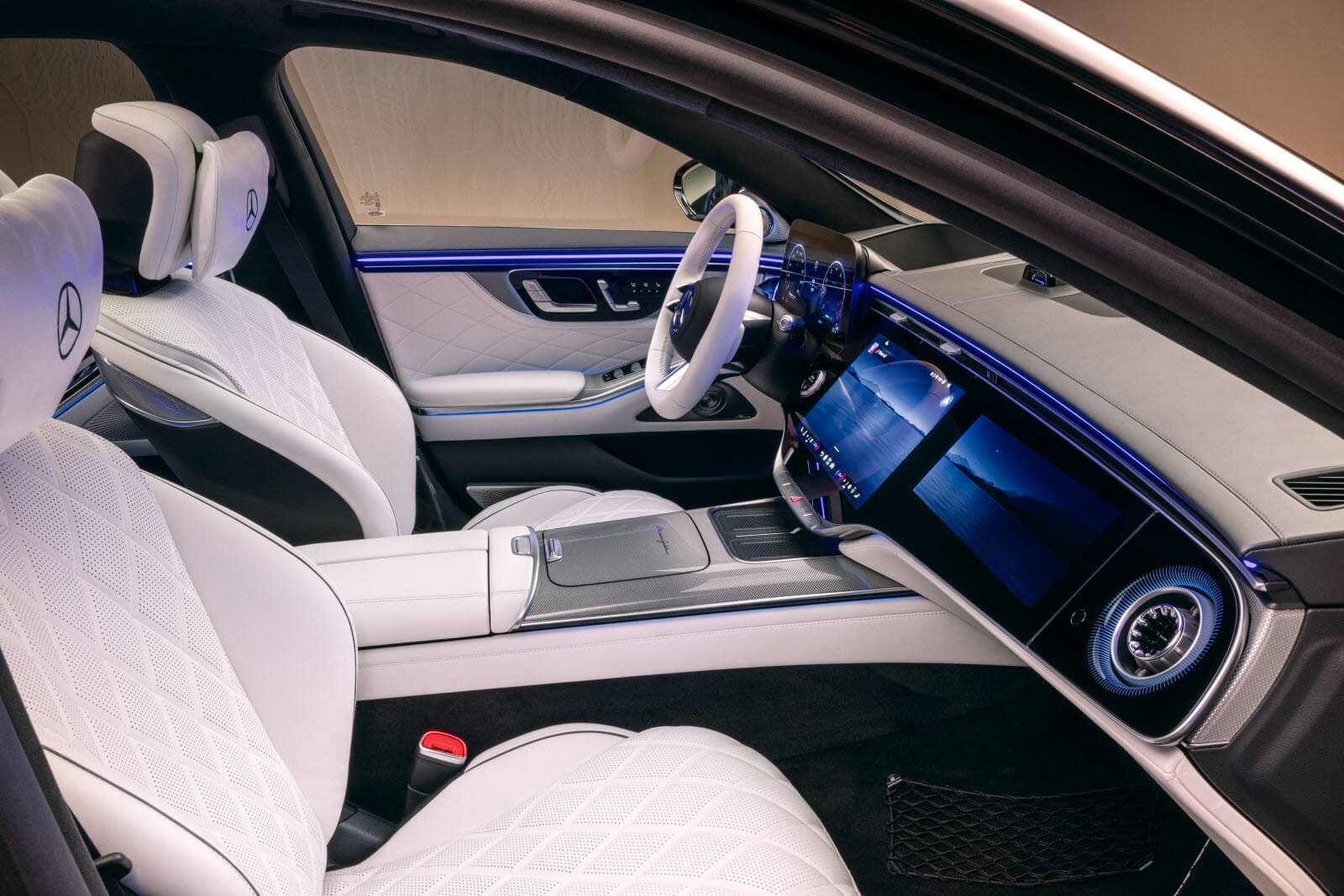
Mercedes is treating the S-Class refresh less like a facelift and more like a rolling software and comfort overhaul. The brand’s messaging suggests a deep rework rather than a facelift, and external reporting points to thousands of revised parts and a broader shift toward a new software backbone.
Inside, its a matter of refining the tactile, upgrading the invisible, and making the cabin feel calmer. The cabin revisions prioritize day-to-day usability and perceived quality: redesigned surfaces and trim, and comfort and convenience adjustments that matter in real life, not just in a studio render. Mercedes highlights interior comfort features such as improved storage/console usability and comfort-driven detailing.


As for HMI, the changes are less “more screens so there will be more screens”, and more about intelligence without friction. Ventilation control and personalization are smarter and more adaptive, with cabin air/comfort also upgraded as part of the holistic ‘serenity package’. That matters because premium cockpit UX is increasingly measured in cognitive load and micro-annoyances eliminated, not in pixels or diagonal inches.


