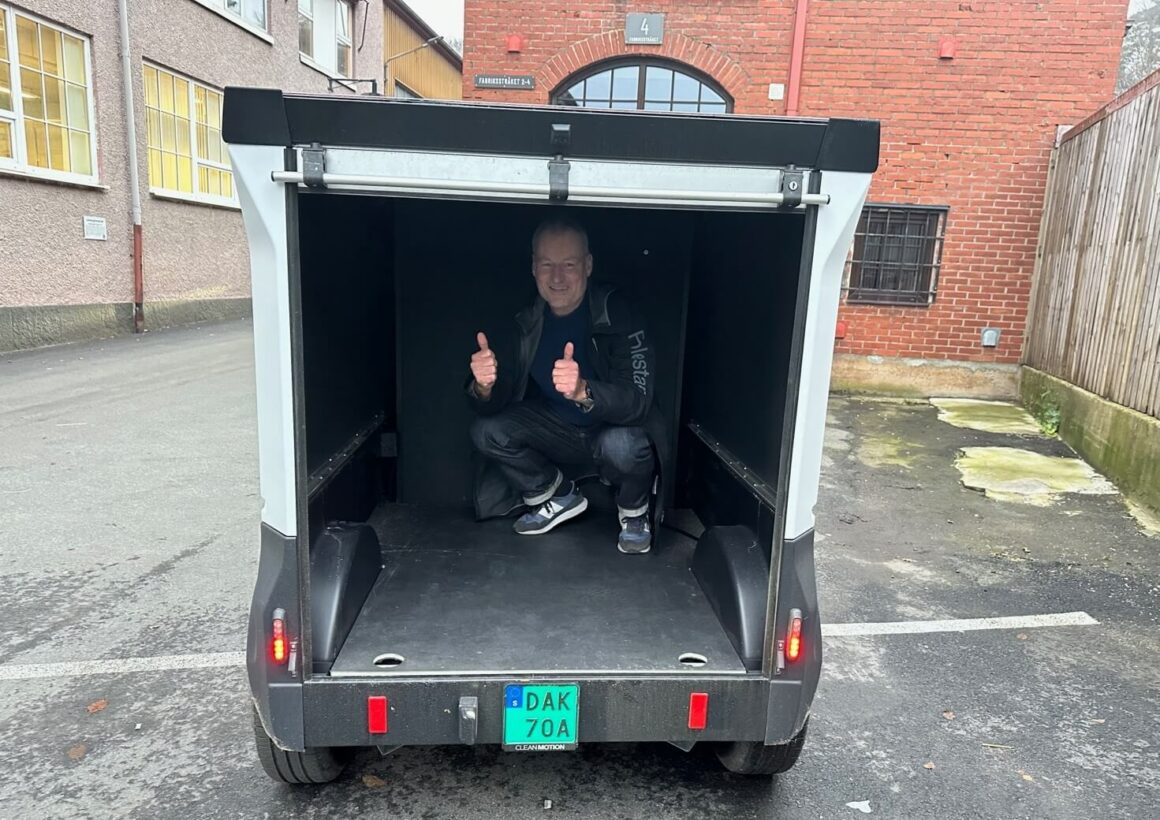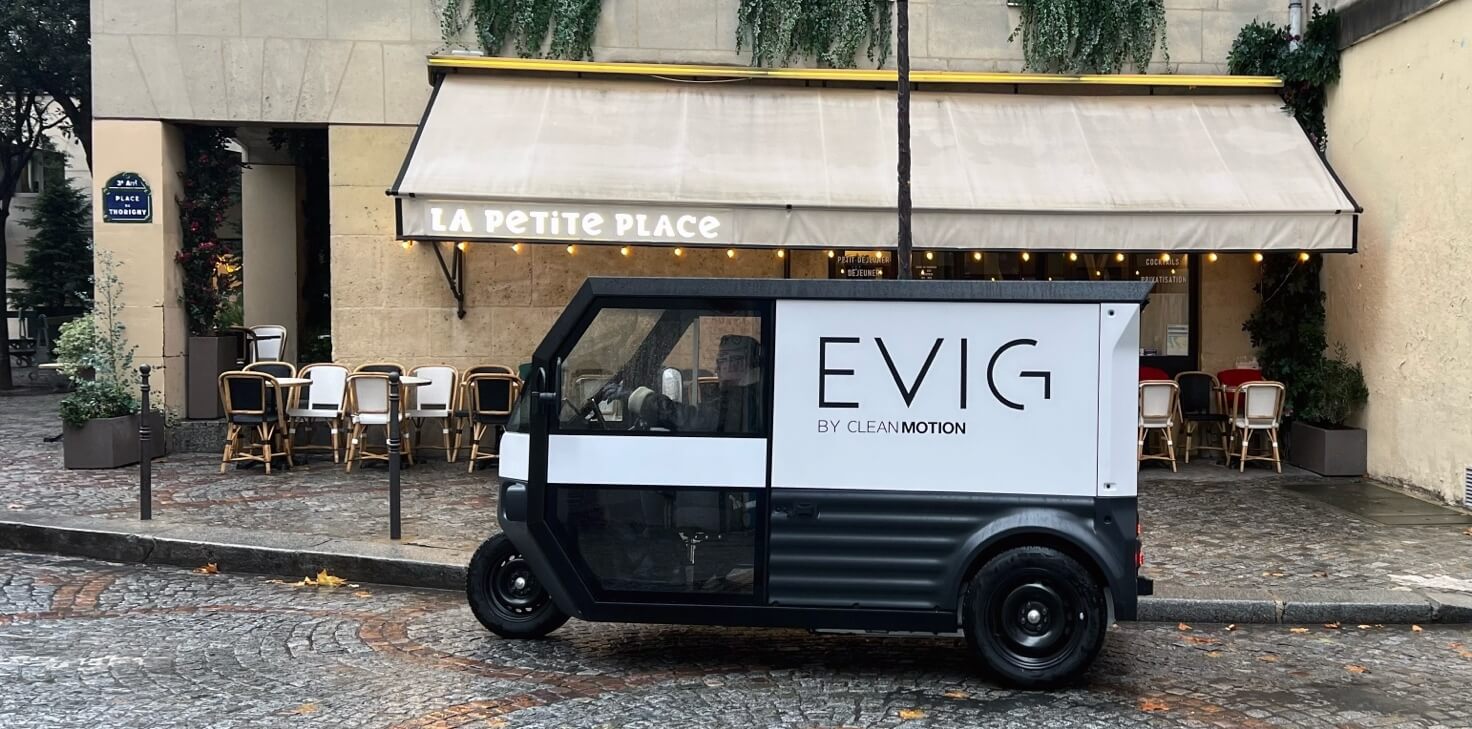
DVN got the opportunity to go and test drive the EVIG Last Mile delivery EV just outside Gothenburg, Sweden. The EVIG name is a bit of wordplay; “evig” means “eternal” in Swedish and EVs are rather durable! And in the case of this vehicle, ‘eternal’ refers to the fact that it has solar cells and in some use cases never might need charging if there’s plenty of sun out. Or eternal could refer to the fact that you might develop a strong bond with this little beauty, which was a great pleasure to see, drive, and learn the story behind it.
From last week’s article with Charles Trelogan we touched upon what the future of Automotive could look like and I think EVIG is exactly one of those products we discussed. Read more here.
DVN Interior Andreas Friedrich met with Ulf Rask CEO and Stefan Janols VP Sales & Marketing, and we had some really good discussions during the test drive. Instead of designing just another electric vehicle, they reimagined what a truly sustainable transport solution should look like. The EVIG is not just electric; it’s energy-efficient to the core.They believe the future of mobility should focus on using energy efficiently, conserving resources, and protecting the planet.
Integrated solar panels extend the range, reducing reliance on charging stations. Lightweight Design requires less energy to move, making it drastically more efficient.
A truly sustainable product that help businesses meet sustainability targets.
Summer of 2025 the EVIG was tested at Smögen Bryggan which is one of the Swedish westcoasts most popular leisure boat harbors in summertime. There it was used for transporting beer and alcohol to all the bars and restaurants and they didn’t have to charge the EVIG one single time – the sun took care of all the charging for the whole summer.
Ulf also told DVN that they had sold 18 EVIG’s to a resort in Dubai where they were going to use it for collecting refuse during night time. Cruising silently and not disturbing the customers. Probably no need for charging them at all with abundant of sunshine available.
The choice of materials has focused on those that are pure and easy to recycle and when possible, use recycled material.

In addition to this they use European suppliers to minimize the CO2 footprint from the supply chain.
The lightweight upper structure is made of Aluminum from the Swedish supplier Hydro, the bottom structure comes from AL-KO in Germany and the drive train is from Valeo in France.

The EVIG is made not just for last mile deliveries, but can be customized to many use cases. The solar roof gives you freedom to use EVIG for vending purposes independent of charging points, and if you work in facility management or gardening and need to recharge your electric tools, you use the 230V outlet in the cargo area to fill your batteries with pure solar energy.
Driving the EVIG was really fun; it felt straightforward and easy.
DVN got the opportunity to talk to Ola Granlund, the designer behind the EVIG.


DVN Interior – Andreas Friedrich: Ola! Will you tell us a bit about your background in design?
Ola Granlund: You know most of it already, Andreas, since we studied together at HDK (Högskolan för Design och Konsthantverk) in Gothenburg Sweden.
DVN-I: Correct. We graduated in 1991 and started our own companies directly and worked together as freelance designers until 1995, when we started a design department at one of the big consultancies in Gothenburg, a company called Caran (later merged to become Semcon), together with our friend and colleague Urban Södling. But you left for SAAB, what year was that?
O.G: I started at SAAB as a consultant in 1997; in 2000 when Michael Mauer joined as design boss I got employed. I managed to end my career there before all the sad things happened to SAAB, and started at Geely Design in 2013, when you (Andreas) called me and asked if could join. In
2017 I joined Cyan Racing in Gothenburg, and worked for them until 2020. Since 2020 I have run my own company full time. In 2021 I got involved with the EVIG project and I have worked for Clean Motion before, so it was known territory for me.

DVN-I: So tell us a bit more about the design process of the EVIG.
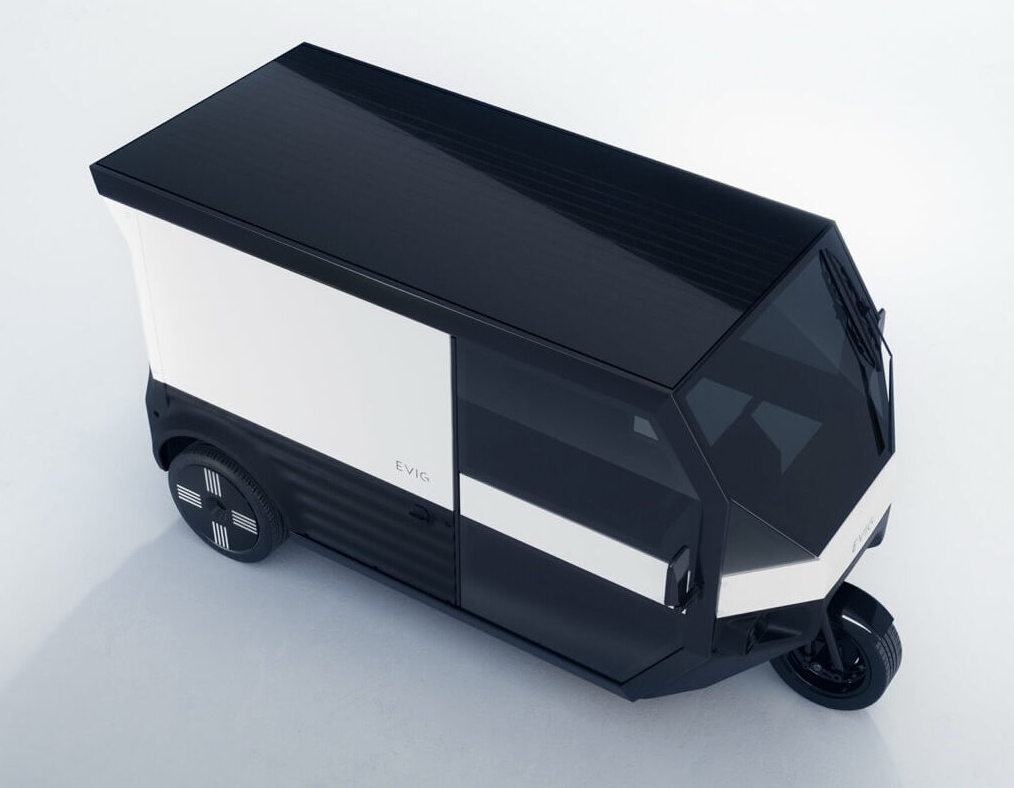
O.G.: We knew early on that it had to be a clean form language that needed to go hand in hand with engineering requirements, a challenge that I love. We had the solar cells with a certain given size and the ambition to do a quite reasonable big cargo compartment and that gave me a square box to start with. I put a seat, a front wheel and a handlebar in front of the box and that was the constraints. We tried to add 3D shape in the beginning but fairly soon realized it’s no idea – lets stick with the flat surfaces and do the best and most honest out of it. If we do it all the way, then maybe it becomes cool?
We have one panel over the rear wheel that has a bit of shape. It’s vacuum formed and contains the wheel arches, the charging port and some detailing that reminds of old style Citroën vehicles, like the 2CV. Even the front is a more shaped panel in order to deal with the front wheel and the lamp housing. Lamps are a bought detail, and we had to design around them.
DVN-I: You managed really well in integrating those lamps.
O.G.: Thanks, they contain everything you need.
DVN-I: What can you say about the form language?
O.G.: We wanted to make a vehicle that would fulfill your daily needs. Something that was still small and compact. I wanted it to be a product you could get an emotional bond to and where you would feel that the people behind it really thought of your best. It should be brave and stand out, and I wanted it to feel honest. The founder of Clean Motion, Göran Folkesson, completely agreed with this approach and understood we had to embrace the boxiness.
DVN-I: So it was more of a product design job than traditional automotive design?
O.G.: I actually applied a lot of my automotive design skills in this project. The rear wheels, for instance, are placed very cautiously to give the vehicle the right stance and feeling of stability. Putting the wheels in the corners is a classic trick. Where other small electric vehicles often have the wheels under the load area, which makes them look unstable, we choose to balance them with the cargo space. Also getting a lot of interesting shape in the front despite the flat panels and flat windows. It became almost like a helicopter cockpit, with very good visibility.
DVN-I: I guess you have thought of different adaptations and possibilities for special applications for the EVIG, are you involved there, too, as a designer?
O.G: Yes, absolutely! When we approach a new potential customer, I get involved to do some sketches of possible adaptations that the customer is asking for. That is something we rarely do in traditional automotive design, and that is one of the beauties of working for a small company.
DVN-I: What about the interior? It’s almost nonexistent, like one bent piece of flat material!
O.G.: We needed to get it ready for the launch so it’s actually just a simple felt composite flat panel, almost the same as you have in load floors. But the actual interior is very similar, but with a few more practical details.
As standard the EVIG comes without doors – free air conditioning, if you like. But doors are possible to get as an option, and they come with a simple sliding opening for ventilation.
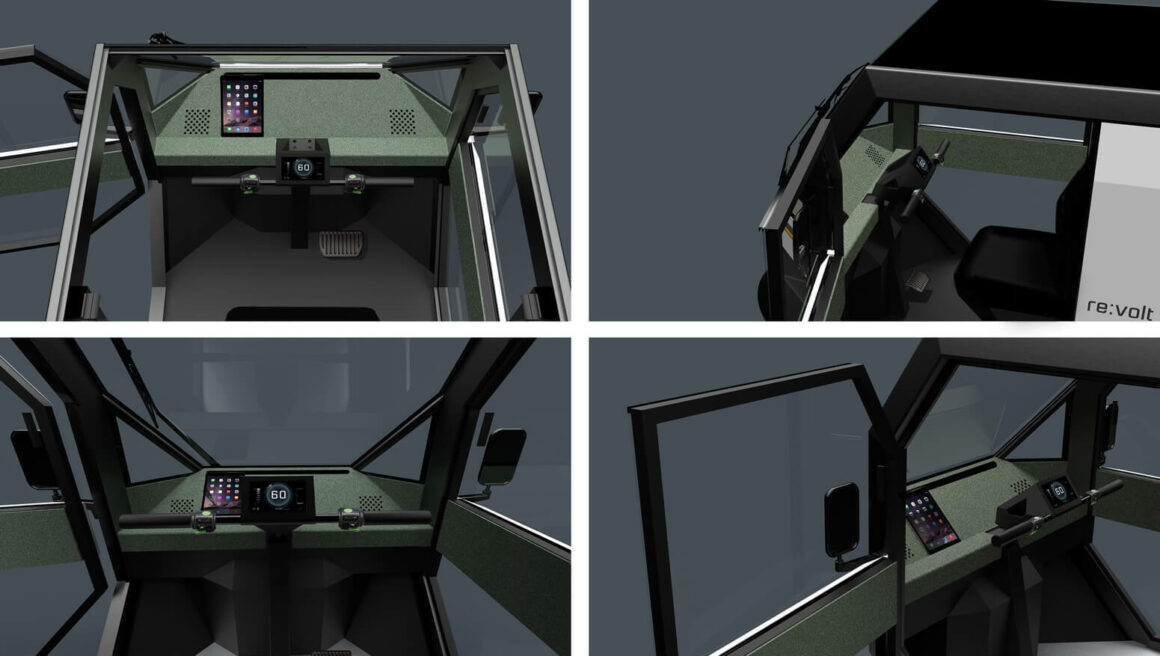
DVN-I: I really like the simplicity of the interior. Seat is comfortable and adjustable and comes with heating. Handlebar has a central screen with the necessary information displayed and even has a reverse camera. The interior is like a surface where you could attach whatever you would like.
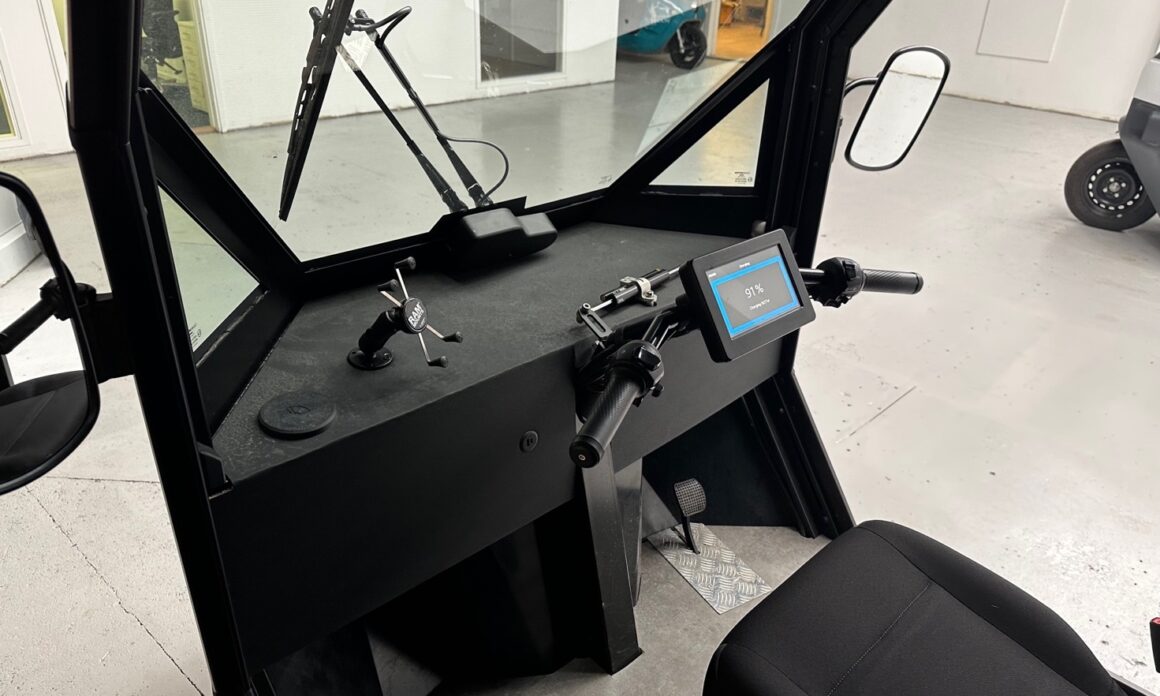
O.G.: Yes we have plenty of ideas for accessories that you easily could add.
DVN-I: For sure a product that would suit Southern Europe really well – great work, Ola!
O.G.: Yes for sure. Thank you, it was a pleasure.