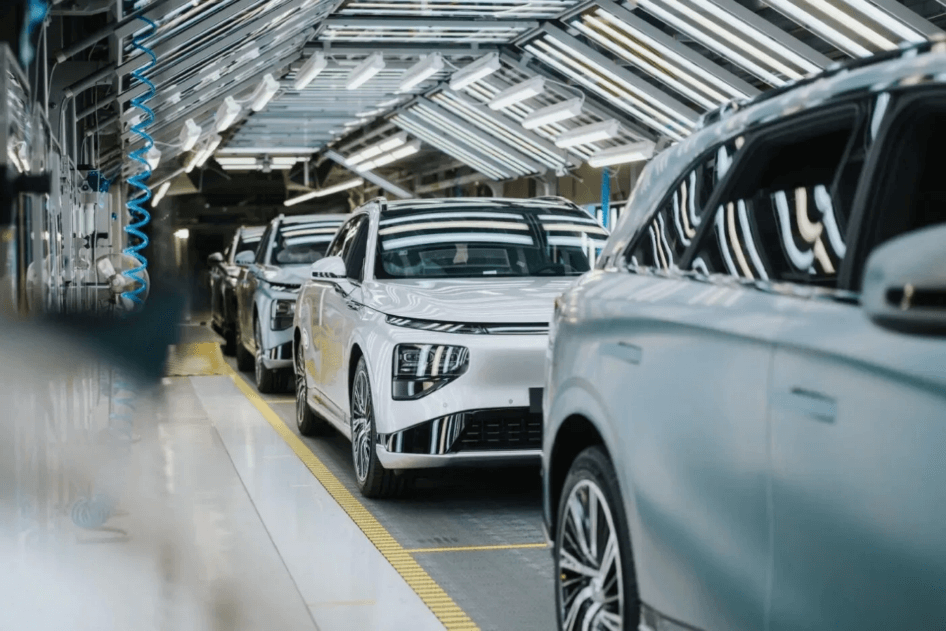
Xpeng has started producing EVs in Europe to mitigate the impact of EU tariffs. The first units of the Xpeng G6 and G9 have been built by contract manufacturer Magna Steyr in Graz, Austria.
The order follows a well-established export strategy in the car industry: SKD (semi-knocked-down) assembly. That’s when vehicles are partially built in one country and then the kits and components are exported to the target country and assembled there. Since only parts, not complete vehicles, are imported, different tariffs apply.
For fully-built cars, Xpeng currently faces EU tariffs on Chinese-made EVs: in addition to the existing 10 per cent import duty, a further 21.3 per cent surcharge is levied – almost one third in total. With SKD assembly in Austria, these extra tariffs no longer apply.
Production at Magna Steyr in Graz has been declining: after more than 105,000 vehicles in 2023, only 71,900 cars were built last year. Jaguar has already ended I-Pace production, while contracts with BMW and Toyota will expire in 2026. Fisker, which planned to have their Ocean SUV built at Magna, has since gone bankrupt. An order from Ineos to manufacture the electric off-roader Fusilier was withdrawn before the first car was even built.
Xpeng entered Europe in 2021, starting in Norway. Across Europe, Xpeng sold just over 8,000 units in the first half of 2025, volumes are expected to rise: following the G6 and G9 SUVs, the updated P7 saloon (called P7+) will soon join the line-up. The model was unveiled last week at the IAA Mobility, where Xpeng also announced the opening of an R&D center in Munich. From there, the company will support technical cooperation and adapt products for local markets.
In Parallel, BYD will start building the Dolphin Surf in Hungary in Q4 2025


