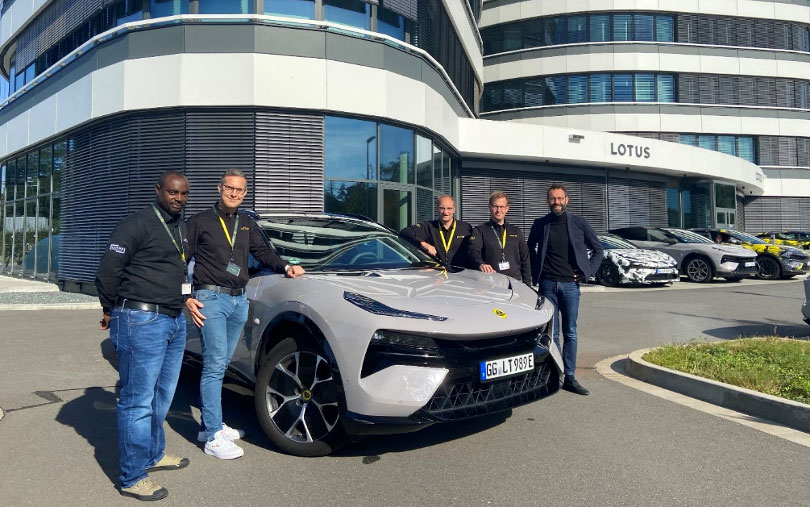
Lotus participated in the US DVN Workshop in august, and made a really nice presentation. It was the first time for DVN to welcome their lighting group on the stage. In reciprocity, we visited their office in Raunheim to talk with their lighting team about lotus lighting technology and interview Frank Langkabel, their exterior lighting technical lead.
Driving Vision News: Frank, tell us about your company.
Frank Langkabel: Lotus is now part of the Geely group who has a large portfolio of brands. Lotus is at the top of the pyramid when we talk about luxury and sport.

DVN: For me, Lotus is an English car maker, but you are located in Germany.
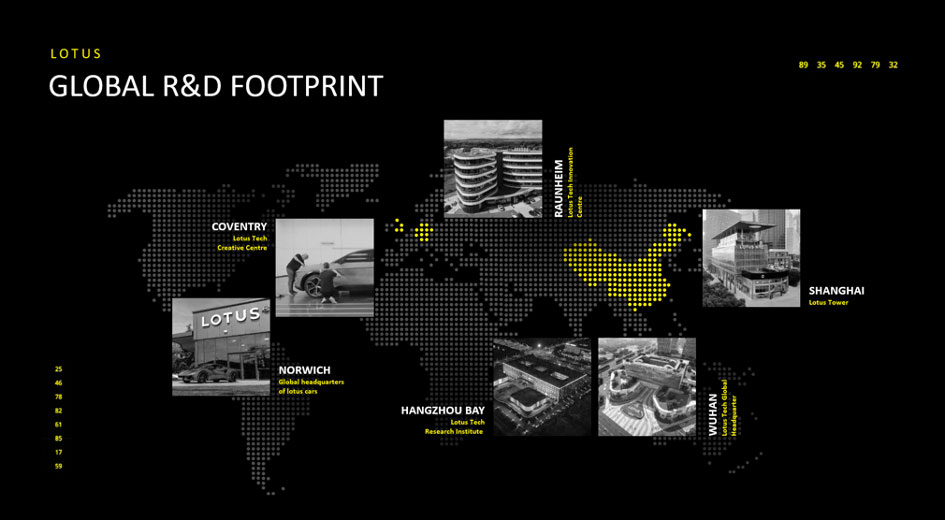
F.L.: Lotus has different locations for R&D, design and manufacturing. If we focus on R&D, it is split between the UK, Germany, and China.
DVN: Thinking back now on your presentation in San Francisco during the DVN Workshop: Rouven from your team started with some slides about the Lotus heritage—three nice cars for me. I am a James Bond fan, I was born in 1977, and I really like pop-up lamps. Already Lotus was quite innovative when we talk about lighting!

Then, you presented some details on the lighting concept of the lotus Evija, launched in 2019. The Lotus lighting pedigree is impressive: laser low beam, laser high beam! Can you give us more details about the low beam and high beam concept?
F.L.: You are right. The Evija is the first production road car in the world to feature laser lights for both main light functions. Six Osram lamp modules—four modules for the low beam and the remaining two for the high beam—are positioned to reflectors and microlenses. Each of these six module lenses is 20mm high and 17mm wide.


DVN: The rear lamps also have an amazing design with a 3D shape integrated in the body. How is the lamp integrated in the car? is it a carbon-fibre body?
F.L.: Yes, the Evija has a lot of carbon parts. The rear body air tunnel is a 2-piece carbon construction with the lamp being flange mounted to the tunnel before the second half is assembled. Then the whole module is assembled to the vehicle.
DVN: Part of your DVN Workshop presentation was dedicated to the new Lotus Eletre. So many interesting concepts on the car! You mentioned that you have L4 Hardware set up, ready for OTA activation. Could you give us more information about the hardware on the car?
F.L.: That’s right, the Eletre is equipped with L4 Hardware. In total there are four Lidars, six radars, 11 cameras, HD mapping, and two redundant Nvidia SOC computers in the vehicle.
DVN: Speaking about headlamps, I remember two things: an innovative hot foiling concept for signaling function and some very thin lighting functions with very high performance (500-metre range for high beam). Could you provide us some more detailed information?
F.L.: Regarding the hot foiling solution: the big challenge was to respect the boundary conditions needed for the hot foiling process right from the beginning within the design phase. The foiled areas have a width of only 3 mm. The definition and refinements of the blackout areas required some iterations with together with our designers to achieve the best possible result and a very clean appearance of the foiled areas.
In addition, the development of the right foil also played a crucial role in order to block all the light with it. By the way, we are now rolling out that hot foil execution also to the Emeya, our new electric grand tourer.

You are right, the headlamp is very slim with an overall height of not more than 65 mm for the light exit window. We managed to package three modules inside with light emitting surface heights ranging from 30 – 35 mm. The key to the high intensity for high beam was to implement parts of the high beam function into each of these three modules. One of those modules is the very unique high beam -spot / cornering lamp module for which we developed the general concept in-house.

DVN: The rear lamps are very well integrated in the car. You integrated an EV charging indicator in the lamp. Is it done with dedicated monocolor led, or is it RGB leds…?
F.L.: Yes, the charging indicator function is given by more than 80 RGB LEDs in the centre area of the rear lamp. They provide different graphics in terms of displayed width and slight changes in color, based on the state of charge provided from the vehicle’s battery management system.
DVN: Do you have some customer feedback about this nice feature? How is it perceived compared to the usual LED indicator, smaller than 1 cm2 we see on other cars?
F.L.: The beginning of this year, the Eletre was launched in China. During the launch event in Oslo the feature was very well perceived and often mentioned by the media. With the first deliveries to our EU sales network a couple of weeks ago and with customers admiring the Eletre in our dealers’ showrooms, this feature plays a significant role in the overall experience and emotional aspect for our customers. It is something they’ve never seen before, and that is what we wanted to achieve.

Lotus participated in the US DVN Workshop in august, and made a really nice presentation. It was the first time for DVN to welcome their lighting group on the stage. In reciprocity, we visited their office in Raunheim to talk with their lighting team about lotus lighting technology and interview Frank Langkabel, their exterior lighting technical lead.
Driving Vision News: Frank, tell us about your company.
Frank Langkabel: Lotus is now part of the Geely group who has a large portfolio of brands. Lotus is at the top of the pyramid when we talk about luxury and sport.
DVN: For me, Lotus is an English car maker, but you are located in Germany.
F.L.: Lotus has different locations for R&D, design and manufacturing. If we focus on R&D, it is split between the UK, Germany, and China.
To read more, you need to be DVN Gold Lighting or log in


