Analysis by Daniel Stern, DVN Chief Editor
One comment that roused my ears amidst the great lot of technical information at the US DVN Workshop in San Francisco shortly ago was from DVN’s Paul-Henri Matha. The question came up of reducing headlight glare by going toward a warmer white light, backing away from the bluer-and-bluer-and-bluer trend, and Matha said this idea is not discussed in Europe; there’s no public objection to the bluer colour of today’s headlamps because in Europe the headlamps are well aimed.
It’s legitimately arguable that European low beams, aimed so low as to eliminate every last little bit of glare, are too low to give adequate seeing distance. That argument is growing weaker as nighttime pedestrian deaths rise in the U.S. and fall in many countries outside the American regulatory island, where “European” (rest-of-world) headlamps and aim specs are used. It grows even weaker as ADB gains traction even in popular-price vehicles, again outside the American island.
Leave that batch of arguments on the shelf for a moment, though, and think about the original question, Maybe whoever asked it at the DVN Workshop doesn’t personally feel blinded by ‘those awful, glaring, bright blue headlights’, but at least they were aware that’s a notion that has currency in America. Why something can’t be ‘done about them’ is a question asked, in so many words, again and again in American traditional and social media. It’s not a new complaint; it flared up in the mid-1990s when Xenon headlamps first came to American roads, and in the mid-1980s when halogens began appearing on U.S. vehicles. Every time, the reaction from regulators and engineers alike has been a dismissive scoff and shrug—’it only seems glaring to you because it looks different to what you’ve seen before’—and unhelpful, patronising advice: ‘just look away from the glare’.
Meanwhile, headlamps are growing smaller, brighter, and bluer than ever; those are three factors that aggravate headlight glare. And despite the valiant efforts of IIHS, whose headlight tests are nudging new-vehicle headlight aim closer to where it should be, once a vehicle is on the road in North America, the aim of its lamps is vanishingly unlikely ever to be checked or correctly adjusted—this despite the U.S. Congress’ apparently toothless order that NHTSA “amend [FMVSS 108] to ensure that headlights are correctly aimed on the road” (which will almost surely be ignored by NHTSA as they did with the order they were given in that same law, requiring acceptance of the SAE J3069 ADB standard).
As I’ve written (once and twice) before, that’s a huge problem. Headlight aim is overwhelmingly the primary determinant not only of how well a driver can see at night, but also how much glare they’re throwing around. That’s not a guess; it’s settled science thanks to careful, rigourous work by UMTRI and the RPI Lighting Research Center.
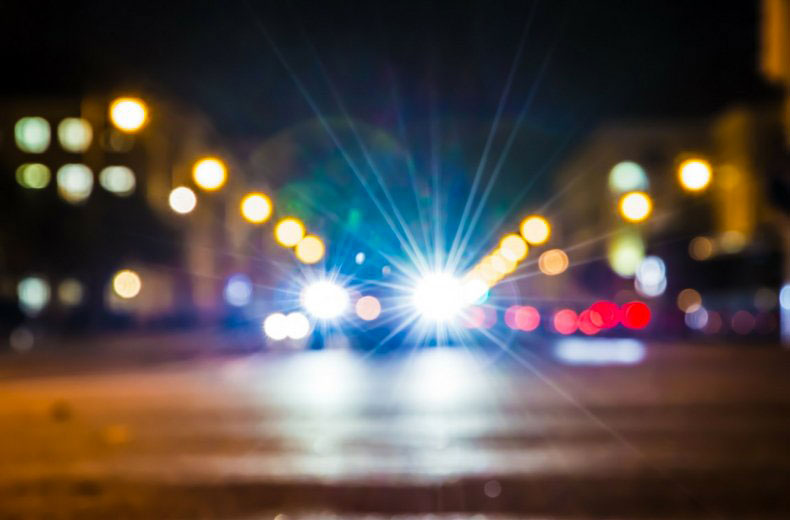
Non-experts don’t perceive misaimed headlamps as such; they just see them as too bright, as blinding. That’s understandable and legitimate; today’s high-intensity low beams, aimed just a little too high, are effectively high beams. But then these non-experts describe them by their apparent characteristic: that blue-white colour. Add some misinformed demagogues with a bunch of social-media followers, and ‘DO SOMETHING ABOUT THOSE BLINDING BLUE LED HEADLIGHTS!’ gains apparent legitimacy as an idea and spreads fast like wildfire, destroying as it goes.
White light with more blue content provokes significantly worse (nearly 50 per cent worse) subjective/discomfort glare ratings than light of equal intensity but less blue content—here again we tip our hat to UMTRI for thorough research demonstrating this. And technologically-imposed constraints on headlight colour have never been looser, so yes, theoretically we could reduce the glare by reducing the blue. Now let us think again about what Paul-Henri Matha said at the DVN Workshop: mostly people in Europe don’t complain about ‘those blue headlights’ because ‘those blue headlights’ mostly don’t give people cause to complain about them, mooting the question of whether it’s the blue or the intensity to blame for the blinding. That lack of complaint might not be quite so complete; Britain also has its own little group of ignorant-but-very-sure-of-themselves cranks linked to the American crackpots.
But not all of those UK complaints are overheated conspiracy-theory nonsense. The UK’s RAC (comparable to ADAC in Germany or AAA/CAA in North America), in a 2019 research survey, found a lot of UK drivers feel dazzled or endangered by headlight glare. Probably some proportion of these complaints are understandable by reference to yet more good UMTRI science: perception of glare varies according to the perceiver’s experiential frame, so someone accustomed to a low-glare traffic environment will have a lower intensity threshold of “HEY, OW!” than someone accustomed to a high-glare traffic environment. An interesting thing about the UK survey: respondents made no overwhelming association between “blue” and “dazzle”.
Assuming glare complaints outside North America are substantial enough to warrant attention to the causative factors, those countries have a giant advantage; a huge head start: they’ve already got numerous glare countermeasures in place: photometric and aim specifications with emphasis on glare control; headlamp levelling systems, and—most importantly of all—vehicles get their headlamp aim checked and adjusted regularly. So if it’s found, for example, that those checks are being done sloppily, it’s a relatively simple matter to tighten that up. The RAC survey mentions this was done in Britain in 2016.
None of that ‘infrastructure’ for addressing headlight glare exists in North America, and the longer the problem is ignored as technological evolution makes headlamps inherently more glaring, the worse the problem gets. We in the vehicle lighting community mustn’t just shrug and look for the regulators to fix it; they won’t or they can’t, at least not on their own. We’ve got to actively step in and clean up the glare problem—the aim problem—in North America. Maybe that means forming a technical advocacy group to coördinate with the American Association of Motor Vehicle Administrators in developing and advancing the state-by-state adoption of up-to-date, appropriate headlight aim regulations (something NHTSA can’t or won’t do). Maybe there are other ways of getting the boat turned around and headed in the right direction. It’s unfortunate and perhaps unfair that it falls to us to clean up the mess, but it does, and so we must!


