Transport & Environment’s (T&E) is a is an European umbrella for NGOs working in the field of transport and the environment, promoting sustainable transport in Europe, with a vision of a zero-emission mobility system that is affordable and has minimal impacts on our health, climate and environment.
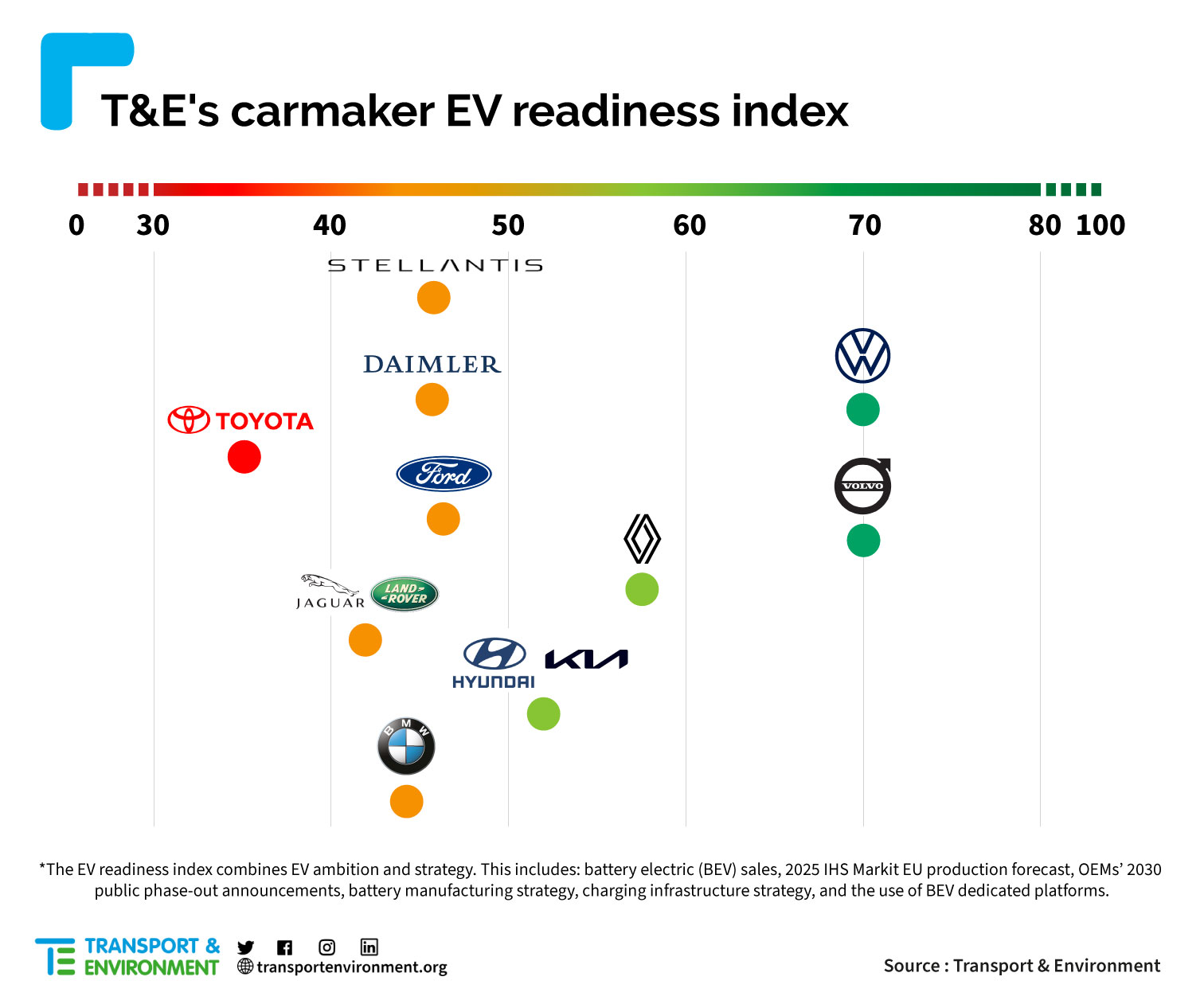
Volvo Cars and Volkswagen are the only major carmakers ready to switch to electric in line with Europe’s net zero climate target, according to new analysis they did.
T&E’s ranking of the readiness of 10 major automakers in Europe to transition to EV by 2030, shows there are big differences in ambition and quality of their plans. Volkswagen and Volvo Cars have aggressive and credible strategies. Others like Ford have an ambitious phase-out target but lack a robust plan to get there. Stellantis, Daimler, BMW, Jaguar Land Rover, and Toyota rank the worst with low short-term BEV sales, no ambitious phase-out targets, no clear industrial strategy, and an over-reliance in the case of BMW, Daimler and Toyota on hybrids.
According to the same report, BEV production in the EU27 is expected to increase from around 1 million units in 2021 (7.4 per cent of production), to 3.3 million units in 2025 (24.2 per cent) and surpass sales of cars with an ICE in 2030 with 6.7 million (50.2 per cent).
PHEVs are expected to peak at 1.6 million units in 2026 (12 per cent of total car production) and then stagnate throughout the second half of the decade.
Previous analysis by T&E showed that in 2016, carmakers failed on their collective target of selling 3.6 per cent electric cars, achieving less than half of that.
To ensure automakers ramp up the production of affordable electric cars in time to decarbonize by mid-century, European regulators need to set binding car CO2 targets in the next decade leading to two-thirds of new cars being fully electric by 2030 and all new cars in 2035, says T&E. With current plans, BEV sales are likely to be at least 10 percentage points lower than they need to be in 2030.


