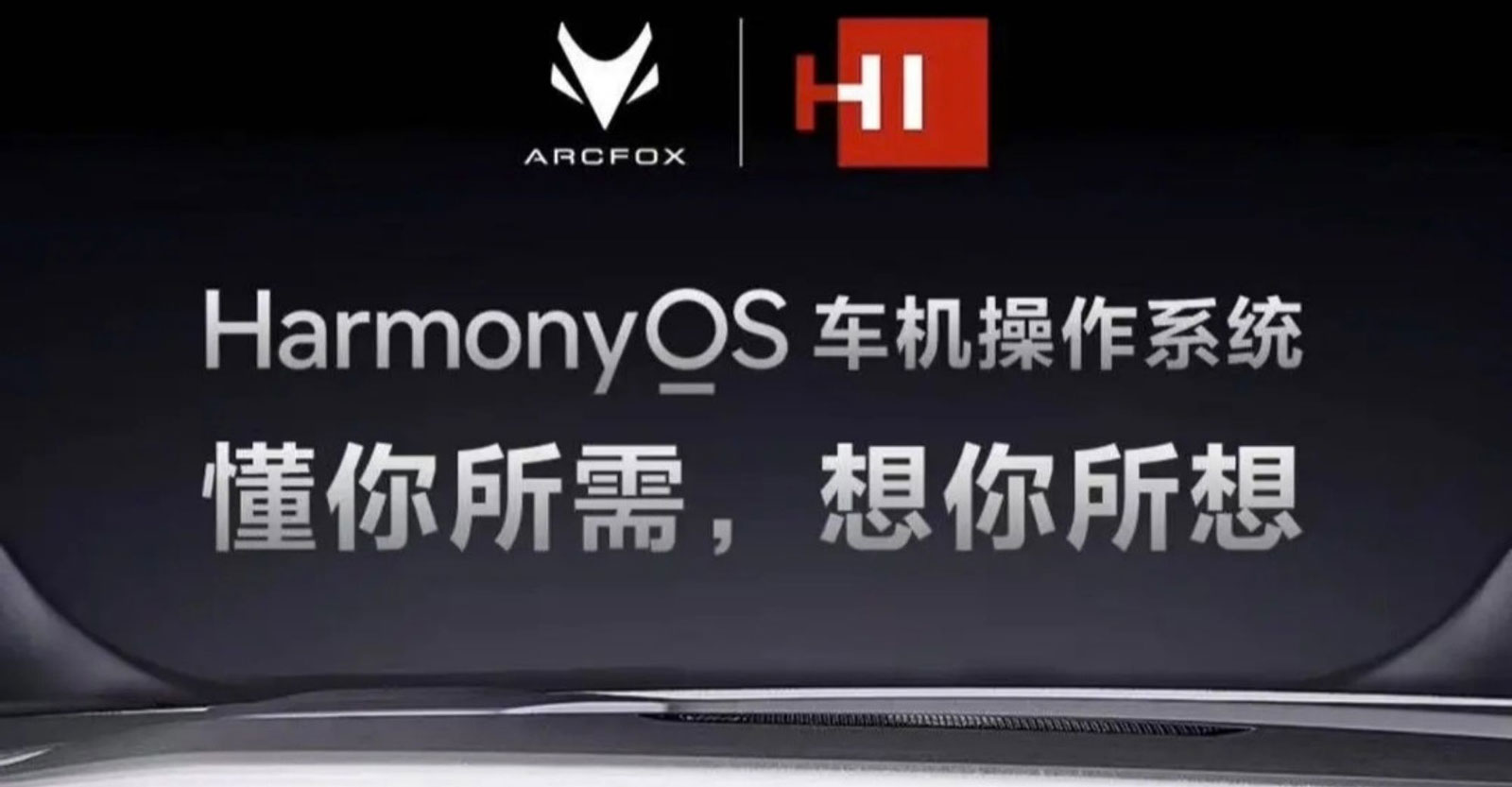
BAIC has become the first automaker to adopt vehicle cockpits with an OS (Operating System) developed by controversial Chinese technology giant Huawei.
The operating system, named HarmonyOS, will be installed in the new Arcfox αS ICE SUV. Huawei developed the HarmonyOS operating system after being barred from accessing U.S. technology, including Google’s Android operating system, in 2019.
Arcfox αS is offered with Huawei Inside (HI) version, featuring Huawei’s claimed L4 autonomous driving solution and Harmony OS intelligent cockpit. It can be connected to smart homes and other intelligent devices, “which can transform the car into a movie theater, game hall, and karaoke room in seconds,” Huawei said.
The cooperation between BAIC Group and Huawei started last year when BAIC Group launched the first Arcfox model αT, the first mass-produced local EV equipped with Huawei’s technology.
The high-end brand Arcfox, first introduced in 2016, was built by a joint venture between BAIC Bluepark—the EV-focused subsidiary of BAIC Group—and Magna, under a 51/49 per cent JV structure. BAIC positions Arcfox as a high-end brand to differentiate the product from its own “Beijing” brand, and develops the EV through cooperation with local technology companies such as Huawei, as well as auto-part suppliers including Magna and Contemporary Amperex. Arcfox uses Huawei’s advanced chip and software as well as Magna’s chassis technology.
Based on Kirin chipsets, Harmony OS smart cockpit solution features a cockpit-oriented software platform, a display platform, and a complete hardware and software ecosystem. It provides capabilities such as one-chip multi-screen, multi-concurrency, and runtime deterministic assurance to meet the requirements of mobility scenarios. Through HarmonyOS, a vehicle’s head unit can connect with other intelligent terminals, using various hardware and share information. Within the cockpit Huawei provides its signature Huawei Mobile Services (Automotive) core capabilities, such as voice, vision, sound partitioning, sound effects, and touch control, and fully opens these capabilities through APIs, which allow automotive manufacturers, tier#1 suppliers, and application ecosystem partners to develop functions, services, features and applications.


