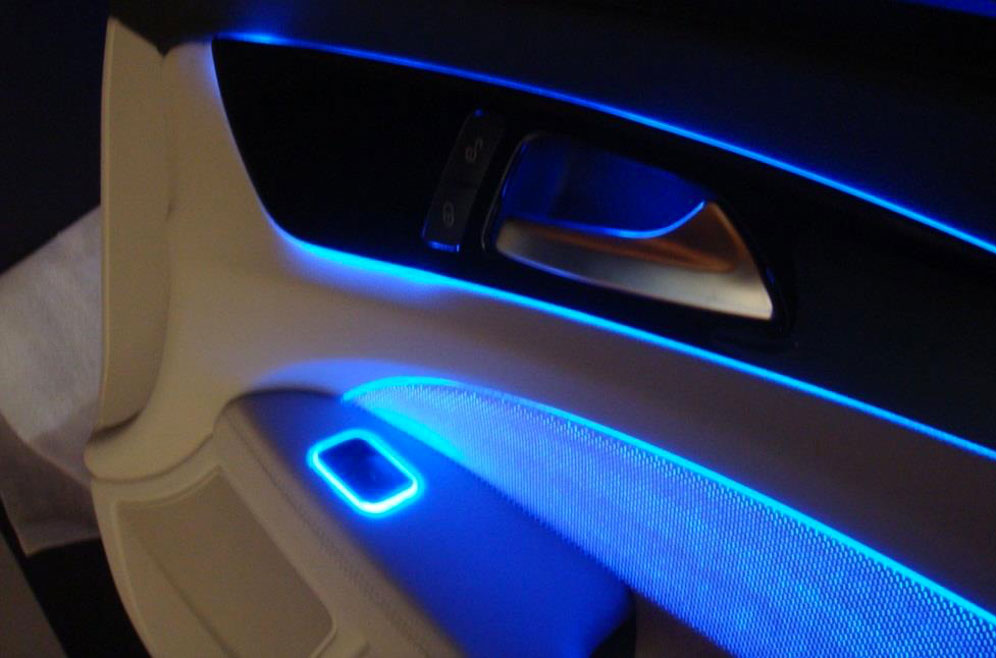
Benchmark Lighting Integrations
State of the art of lighting integration in interior components is mainly driven by RGB-LED modules in combination with short, long, small, or broad light guides for indirect contour and area lighting, or backlighting of A-surfaces with static or dynamic light performances.
The focus for lighting integrations in interior components is on door panels, because of the many styling, functional, signaling, and psychological effects in this area. But there is also an increasing number of light integrations in instrument panels, center consoles, seats, steering wheels, door sills, and headliners, and in special in panoramic roofs by using the large transparent area as a luminous surface.
Audi, BMW, and Daimler are still in the lead with the number of light integrations and innovations in the interior components. But Jaguar, MINI, Opel, Peugeot, Renault, VW and many other car makers offer a lot of interior lighting features in nearly all car segments. Makers from America and Asia are fast followers for interior lighting applications and integrations. We foresee this trend continuing after the investment and development delays caused by the pandemic.
Some examples of interior lighting integration:
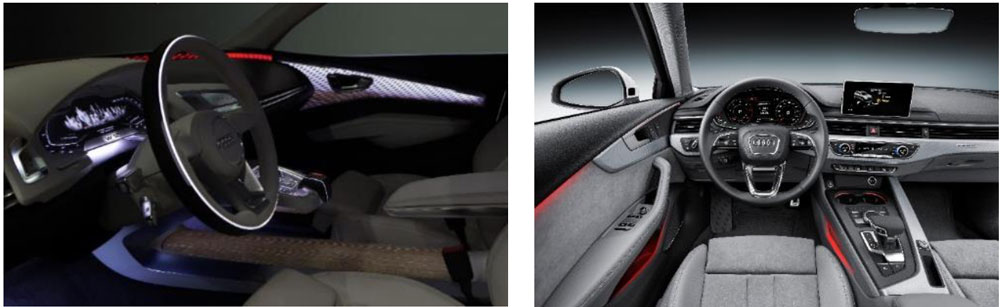
Audi with indirect, contour and smart area lighting in deco trims, cupholders and below center console
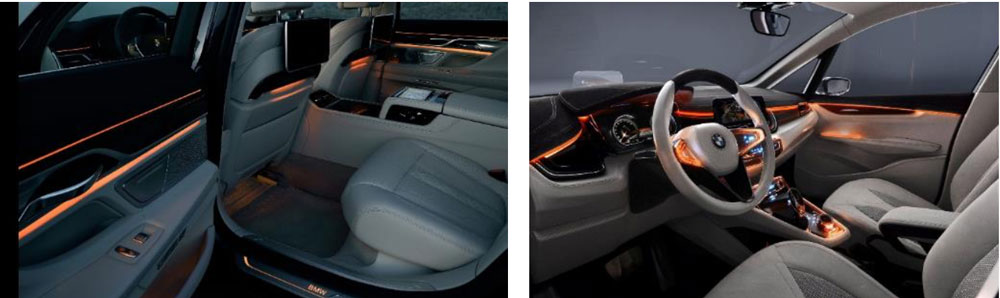
BMW with double stripes of indirect & contour lighting and an interior concept with manifold lighting integrations
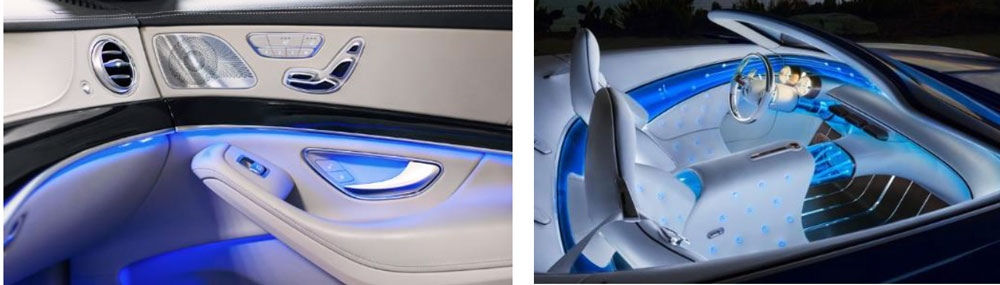
Daimler with indirect and area lighting, illuminated components and new display and interior lighting concepts
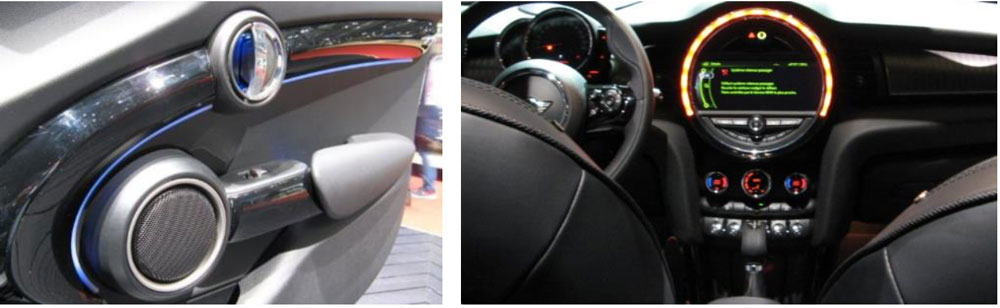
MINI with contour lighting, illuminated door opener, and communication light in combination instrument
Forthcoming editions of this series will delve into contour lighting, indirect lighting, and luminous headliner technology and technique.


