Every two years, EuroNCAP—the European body that tests vehicle safety—updates and tightens up its test protocols. This year, several important changes come into effect, including 50 km/h frontal impact test evolution, the adoption of a movable deformable barrier, and use a new technologically more advanced test dummy that should be a little closer to reality.
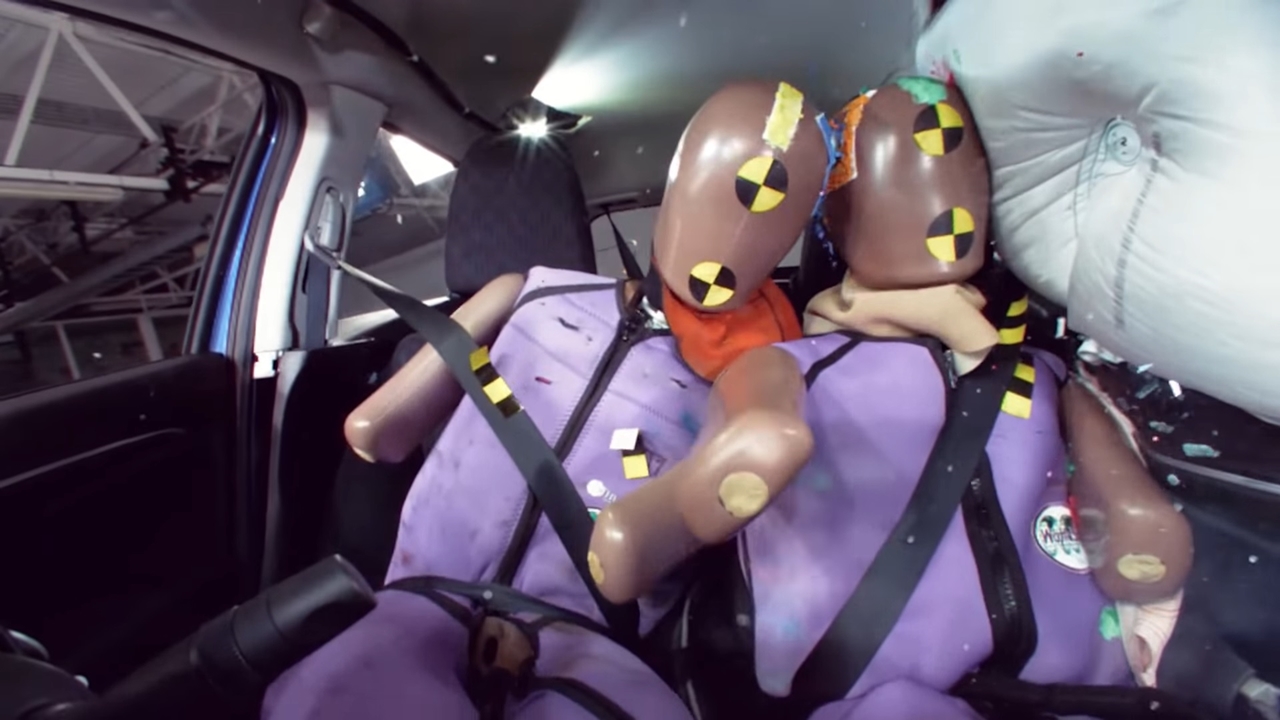
For side impacts, the second leading cause of death or serious injury after frontal impacts, will be analyzed with more severity, thanks to the strengthening of the mass and speed of the ram that strikes the vehicle. As part of this test, the organization will measure, for the first time, the injuries that the driver and front passenger will inflict on each other as well as the effectiveness of the central airbags.
After having already measured the effectiveness of the automatic emergency braking systems (AEB) in different scenarios, the organization will test two new ones at low speed, in reverse (detection of a pedestrian) or when crossing a crossing (detection of a car on the cut axis).
EuroNCAP will also measure the effectiveness of the driver’s attention monitoring systems to prevent falling asleep, the leading cause of motorway accidents.
Finally, after having measured the systems that act before and during the accident, EuroNCAP will also focus on the post-accident system, with the help of CTIF, International Association of Fire and Rescue Services. All the elements which make it possible to quickly rescue the occupants will be judged, information communicated to the firefighters to extract the occupants to the advanced functions of the e-call systems.
“The impact of these updates will be significant (on the rating given), said the organization that urges consumers to” be careful when comparing the latest results with the ratings of previous years “.


