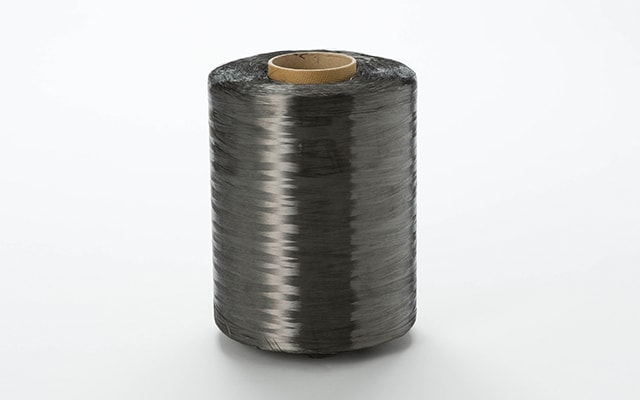
Toray Industries, Inc., say they have created a high tensile modulus carbon fiber and thermoplastic pellets that are ideal for injection molding; the maker says they can greatly enhance cost performance.
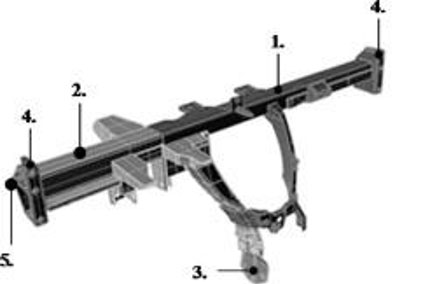
Carbon fiber is a flexible fabric-like material that, when combined with a polymer, can be molded into the shape of a car part that is stronger and lighter than metal parts These carbon fiber-reinforced plastics (CFRPs) are slowly finding their way into new applications as industries demand materials with ever-higher strength-to-weight ratios, corrosion resistance, and workability; mainly body structure, in cars such as BMW 7, i3, i8, Alfa Romeo 4C. But cost has been the limiting factor since ever. Interior application domain could be seat frames, instrument panel cross car beam, door structures, etc.
In the development effort announced recently, Toray tackled the challenge by pursuing further advances with its Torayca MX series control technology to create 7μm fibers with uniform internal structures. The result is a fiber with a tensile modulus of elasticity of 390 GPa, around 70% higher than the standard level of Torayca series offerings for industrial applications, delivering a much better cost performance.
Torayca thermoplastic pellets incorporating the newly developed carbon fibers maintain longer fibers than conventional high tensile modulus offerings after molding processes. The pellets can thus deliver attain a tensile modulus of 41 GPa. That is comparable to the 45 GPa of magnesium alloys. At the same time pellets have a density of just 1.4, against the 1.8 of magnesium alloy. Using these pellets to make complex parts through injection molding processes would significantly enhance productivity and contribute much to lightening parts.


