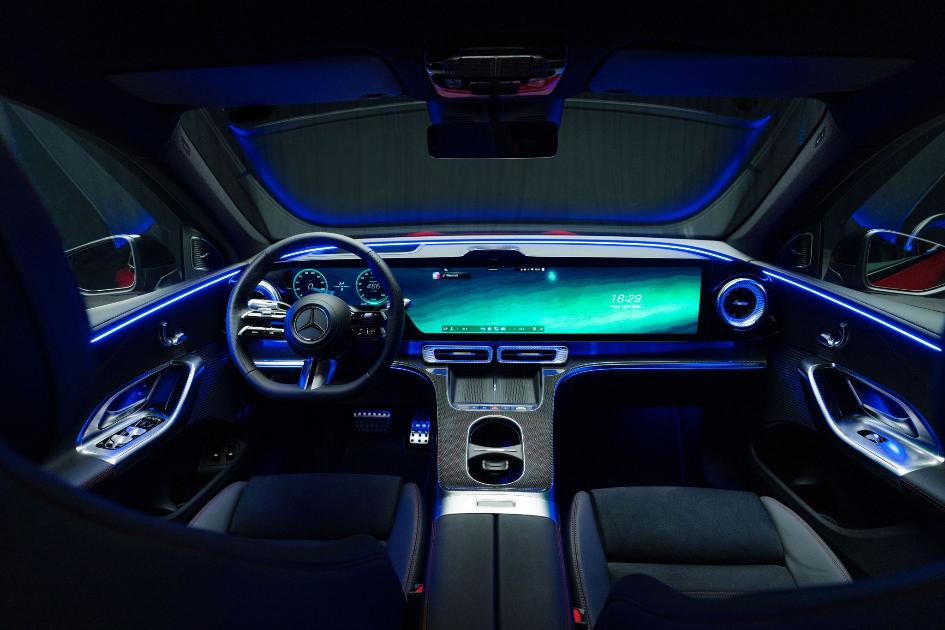
You’re driving at 130 kmh on the highway…and you have to swipe through menus just to change the volume. Moments like these show why car controls need to be more than just touch and gestures. Mercedes-Benz Chief Software Officer Magnus Östberg says his company has collected and analyzed data showing that physical buttons are better.
Specifically: they are safer and more intuitive to use, because they can be operated by the driver’s muscle memory, and less distraction means more safety. The Mercedes findings replicate those of that Swedish study a few years ago.
The future of vehicle operation is about striking the right balance between digital flexibility and physical haptics. Mercedes-Benz will begin to integrate more physical controls into their digitally focused cabins. This starts with the new GLC and CLA Shooting Brake EVs, which both get a host of rockers, rollers and buttons on a new kind of steering wheel.
This wheel will be the standard for Mercedes models going forward, and the plan is also to fit it to all cars already on sale, starting later this year with the recently launched CLA sedan. This, Östberg said, is the easiest and most efficient way of adding physical controls to cars already on offer while still keeping Mercedes’ digital-first cabins.
Speaking to Autocar at the IAA, he explained: “You can see a difference if you move from the CLA [sedan], which has a touchscreen and fewer hard buttons, to the [new] GLC, where we put back the rollers and buttons, because we see in the data that the rollers and these physical buttons are very important for certain age groups and certain populations.
“So having that balance between physical buttons and the touch is extremely important for us. We’re completely data-driven, seeing that what is actually something that is used high-frequency, the data shows us the physical buttons are better, and that’s why we put them back in.”
That data has come from software-defined vehicles: the CLA is Mercedes’ first SDV and the incoming GLC the second.
As well as being easier to tweak (as software can be updated OTA rather than needing to drag buyers into garages), SDVs also give car makers full access to drivers’ data and usage. “This is so important,” said Östberg, as it means decisions, such as bringing back some physical controls, can be data-driven.
Due to that data, he hinted that other wheel designs could be used depending on the market. For example, while Europeans like buttons, Asian drivers prefer more touchscreen and voice controls.


