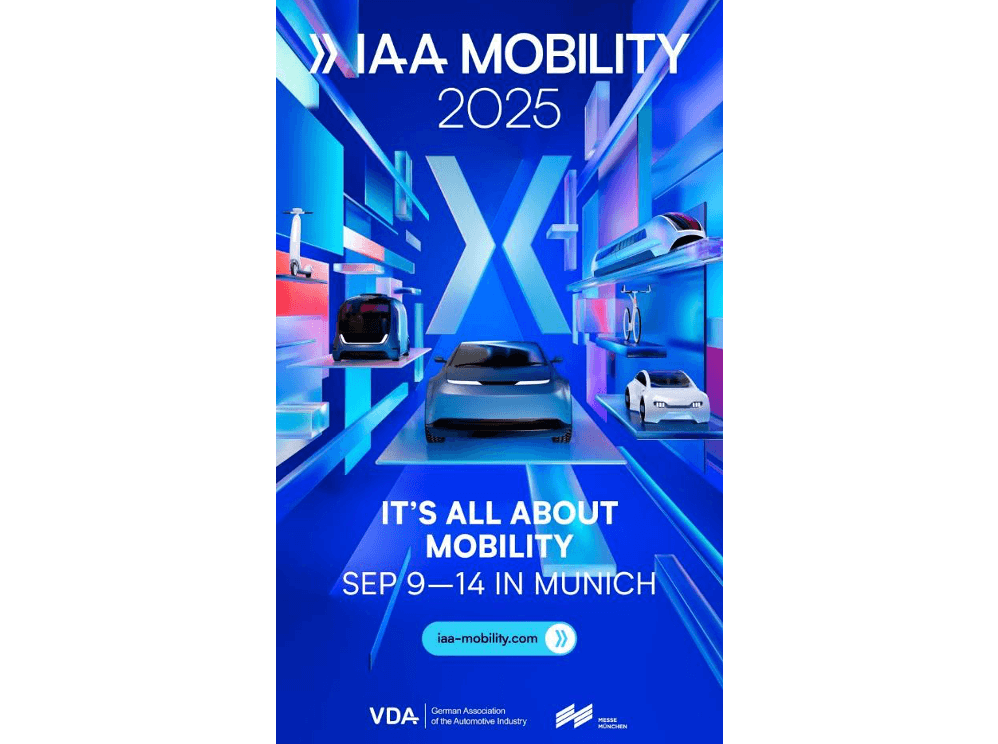
The IAA in Munich highlighted numerous interior innovations shaping the future of mobility: AI, smart cockpits, pillar-to-pillar displays with AR HUD, ADAS & DMS, signature lighting, seating comfort & sustainable materials, and enhanced interior ambiance, all this to enhance Interior User Experience, common red thread of all concepts and innovations presented there!
The German Premium 3 (Audi, BMW, Mercedes) were there with a very significant presence both in the Messe and in-town, displaying production cars and concepts. Nearly half of the automaker exhibitors were Chinese: BYD, Xpeng, Deepal & Avatr (Changan), Aito (Seres), Leapmotor, Aion (GAC), Forthing (Dongfeng), intensifying competition and signalling ambitions to establish R&D centers, design studios, and assembly lines in Europe.
Attendance was strong on both sides, people and exhibitors. A good sign for the industry and the future of auto shows!
We noticed a great deal of dynamism, with exhibitors striving for differentiation through brand identity, interior philosophies, and manufacturing strategies.
Cockpits & Displays
Cockpits are increasingly defined by wide or immersive displays. BMW showcased their new panoramic iDrive.

The Mercedes 39.1″ HyperScreen spans the entire length of the new GLC’s dashboard.

Hyundai Mobis and Zeiss revealed their holographic windshield display.

VW, Audi, BYD, Xpeng, and Huawei Aito presented large curved or multi-screen dashboards with advanced infotainment.
Passenger displays should remain invisible to the driver to avoid distraction.
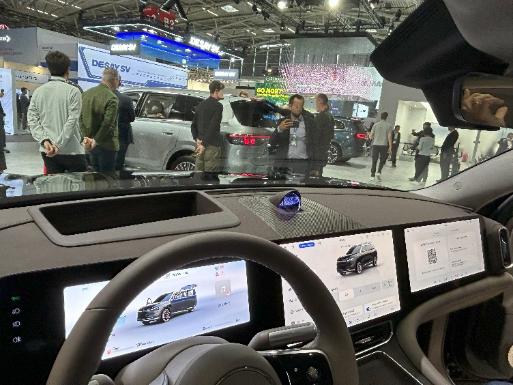
Continental’s Aumovio mirrorless 3D HUD reduces space needs behind the dashboard, increasing design flexibility.

Valeo’s Panovision is a panoramic HUD, which guarantees drivers keep their eyes on the road.

Seating
In Europe, the focus traditionally lies on the driver’s seat, as the average vehicle occupancy rate is just 1.2.
Chinese automakers highlight second-row comfort, showcasing features like the zero-gravity position found in several luxury vehicles. Magna presented adaptable rail solutions already implemented in five vehicles.
Other examples: Dongfeng Forthing V9, GAC MPV E9, Huawei Aito 7 & 9
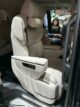
Seats are becoming more individualized, often equipped with personal devices for enhanced comfort.

Driving Comfort & Energy Management
Energy efficiency remains a core challenge in EVs, particularly with heating in winter. Hyundai Motor Group, with supplier Teraon (SK Group), presented Radian thermal management technology which can reduce energy use by 25 per cent. It targets driver-only scenarios to optimize comfort without unnecessary energy loss.
DVN Partner A2Mac1 introduced their Energy Management Strategy tool, which benchmarks thermal systems, including cabin heating and cooling, helping OEMs better understand competitors’ solutions and optimize their own.


Interior Lighting
Interior lighting took center stage as a key element of the in-cabin experience.
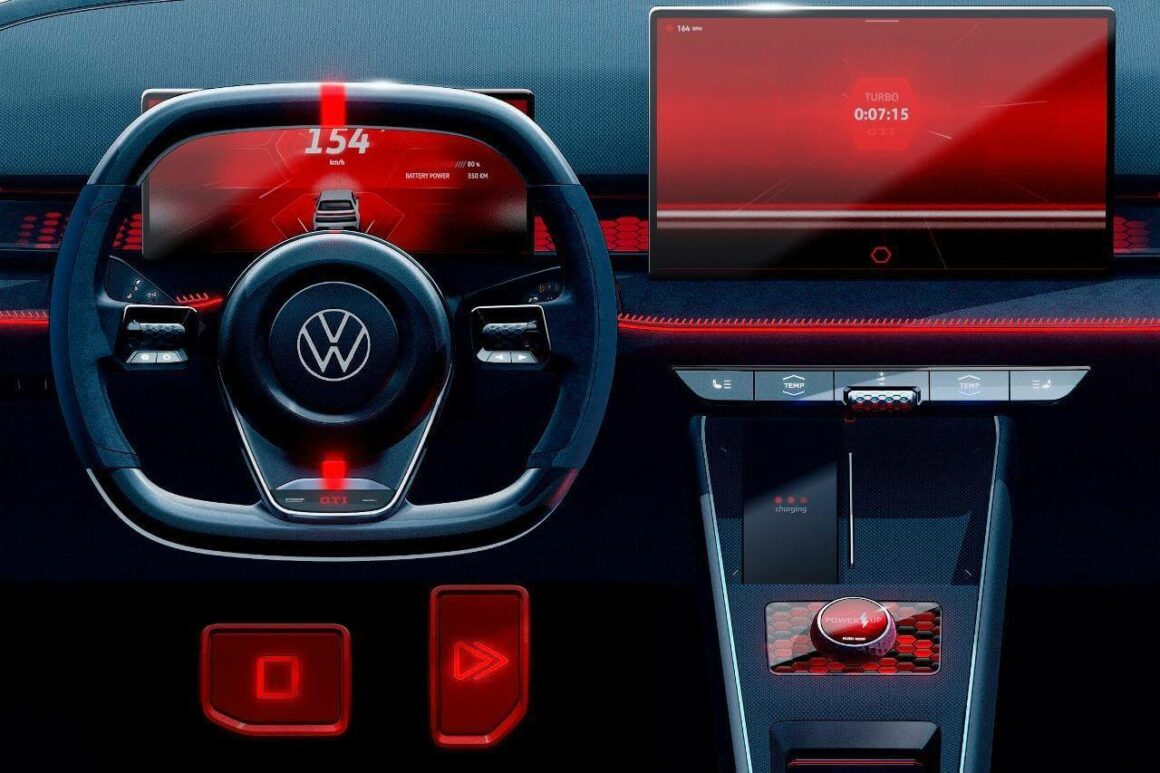
Volkswagen presented interiors with background lighting designed to create a lounge-like atmosphere, emphasizing comfort and a premium feel.
Hyundai’s Concept Three featured ‘Parametric Pixel’ lights both inside and outside, integrating lighting with the car’s design language. The interior lighting is coordinated with exterior elements, such as anodized steel bodywork and lemon-tinted glass, to create a cohesive aesthetic experience
Valeo is leveraging the vehicle’s system capabilities for a more intelligent interior experience.
Sustainable Materials
Sekisui introduced Aurorade, a recyclable nanomaterial allowing light transparency to enrich the cabin ambiance.

Mercedes unveiled a fully vegan-certified interior, including seats—free from animal derivatives or testing. Magna presented their melt-recyclable base pad and trim assembly, made from the equivalent of 253 plastic bottles and offering a fully sustainable, easy-to-recycle solution without compromising comfort, durability, or performance.
Flying Mobility?
Xpeng and GAC introduced electric flying cars: the Land Aircraft Carrier and AirCab Govy. Both are two-seat aircraft designed for urban mobility and rescue, with mass production planned.


Summary:
Interiors are becoming the true brand differentiator, consumer-focused, driven by user experience enhancement, digitalization and sustainability. Automobile is increasingly set as a third living space. Cockpits are dominated by immersive screens, head-up displays, and AI-based interfaces. UX on HMI is increasingly important for the brand and the users. Seating is evolving toward well-being and personalization, with embedded sensors for comfort and safety. Interior lighting is everywhere, going beyond decoration to communication and safety. Materials are shifting toward eco-friendly and vegan solutions.


