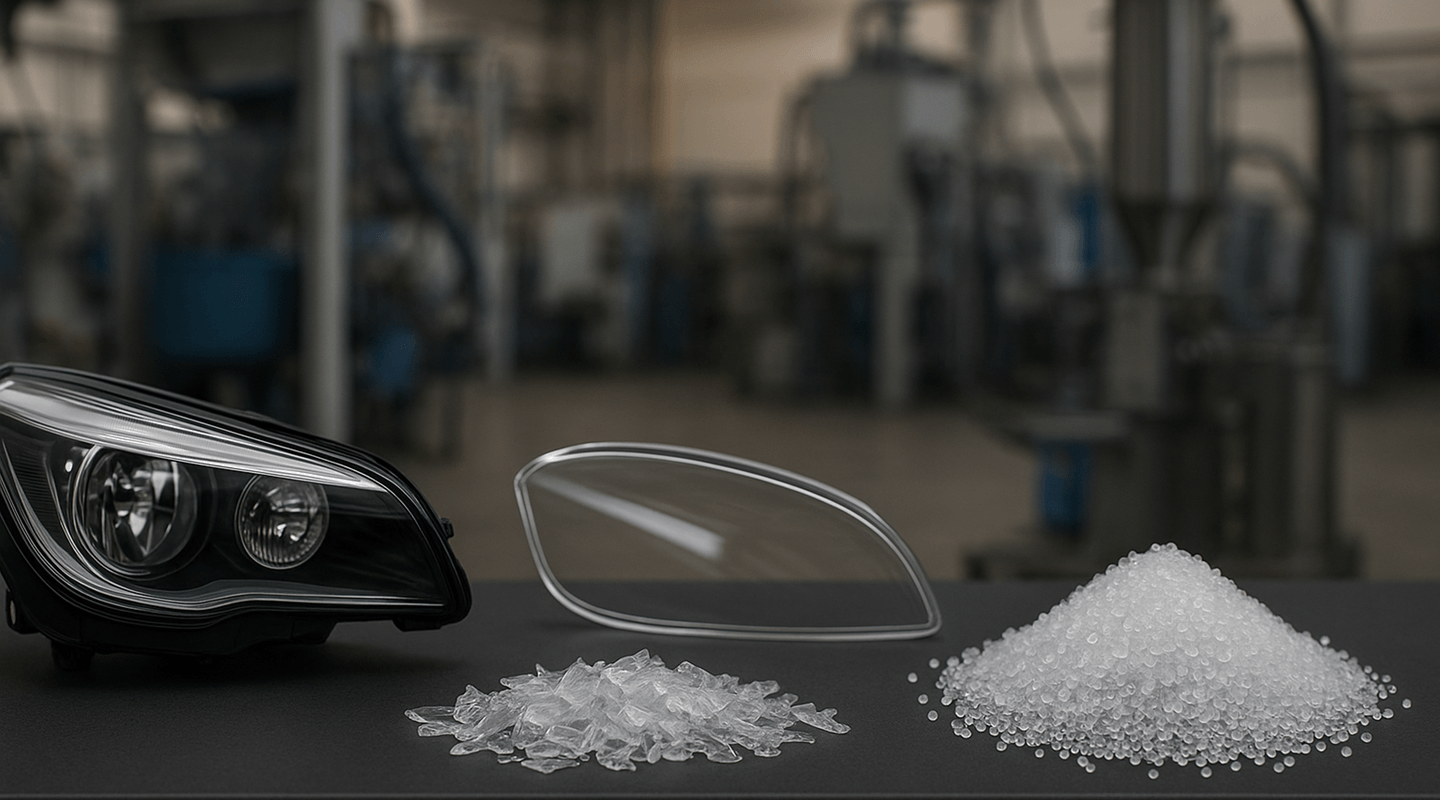
Covestro have launched new recycled polycarbonates made from old headlamps, and it’s won the supplier first place in the PolyFormNEXT Products of the Year 2026 reader poll.
The recycled polycarbonates are a further step towards a circular economy in the automotive sector. The material was developed in a joint program launched by the German GIZ (Gesellschaft für Internationale Zusammenarbeit), with Volkswagen and Nio as main partners. The new materials are TÜV Rheinland-certified. They contain 50-per-cent recycled content, and are already commercially available for new automotive applications. Volkswagen and Nio are testing the material for possible use in future vehicle designs.
By offering high-quality recycled materials from old headlights, Covestro aims to help its customers meet increasingly specific and stringent requirements while promoting the circular economy in the automotive sector.
As part of this program, Covestro are working with partners such as Chinese recycler Ausell and other automotive manufacturers to create closed-loop recycling paths for high-quality plastics from old vehicles. The program promotes recycling processes, and builds strong supply chains for high-quality recycled materials from old cars. Covestro and their partners along the value chain have developed practical solutions to collect old headlights and process them into high-quality recycled materials, which in turn are suitable for various automotive applications.
The new post-consumer recycled (PCR) polycarbonates come as the automotive industry, one of the world’s most resource-intensive ones, is faced with increasingly stringent rules and regulations. The EU’s End-of-Life Vehicle Directive with its requirements on recycling percentages, China’s Extended Producer Responsibility (EPR) program, and generally increasing sustainability requirements worldwide make it necessary for car manufacturers to look for sustainable material solutions.
The innovative polycarbonates meet high performance standards for demanding automotive applications. They offer excellent surface quality and meet stringent air quality requirements for vehicle interiors. This combination of sustainable recycled content and high performance enables automotive manufacturers to meet both regulatory requirements and their own environmental targets without compromising product quality.


