CES 2026 reinforced how mobility innovation now centers on digital interior experiences. The automotive presence continued the SDV (software-defined vehicle) trajectory first strongly signaled in 2024 with software, AI, advanced displays, and integrated sensing. Here’s a summary of the exhibits and their implications.
Interiors are intelligence hubs.
The cockpit is no longer a collection of screens, but an AI-powered, vehicle-wide interface that senses context, personalizes experiences, and integrates productivity, entertainment, and safety.
UX defines brand.
With platforms like Android Automotive, AI assistants, and multi-display ecosystems, UX is becoming an OEM differentiator and core brand touchpoint – no longer just an aspect of the infotainment system.
CMF is evolving into display and interaction finishes.
Traditional interior finishing is converging with interactive display technology. Materials now include dynamic display surfaces, holographic projections, and adaptive interfaces.
Comfort is cognitive and contextual.
Comfort isn’t just a matter of seats and temperature control anymore. It’s adaptive, intelligent, and proactive systems that anticipate needs, enhance wellness, and reduce cognitive load.
CMF trends were salient on the backdrop of broader cockpit and interface innovations. For example: advanced display integration as a surface material.
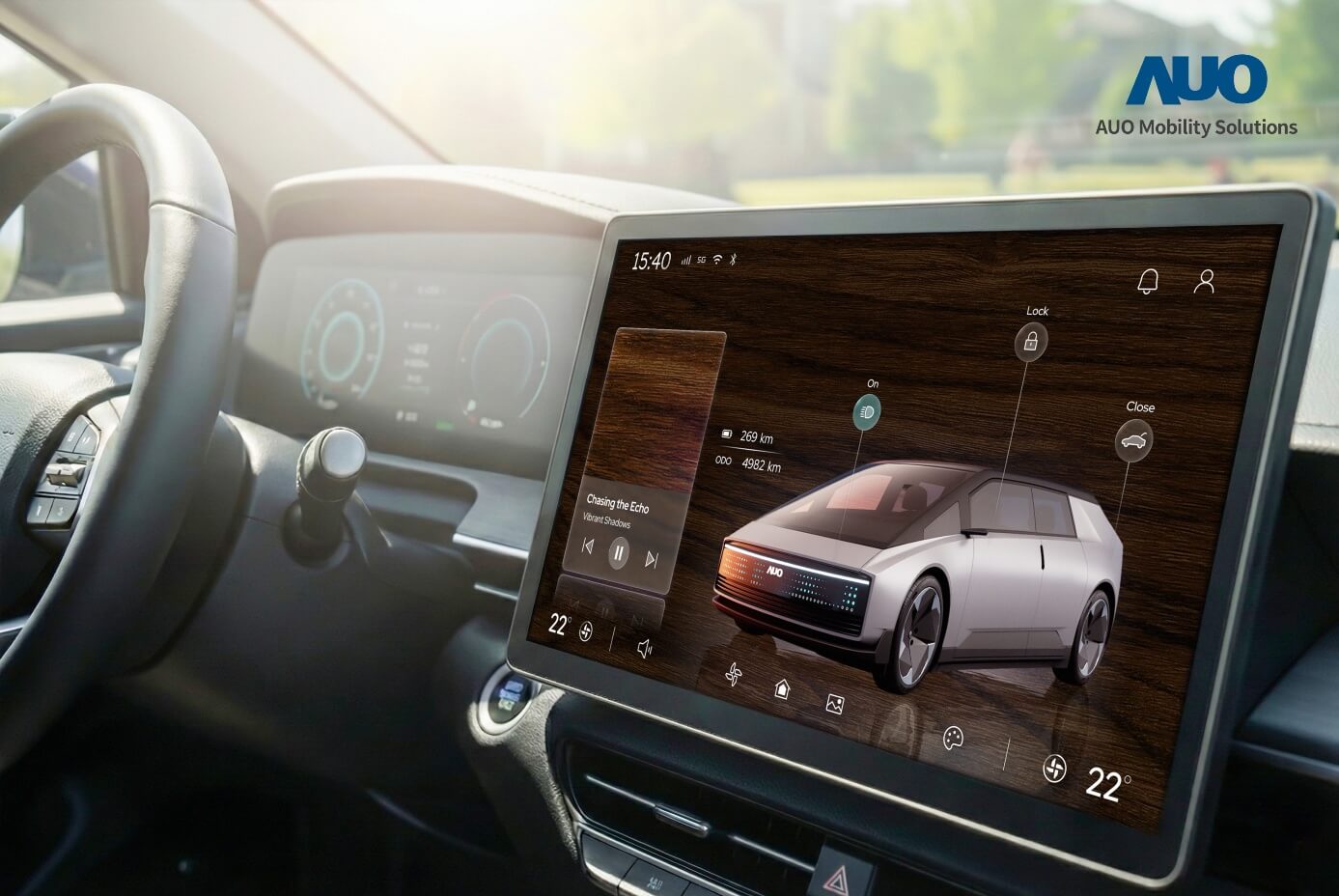
AUO Mobility Solutions showcased advanced HMI displays and microLED integration. Rather than separate screens mounted within interiors, AUO’s technologies emphasize seamless surfaces that blur the boundaries between glass, display area, and finish an emerging aspect of interior CMF.
LG won attention for transparent OLED and curved windshield displays that project information directly onto large, otherwise ‘material’ surfaces.
Holographic and other advanced windshield displays were well-represented at the show.

Hyundai Mobis’ M.VICS 7.0 cockpit platform won a CES Innovation Award for its holographic windshield display, which projects essential data without separate screens, previewing future interior finishes where information floats above or within materials rather than on discrete panels.
Several major themes emerged around seating.
Clearly there’s a leap in full-cabin in-cabin monitoring beyond driver-only stereotyping to AI-based occupant characterization including posture, behavior, and state recognition that could soon feed adaptive seating control systems. Advanced systems demonstrated by various companies showed how cabins can learn and respond to occupant preferences (posture, comfort, relaxation mode, etc), hinting at future seats that actively adapt to occupants in real time.
Although specific seating mechanisms weren’t the primary show focus, integrated UX and comfort platforms from suppliers like Bosch, Visteon, and LG explicitly mentioned how seat position, occupant identity, and real-time feedback will combine with onboard AI to deliver comfort profiles (temperature, posture support, vibration patterns, etc) based on the detected individual.
Cockpit advances were the biggest automotive theme, with cockpit innovation being the core arena where automotive meets consumer tech. Automakers and suppliers demonstrated show-ready and future-ready cockpit platforms that signal what interiors will look and feel like in vehicles from about 2027 on.
Visteon showed a full end-to-end intelligent cockpit portfolio including AI computing platforms, advanced displays, connectivity modules, and electrification elements. They were described as production-ready systems aimed at immediate OEM uptake.

LG’s Mobility brand showcased its AI Cabin Platform built on the Qualcomm Snapdragon Cockpit Elite, bringing generative AI models (vision-language, language models, and image generation) into real-time vehicle environments. This positions the cockpit as a center for contextual awareness and adaptive assistance, rather than just a place for screens.
Hyundai Mobis’ M.VICS 7.0 platform integrates an expanded large display, AR-HUD, and holographic windshield UI, all designed to move beyond the traditional infotainment screen to connected, context-aware visual experiences.

Android Automotive OS & Sparq OS (P3) had one of the largest in-vehicle OS booths, where they emphasized secure, customizable, brandable cockpits with integrated app ecosystems.

Aumovio (spun off from Continental) demonstrated the Branded Personalized Cockpit with multi-display landscapes, ePaper tech, switchable privacy displays, and invisible camera integration.
Cockpit systems showcased voice, gesture, and visual intelligence. The emerging trend is to combine multimodal input with AI that conducts intent ‘understanding’, proactive assistance, and contextual adaptation. This is the next stage beyond today’s static voice command systems, and automakers are already starting to integrate these ideas into production vehicles – such as BMW’s Alexa+ in-car system demonstrated at CES.
Comfort was positioned not merely as seat padding or climate control but as holistic interior experience design.
AI platforms from Bosch and Visteon included features that manage driver distraction, interior pattern recognition, sensory inputs, and even integration with productivity tools. This is a new interpretation of comfort that blends mental ease, task satisfaction, and environmental cognition.
LG’s AI cabin and other system presentations emphasized adaptive ambient lighting, contextual climate adjustments, and personalized profiles that can shift not only temperature but mood and activity mode (e.g., “relax”, “work”, “travel”) into comfort settings – find more about this in another article in this newsletter.

Some media reports on CES pointed to fun features like health-linked cabin filters or wellness boosters (vitamin-infused air tech, comfort triggers linked to driver state), indicating that exhibitors were exploring comfort beyond thermal metrics.

Full-cabin monitoring systems can detect fatigue, child presence, and druver impairment, feeding information back to seat adjustments, alert systems, and adaptive behavior. They tie safety and comfort together in a single experience stack.
UX was arguably the central thread connecting every other theme at the show. Rather than discrete features, UX exhibits were about contextual, intelligent interaction, seamless personalization, and utility beyond driving function.

Automotive exhibitors at CES used LLMs (large language models), multimodal perception, and advanced voice assistants to ‘know’ users and anticipate their needs, not just react to commands. For example, BMW’s Alexa+ UX in the iX3 used conversation history and context to generate proactive suggestions.
P3’s Android Automotive-based solutions highlighted personalized user profiles, application ecosystems, secure infotainment stacks, and zonal privacy control crucial for differentiating OEM brands with their UX flavor.
Aumovio’s Branded Personalized Cockpit spoke directly to UX differentiation with multi-display personalization and privacy options signal how OEM interior UX will become a brand signature rather than a common commodity.
Solutions from Bosch & Microsoft Azure integrations pointed to automotive UX bridging productivity platforms (e.g., Teams, email, calendar) with safe driving contexts – the idea being to turn vehicles into connected personal spaces that adapt their UX to driver and occupant activity.


