By Hans Joachim Schwabe, DVN Senior Advisor
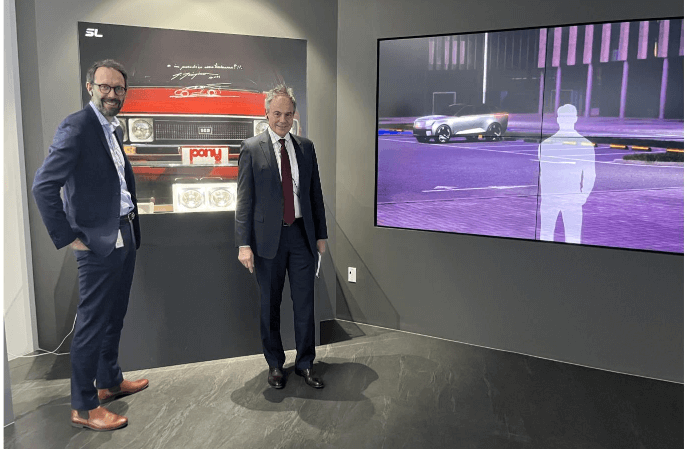
This week, we turn the DVN spotlight to Korea. We are pleased to bring you our visit to SL in Daegu, where we had an extensive and fascinating tour of this major supplier’s R&D facilities and their 21,000-m2 factory, where around 700 employees work – that includes the MLA production lines turning out 3 million units per year.
South Korea has a long history in lighting for vehicles, driven initially by US influence after World War II; GM, for example, have long had production operations in the country.
Today, the Hyundai Kia Motor Group dominates the Korean market, with a 93-per-cent share. They’re also a global top-3 maker since 2022. Their car production for the domestic and export markets has a CAGR of 3.9 per cent over the last four years, adding up to 7.8 million cars. They’ve done some rebalancing and capacity extension recently; for example, production in China has slowed from 1.8 to 0.3 million vehicles, and there have been significant shifts to India, Indonesia, and Vietnam. More than two million vehicles produced in Korea are exported to other countries. Main exporting brands are Hyundai, whose Palisade and Sonata combined with higher shipments of EVs are driving growth, and Kia with their strong EV/SUV-centred portfolio. Next on the list is Renault Korea, with a market share under 5 per cent; their current top seller is the Grand Koleos. Sales of imported brands are shifting from premium German brands to Tesla and BYD, exemplifying the increasing EV uptake – EVs (including BEVs and hybrids) are now at 20 per cent in Korea.
Lighting trends are mainly focused on ADB, road projection, and communication. Hyundai Kia offer unique and customized designs based on MLA technology, and they’re expanding their technological scope into multipixel chip configurations like ams Osram’s 25-kilopixel offering, or Nichia’s 16-kilopixel.
The Korean vehicle lighting tier-1 scene is dominated by SL Corporation (Samlip) and Hyundai-Mobis, while the tier-2 landscape is mainly held by international suppliers. Especially for advanced front lighting, ams Osram and Nichia are strongly present and well respected. Rear and interior lighting is much more diversely supplied, including by local companies like Samsung; Seoul Semiconductor, and coAsia. These suppliers are not as dominant in exterior front lighting, but still very aggressive and committed to address domestic-market needs.
We hope you will get as much information and enjoyment reading our SL report as we got writing it!
Sincerely yours,