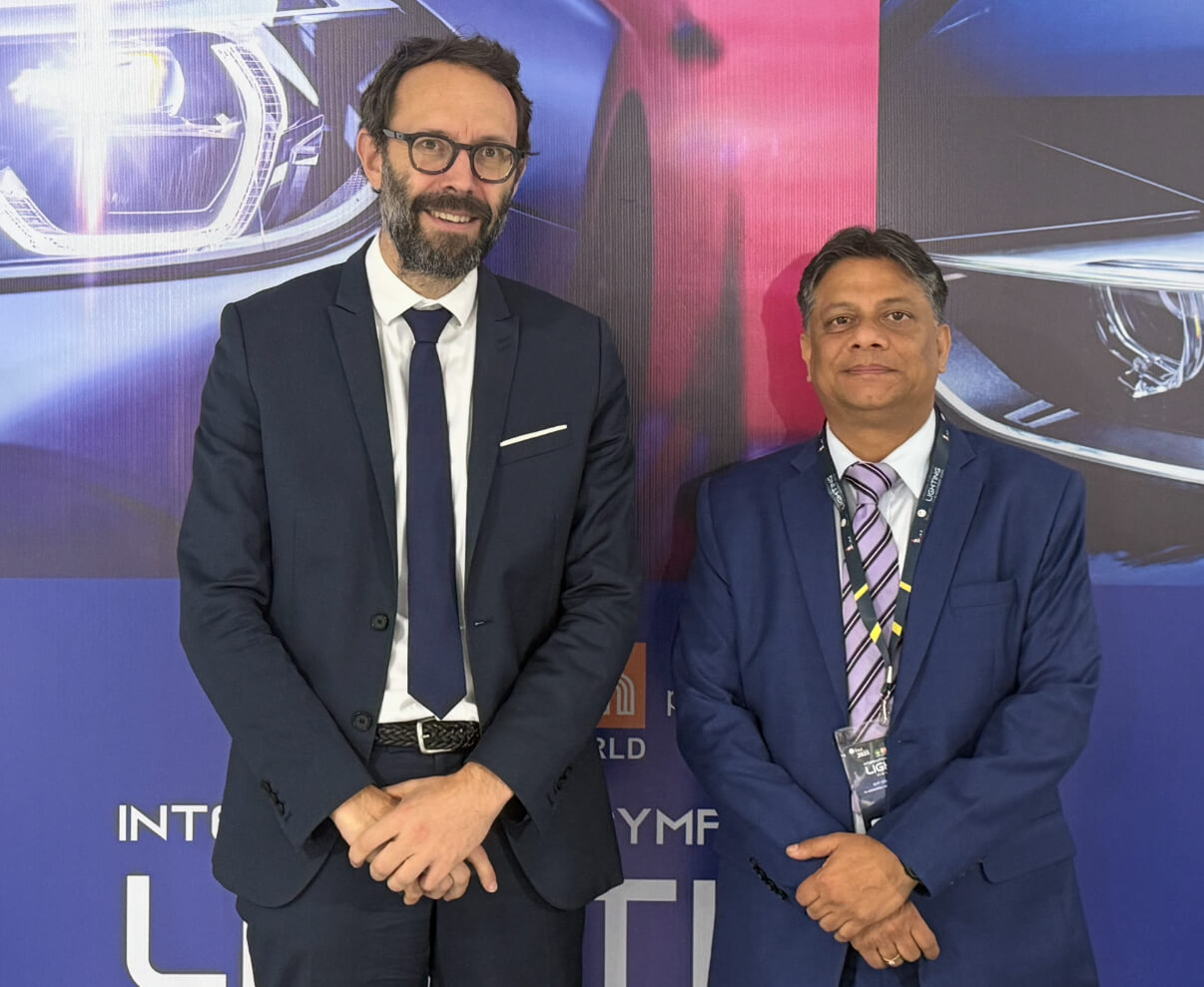
It was a pleasure to meet Joshi Madhusudan during ISOL2025. I took time to ask him a few questions about ICAT, ISOL, and Indian lighting regulation
DVN: Hi Joshi. First of all, congratulations for ISOL2025. It was super interesting for me to attend and see the quality of the presentation, the high number of attendees and the atmosphere in the room. Indian lighting engineers are really working hard to do nice cars with nice lamps. Could you introduce you, your role at ICAT, and give some hints about ISOL2025 (number of attendees, etc… ?)
Joshi: Hello Paul. Thanks for your physical presence at ISOL 2025 here at International Centre for Automotive Technology (ICAT), Centre 2 which happens to be the event venue this time. I really appreciate it. ICAT is the national institution for automotive research, development and homologation. It has a dual role of technical services as well as Type Approval Agency. I am currently heading the technology and business-related activities at ICAT. It was a 22-year-old association with ICAT where I have been serving different roles at different times. ISOL 2025 is the 8th edition of ICAT’s flagship event. This year the overall participation has been excellent, exceeding 1200 numbers (including invitees, speakers and registered delegates. The event is largely attended by OEMs, Light makers, light source manufacturers, suppliers, technology companies, expert consultants both from India and overseas. As you have rightly mentioned, the quality of presentations made during the conference and the overwhelming response of the exhibitors have been the major highlights of ISOL 2025.
DVN: I would like to ask you a few questions, as Indian lighting regulation representative, about automotive lighting regulation in India. My first question is: Daytime running lamp is only optional, rear foglamp also on passenger cars. Can you explain why?
Joshi: The application of DRL and Rear Fog Lamp is particularly important for European weather conditions. In India we have bright and sunny days majority of time in a year. In my opinion, it therefore makes perfect sense to have DRL and Rear Fog Lamp optional. This allows car manufacturers to have fitment of these lamps if they wish do so.
DVN: There is always a time gap between UNECE regulation update and AIS update. That is generating sometimes some difficulties (like UNECE R149-01 with new photometrical requirement for lamps). Can you give us an update about AIS component standards? Have you implemented R148-01 including lit logos, and R149-01 into AIS?
Joshi: I agree there is a time lag in adoption of latest UNECE norms into AIS. However, in general we accept the type test reports (after witnesses) as per the latest European Regulations if the customers require it.
DVN: Can we have lit logo in India from now? I have seen some demo at booth (Honda logo, Mahindra lit logos)?
Joshi: Yes, these are available in some car models now and getting more popular even in 2-wheelers as well.
DVN: During the conference, you did a round table about Glare. What are your views on glare in India? should Automatic high beam activation become a standard (and then we ban manual activation of high beam?
Joshi: Glare is a very sensitive topic for decades. It is becoming more prominent and problematic as the highly efficient as well as bright light sources are used in the headlamps. The increase in number of complaints by the road-users a probably attributed to brighter lights with increased blue content. In my opinion there is no single method available to arrest the problem of glare. Automatic activation of main beam could be a good solution. However, it needs an evaluation for Indian road and driving conditions.
DVN: ADB could be a solution to reduce glare. Suzuki has launched ADB first in India on e-vitara this year. Is it a solution to reduce glare?
Joshi: I hope it helps. I am not sure that ADB alone can solve the problem of glare.
DVN: What are the other topics you are working ON?
Joshi: We are working on multiple topics related to automotive lighting at this point of time. Glare and visibility are of course one of the primary topics of discussion. We are also working towards smoother adoption of ADAS (up to level 2) in the cars in view of Indian use cases. Also, we are strongly working on topics like E-mobility, Cybersecurity and functional safety.
DVN: thank you!


