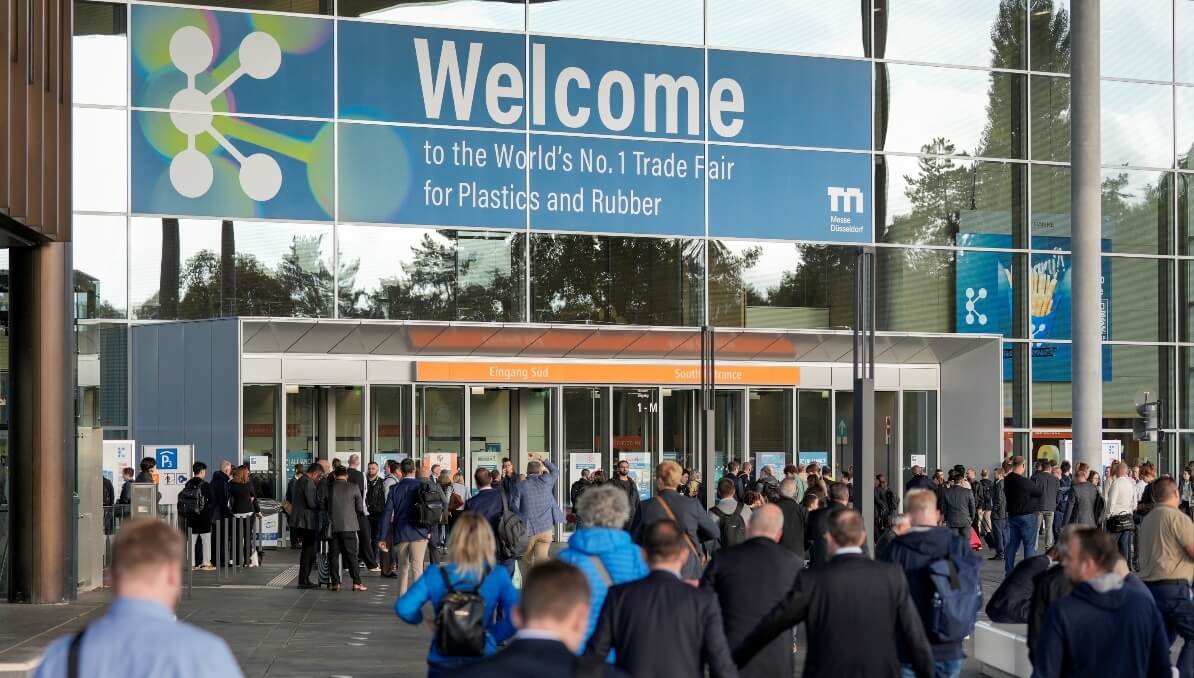
K is the top trade fair for polymers and elastomers – plastics and rubbers – and this year, the show’s motto was The Power of Plastics! Green – Smart – Responsible. Key themes included circular economy, digitalization, and responsibility for people. This is particularly important for the automotive industry, where plastics play a key role in areas such as lightweight construction, efficiency improvement, electromobility, and material innovation.
And so, leading chemical companies presented new products and ideas for how and where they can be applied. And a growing number of startups, many of them developing bio-based and natural fiber materials, showcased potential for the automotive industry to move toward a carbon-neutral future.
Here’s an overview of universities and startups:
Fraunhofer Institute, IMWS
• Project HyWaSand (JEC Awards Winner 2025): the storage compartment cover of a truck driver cabin has been created with thermoforming of thermoplastic sandwich panels (honeycomb structure) and functionalization via injection molding. The lightweight sandwich parts offer advantages including:
- Up to 40 per cent weight saving compared to conventional parts
- Automated serial manufacturing process
- Recyclability by using a thermoplastic composite
- The residual heat of the thermoforming process is used to glue the A-surface to the sandwich, for additional energy savings.

• EcoRudder: thermoplastic sandwich moulding technology for edge-forming of high temperature thermoplastic composite sandwich panels. It’s an automated, flexible technology offering recyclability thanks to the use of thermoplastic composites. It is an expensive process, so there is application potential in the aircraft industry and in luxury automotive parts.
• A matter of fruit: Fraunhofer UMSICHT and designer Verena Brom presented a joint development in which apple pomace from juice production is used to create biodegradable film with leatherlike characteristics.
In a Fraunhofer-funded collaboration, Verana Brom, who initiated the project and co-founded the startup, used her expertise in transforming apple pomace into films, combined with Fraunhofer UMSICHT’s expertise in continuous plastics processing, enabling the concept to be further developed with a view towards industrial scalability.

University of technology Chemnitz
Carbon LabFactory Saxony: research and development of eco-friendly carbon fibers based on renewable materials. Focus on bio-based composites with circular ELV characteristics. Renewable energy sources throughout all process steps: an alternative to energy-intensive traditional carbon fibers with cost reductions to allow the use of carbon fibers in many industries.
Other interesting startups
Caleyda: PHA produced by natural microbes, which is biodegradable and will consumed by microbes at ELV without leaving harmful microplastics behind, with application in a wider range of industries. PHA is a true alternative to fossil-fuel based plastics, and PHA based composites combined with natural fibers can match or exceed the mechanical and thermal properties of conventional plastic for interior trim.

H2 Select: innovative recycling solutions for plastic and fiber-plastic composites. The H2 select network consolidates expertise of (currently) eight German companies and research institutes to develop innovative ways of recycling thermoplastics and fibre-plastic composites based on a combination of chemical and material technologies, including new analysis methods, extrusion technologies and process-integrated sensor technology.

The big companies were out in full force at K, as well:
LG
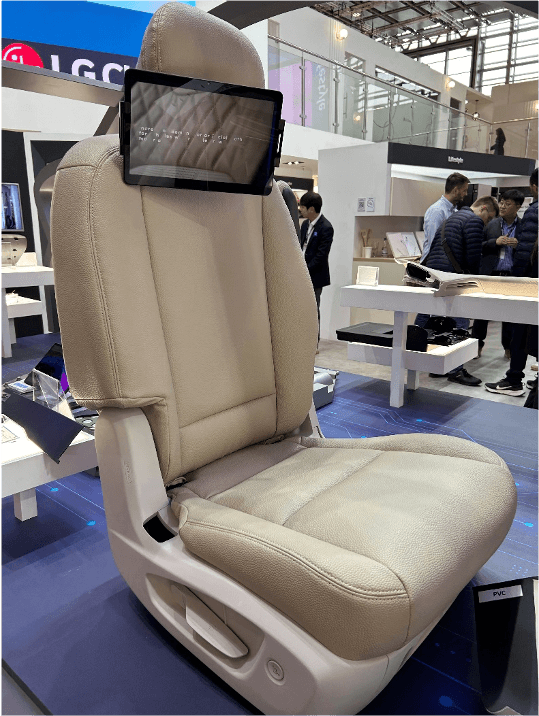
Korea-based LG presented an interesting solution for automotive seat covers: their HRTP4000 is an ultrahigh molecular weight specialty PVC, an eco-friendly, recyclable, affordable high-performance artificial leather. It is TPU-like, but with superior soft touch and feel, better durability and abrasion resistance, and better low-temperature performance.
Another interesting LG material istheir Lupoy ER5006N blend of PCR PC/ABS. It’s a 50-per-cent PCR-based multipurpose material for interior parts, with excellent finish, and carbon reduced by 45 per cent.

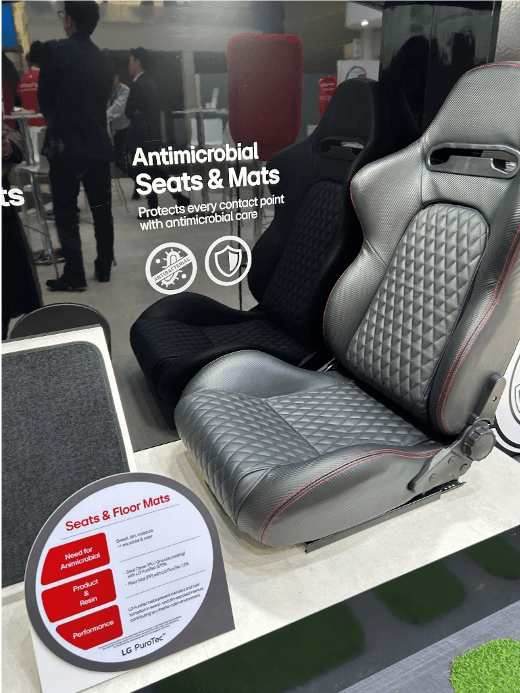
LG also showed their PuroTec SAP, an antimicrobial glass powder applicable in vehicle interiors or seats and floor mats. It helps prevent microbial growth and odor formation in sweat- and dirt-exposed interiors, contributing to a fresher cabin environment.
BASF
BASF presented a breakthrough project developed together with Porsche and Best: chemical recycling for automotive plastic waste. The three companies have successfully completed a pilot project that demonstrates how complex automotive plastic waste from end-of-life vehicles can be chemically recycled into new, high-quality materials for vehicle production.

The focus was on automotive shredder residue (ASR), a difficult-to-recycle mix of plastic, foam, paint, and film. It is typically incinerated, but in this project ASR was combined with biomass and processed through gasification to produce non-fossil synthetic gas. BASF then used the gas to make new polyurethane materials.

Gasification is a type of chemical recycling which breaks down mixed or contaminated waste materials at very high temperatures in a low-oxygen environment. Instead of burning the waste, gasification converts it into a synthetic gas (syngas), a mix of hydrogen and carbon monoxide, which can be used as a raw material to produce new chemicals and plastics.
In this case, the syngas replaced fossil-based feedstock in BASF’s integrated production network. BASF turned the recycled material into polyurethane components for use in the likes of steering wheels and headliners, with the same quality as products made from virgin fossil resources.
This pilot project was done in service to Porsche’s strategy to reduce fossil material use and increase recycled content in their vehicles. It shows that gasification can unlock new recycling pathways for waste streams that mechanical recycling can’t handle, offering a viable, scalable, and sustainable alternative to incineration. BASF highlighted that a mix of recycling technologies — mechanical and chemical — will be necessary to meet recycling goals, and called for supportive regulations to scale such innovations across industries.
Dow
Dow has developed EvoAir POE leather, a polyolefin-based material offering high performance and a range of design, safety and sustainability benefits. It can be produced in light colors and embossed with patterns like a thermoplastic material, and it has good weathering resistance. It is 25 to 40 per cent lighter than PVC leather. It has a smooth, soft finish, excellent low-temperature performance, and improved durability. It offers low VOC emissions, contains no hazardous chemicals like plasticizers and heavy metals, and supports FDA compliance.

Dow calls their InfinAir 3D Loop polymers an innovation in seating material for the vehicles of the future. They’re designed for comfort, designed for 100-per-cent recyclability, have low VOCs/odor and excellent breathability and thermal management. They’re washable, with very low moisture retention. The polyolefin material is produced using a melt extrusion and water cooling process to fuse thermoplastic elastomer filaments into thousands of bonded loops.

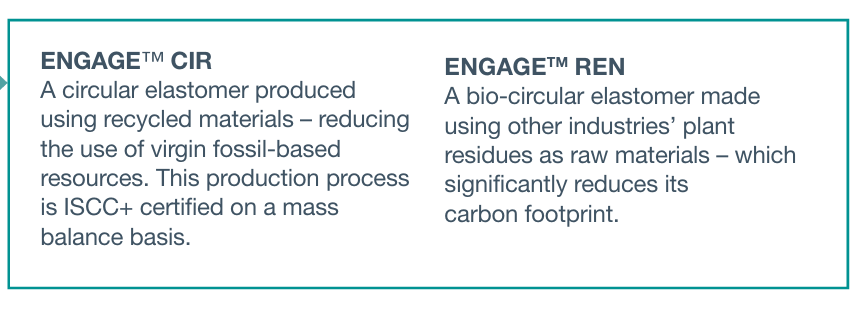
Dow showed TPO with high proportions of recycled content, demonstrating their ability to offer customers circular PP, as well as the option of using a recycled or bio-based elastomer.

All in all, the K show provided a comprehensive overview of how sustainable interior components can be developed starting from raw materials, and how these materials serve as the building blocks of a circular automotive economy.


