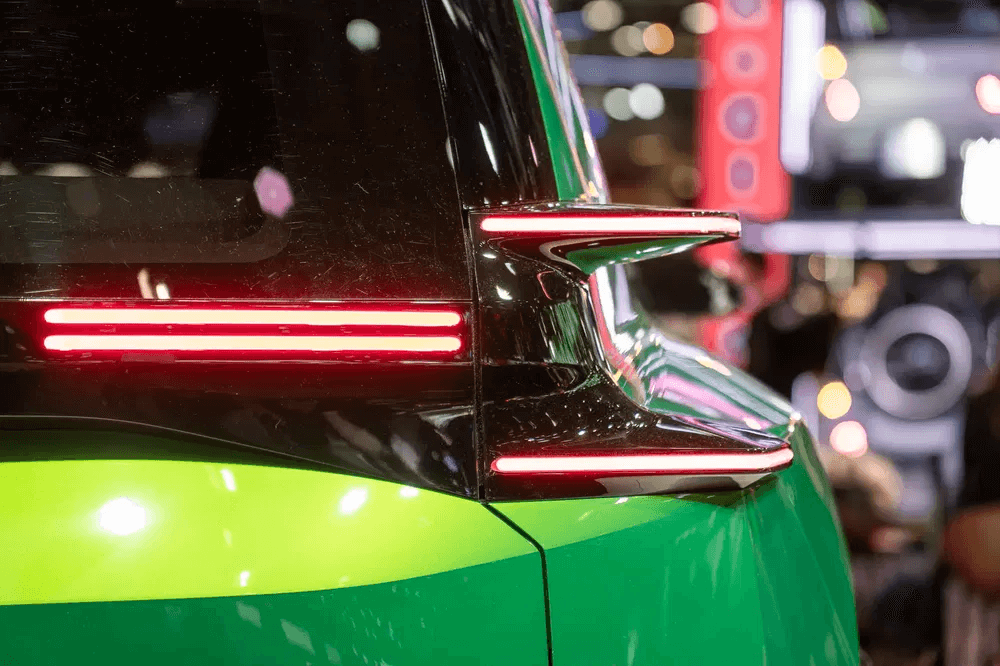
Just before the summer break, I was invited by Citroën’s design team to talk and listen with them about exterior lighting. Everything started last year during Paris auto show when Citroën revealed their C5 Aircross concept with its amazing lamp wings. Later in May, Citroën presented the official cars with a similar lamp concept and I wrote about it (Let’s Dare!).
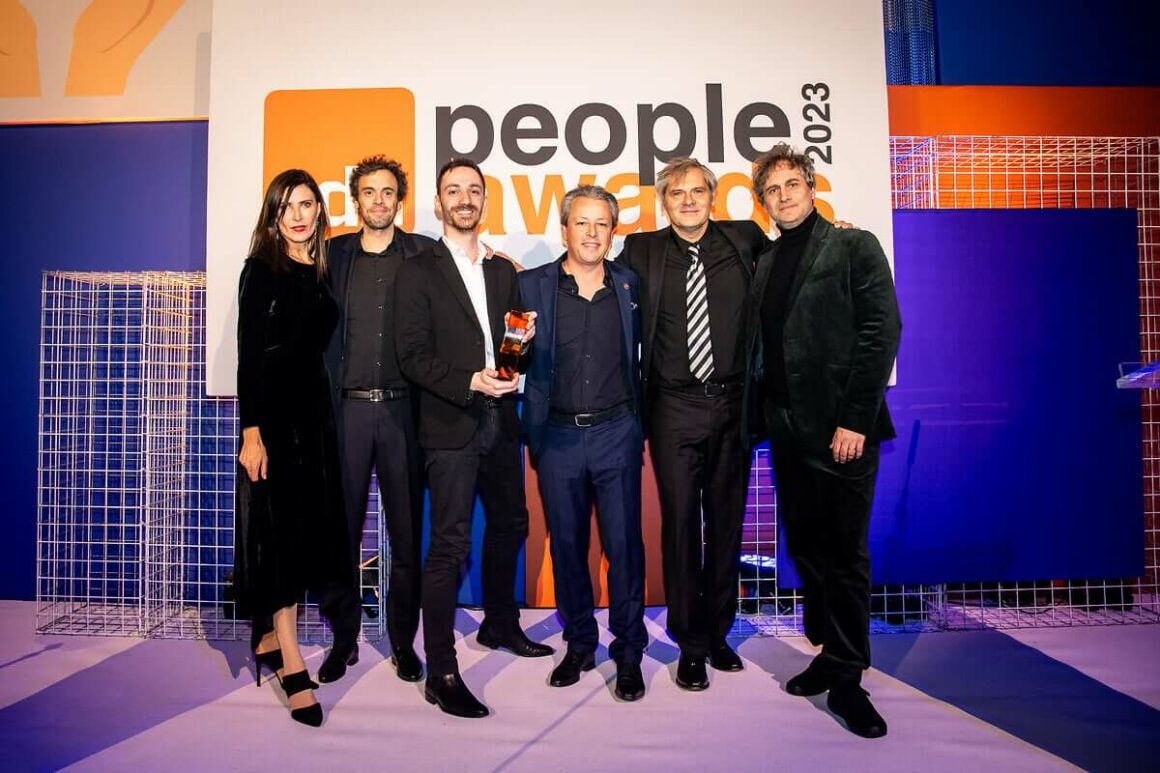
After that, Citroën contacted me to have a closer look at what they are doing, why, and how. This is a great honour for me to be invited to their studio and meet Pierre Leclercq’s team. Just 18 months ago, his team received three CarDesignNews awards, for the Most Sustainable Design Team, the Best Interior Design Team, and the Best Exterior Design Team.
Citroën have always been uniquely creative, from the beginning; founder André Citroën was one of the most creative 20th-century engineers in France – with iconic vehicle like the Traction Avant, 2CV, DS, BX, and CX.

Innovation has always been in Citroën’s DNA, and It was a great pleasure to meet the team and exchange about their latest innovations.

When you start a customer visit, it is challenging to start the discussion. You need to break the ice. This is exactly what Citroën’s Head of Design (since 2018) Pierre Leclercq did with a few words: “Technology is important, and headlamps are the diamonds on the ring”. I immediately knew the discussion would be interesting. This was the first time for me to visit Citroën. During 20 years when I was working at Renault, they were my direct competitors and I always benchmarked their products – their C4 Picasso rear lamp with light guide and later with infinite mirror, their C5 headlamp with DBL and edge light DRL, and more.

According to Leclercq, the Citroën brand has always been seen as innovative (after World War II, the Citroën 2CV was the most innovative vehicle, for example), and that perception provided the fuel to reboot the brand. That’s just what they did some years ago with a variety of vehicles that disrupted the automotive landscape. The E-Mehari, the Cactus, the C3 Pluriel. With this brand, Leclercq says, “You can play with the legacy, you can be brave and develop special vehicle like the Ami (€6k vehicle). You can indeed take risk with the Citroën brand, you can disrupt”.
From that perspective, the design philosophy can be summarized in simple words: “simplicity, round shape and contrast (mix of round shape and square shape, mix of colours)”.
The Oli, presented in 2022, showcased this new design direction for Citroën.

The design team prioritized functionality in creating a versatile vehicle with ample space inside, and which adapts to various roles – from a family limo to an urban explorer or a work companion. The Oli’s design emphasizes low weight, high strength, and durability. It has a flat hood, roof, and rear ‘pickup bed’ panels. The vertical windscreen minimizes glass usage, reducing weight and sun exposure. Identical and lightweight front doors enhance efficiency. And the Oli introduced the new Citroën badge, reminiscent of the 1919 logo, with distinctive front and rear lighting modules that were to gradually become part of future production models. The design seamlessly integrates form and function, offering adaptability and efficiency across diverse scenarios.
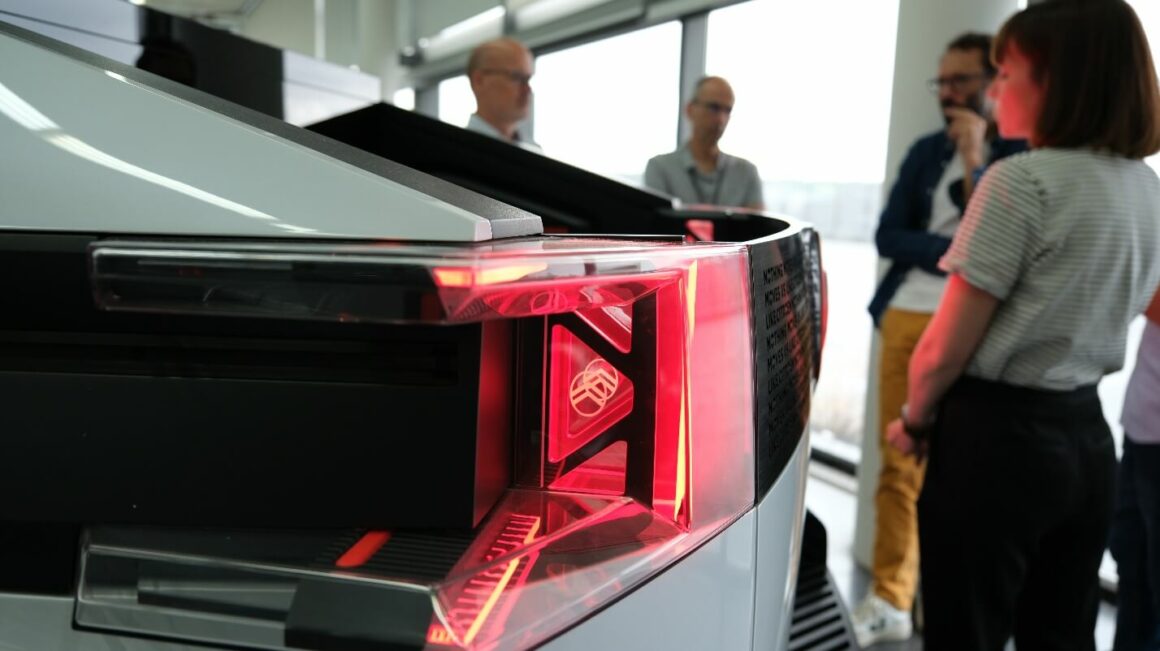
The lamp design is contrast-forward, showing straight lines versus round shapes. The idea for the Oli lamp design and the new Citroën lamp philosophy is to make the front and rear lamps and light signatures unique and recognizable: horizontal and vertical lines looking as though cut with a knife, representing three points – a nod to the triangle signature featured in the previous models. This new signature is on all new Citroën vehicles ever since the Oli: the C3, C3 Aircross, C4, and new C5 Aircross.

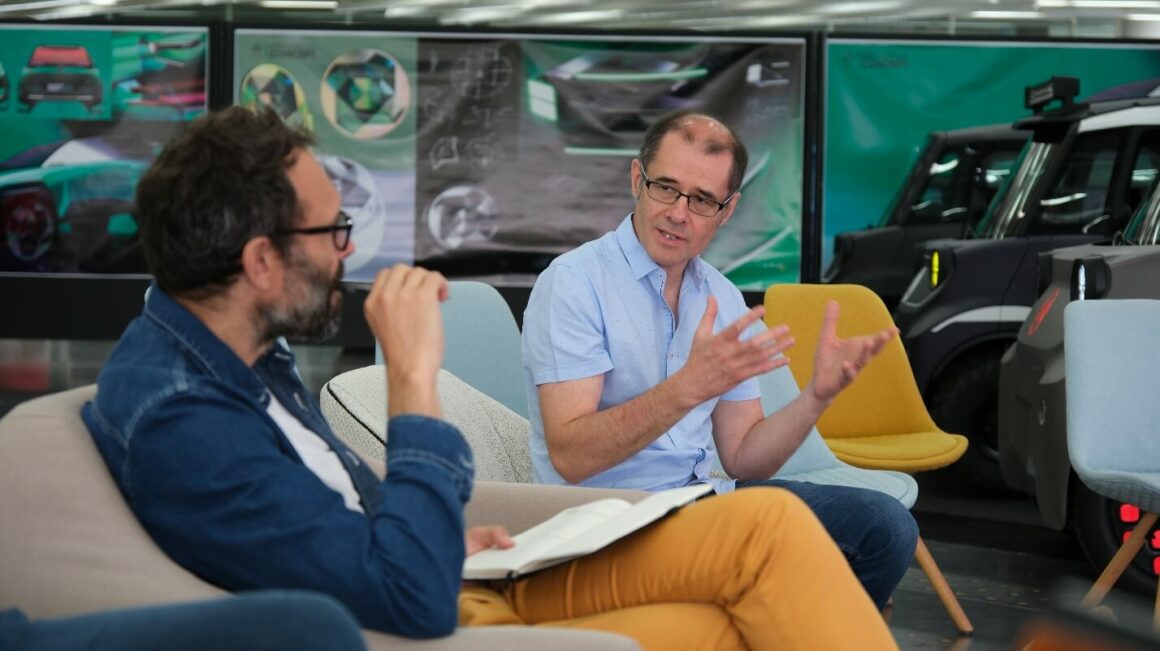
To know more about lamp details, we sat down with the lighting team: Citroën Lighting Designer Richard Brevet, Stellantis Europe Design Team Leader Philippe Poilane, Citroën C5 Design Project Leader (and former Citroën Lighting Designer) Kate Mouilleron, and Advanced Lighting R&D Leader Mathieu Collot.
From the Oli to the C5 Aircross, Citroën’s lighting team have realized diverse interpretations of the lamp shape including vertical and horizontal lines. The initial rectangle shape has evolved into an ingot shape with super homogeneous aspect, which required a lot of virtual and physical loops to perfect the final product.


Citroën developed the lighting setup with Valeo, using their EcoLED with reflector as standard lamps, and thin lens matrix beam (15mm module height) for optional lamps.

There’s also a distinct, unique rear signature, with the lamp shapes and lit signature mixing vertical and horizontal lines – including the intriguing blade wings.

After several concepts and a great deal of research, they started to work on different outer lens shapes for the C3, C4, and C5.

The lamps on the production C5 Aircross are closely faithful to the concept they presented at the Paris auto show, and it’s amazing how Citroën kept these unique wings on the final production car.

Looking at details, such a lamp shape is complex. Welding (hot plate) is not an easy task. Hiding the welding rib between lamp and body in white is tricky, and so is assembly of such a lamp on the body. Same for lamp geometry, gap and flush management. A 3+1 K outer lens was needed for the trunk lamp which include the white Citroën logo and optics on the B-surface (for homogeneity). That makes the metre-long lens tool super complex (black, crystal, red + white logo). Great job by Marelli Automotive Lighting!

With this lamp design, together with other thoughtful features, the aerodynamic improvement was worth around 30 kilometres for EV range – a great achievement!
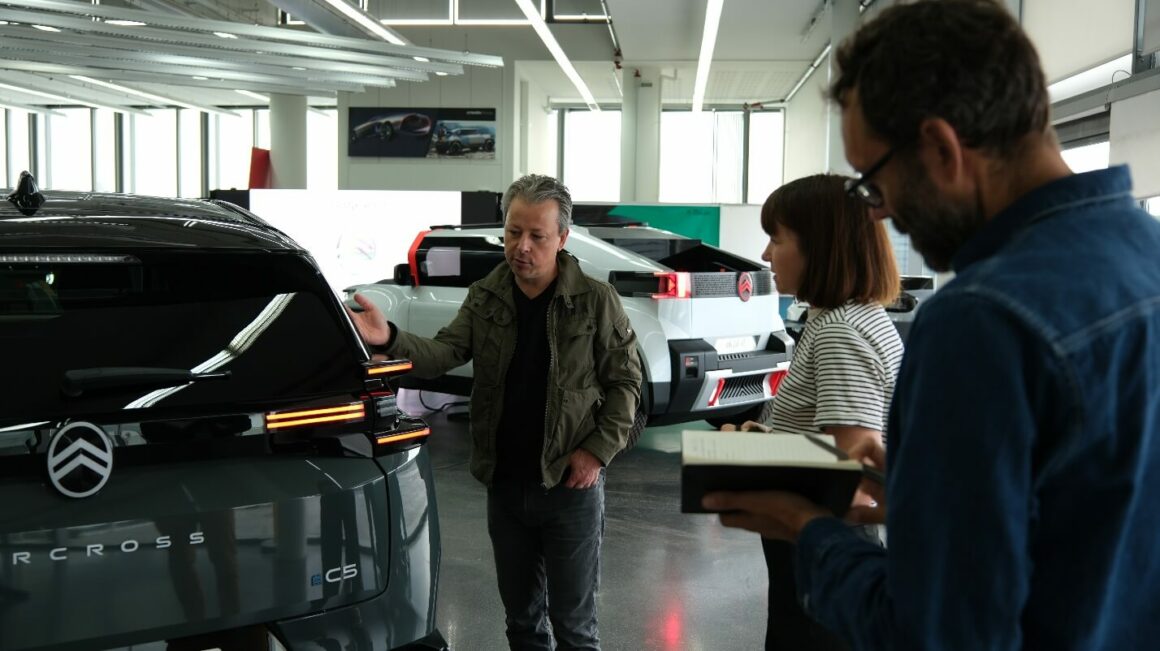
My next question was about logo strategy. In Stellantis group, we have seen lit logos on cars from DS, Opel, Dodge, and just now Peugeot (on the 308 facelift just revealed). What about Citroën? Pierre was clear on the matter: this is complex, regulation is complex (the notorious 75-mm rule in Europe to extend the position lamp function from the exterior to the centre of the car). This complexity means cost. They tried it, but they stopped, opting to keep the lamps on the sides, at the extreme corner. This way, Leclercq says, “We can have a logo in different colours (white, red, grey, etc)”.

After having analysed the exterior design, it was time to enter the car and sit down. Interior lighting has been taking on a bigger role lately for wellbeing, and Pierre calls it “super important”. His team used only indirect light to underline contours.

For this purpose, very early in development you need to define where you want to put light, and design the right sections for that on the dashboard and interior trim like the door panels.

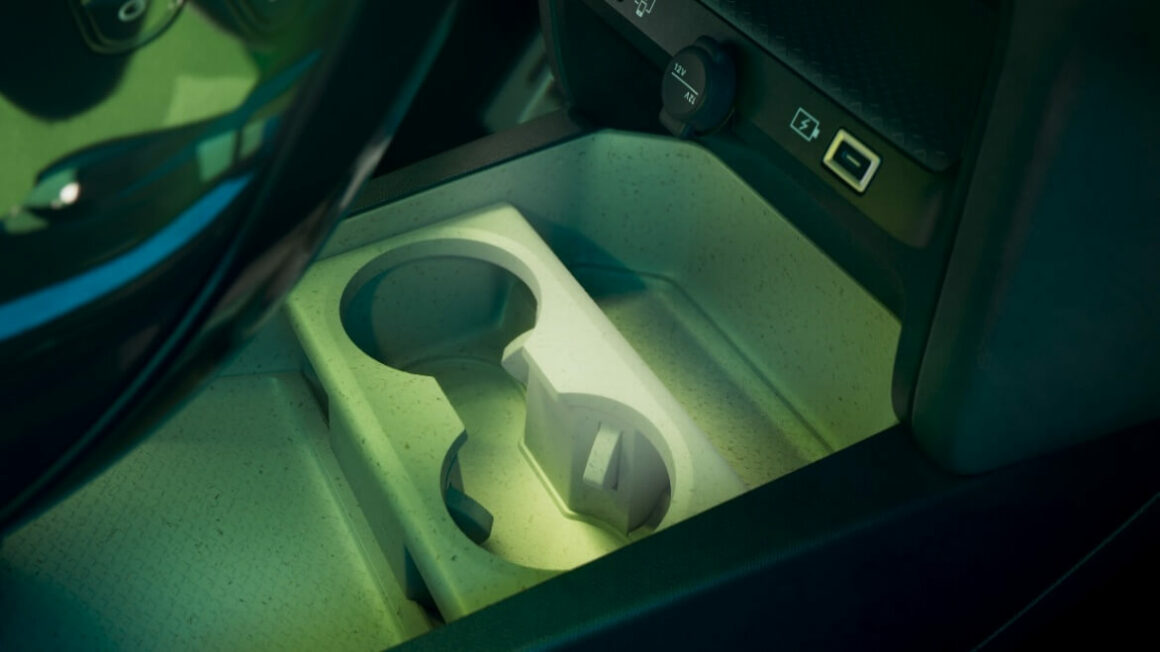
Warm colour is important, too, to make the interior of the car feel like home or in a restaurant. Citroën’s offer is eight atmospheres with eight different colours. Even for entry versions, interior lighting gets a lot of attention, thought, and care at Citroën. Interior lighting also can emphasize material specification of feature like the bottle support done with recycled material.
To succeed in innovation, pre-development and good execution, I think Citroën’s lighting team, including Design and R&D, are using a very good recipe. Advanced Lighting R&D work closely with Design, in same room. The lighting design team are working not only on vehicles for mass production, but are also involved in concept and show car lamp design. The same team designed lamps for the Oli, C5 Aircross concept, and the production C5 aircross. They can test concept from the beginning and include feasibility in the first concept.
Thank you to Pierre, Mathieu, Richard and Kate for sharing your time and thoughts!

To read more, you need to log in as a DVN Lighting member.
Not a DVN member yet? Contact us now to join the DVN Community!


