By Paul-Henri Matha
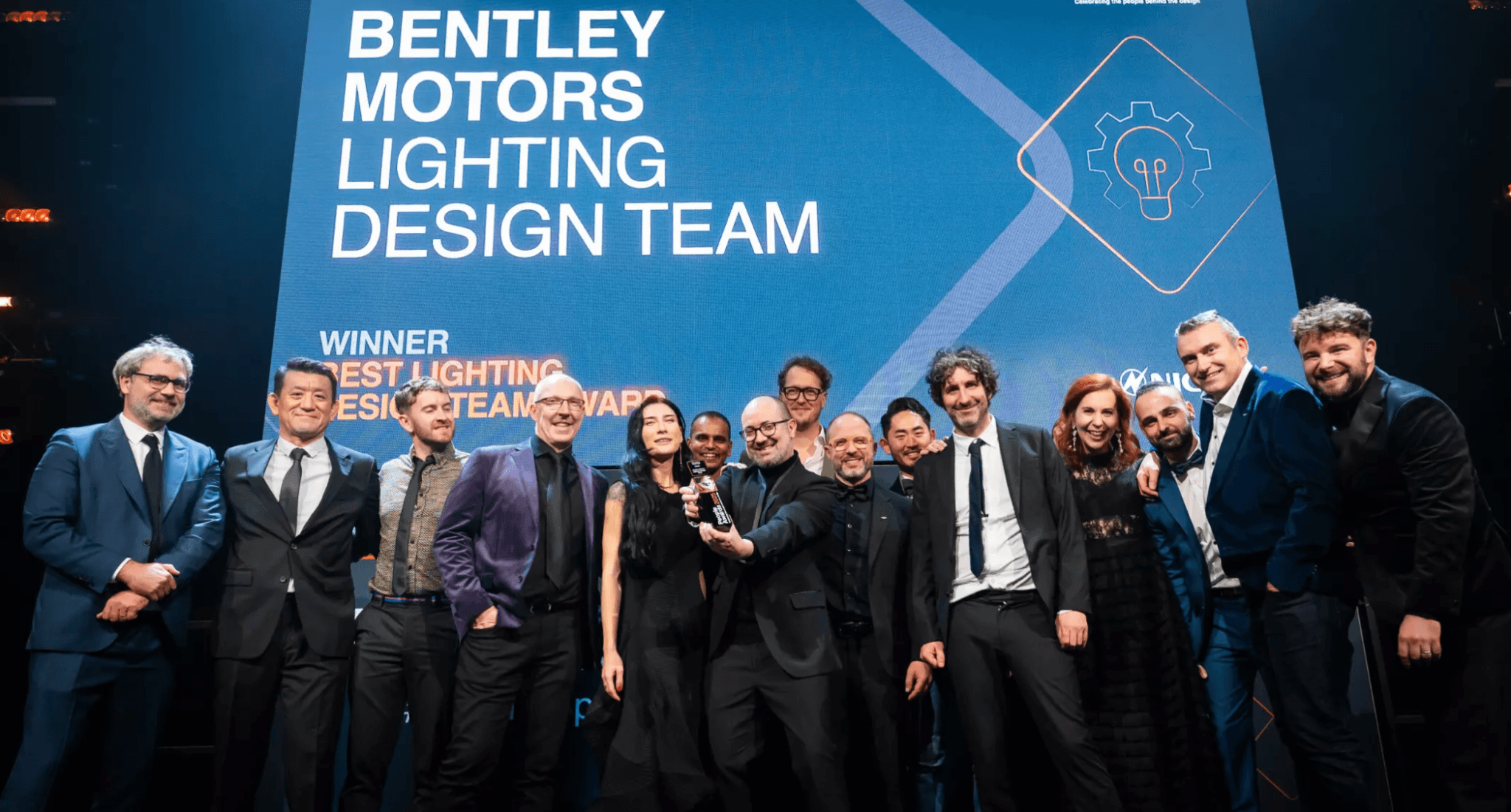
Last December, Bentley won the prestigious Best Lighting Design Team award from Car Design News. DVN were there, and we wanted to know more about Bentley design: who they are, what they do, and what they’ve done on their latest EXP 15 concept car, presented last year.
I met the UX Design team, including Head of UX and Design Operations T. Jon Mayer and Lead Lighting Designer Naomi Saka, and visited Bentley’s new design studio, opened in July 2025.
The building itself carries weight. Dating back to 1919, to the origins of Bentley Motors, it has long been part of the brand’s story, hosting figures such as Her Late Majesty Queen Elizabeth II. Today, it has been carefully expanded and reworked.
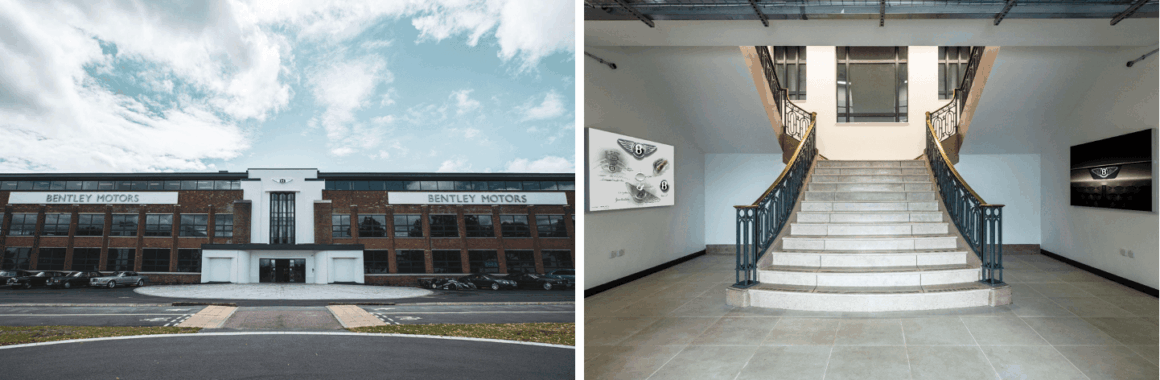
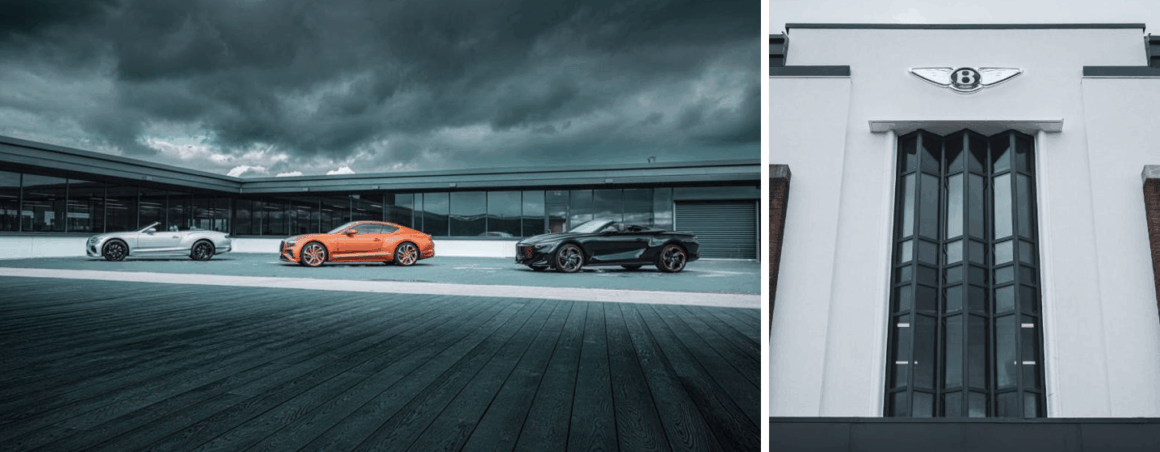
The studio is now nearly twice its original size, with a new third floor added to the existing structure. Rather than rebuilding from scratch, Bentley chose to evolve what was already there, aligning with their broader sustainability ambitions and carbon-neutral site. At the top of the building is an impressive rooftop which can showcase vehicle demonstrations.
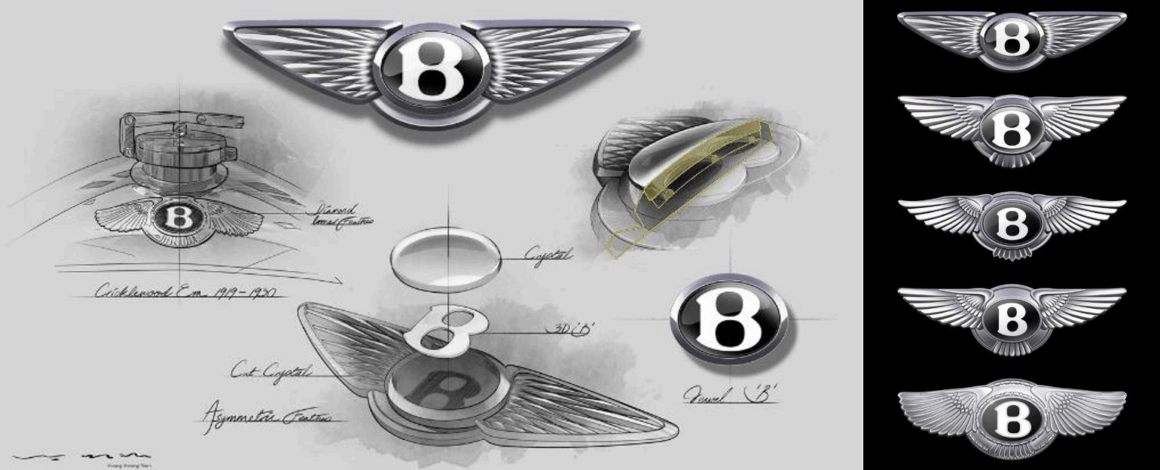
Celebrating this new start, Bentley have decided to redesign their emblem – for only the fifth time in history.
Retaining the iconic wing design, it turns the feathers into illuminated crystal shards. Here is a sketch by designer Young Kwang Nam. For those who marvel a bit longer at the emblem, it reveals its subtle asymmetry, referencing the original feathers. The new emblem design, launched on the EXP15, marks the new era of Bentley’s design philosophy, defined by the magical fusion of light and craftsmanship.
For over 100 years Bentley have crafted leather, wood, and metal to perfection. With the same attention to detail, they want to craft light as the fourth material.



Flowing through exterior, interior and human-machine interfaces, it breathes life into beautiful hand-crafted materials.
“Luxury is timeless, so we are inspired by things that are timelessly beautiful to humans”, explains Naomi Saka, Lead Lighting Designer. She is inspired by moments like sunlight dancing on the ocean, and the way light filters through leaves, interacting with materials. Bentley’s Nature Inspired Lighting, refracted through an optical lens in front of the LEDs, constantly subtly moves and changes with the environment.
To design light, Saka uses visual coding software derived from the immersive art world called TouchDesigner. This way, she moves away from designing sequences, but algorithms making the light reactive to parameters like the speed, G-force, brightness and time of the day – curating experiences with provenance to the user and the journey. T. Jon Mayer says authenticity is a key factor for Bentley and this way of working defines digital authenticity and a new generation of craftsmanship.
Days and nights were spent inside of the vehicle refining algorithms, shaping the rhythm, movement, and emotion of light. Saka says, “Like the craftsmen in the wood workshop, I’m crafting and learning about my material: light. Understanding how the environment, human and light relate to each other”.
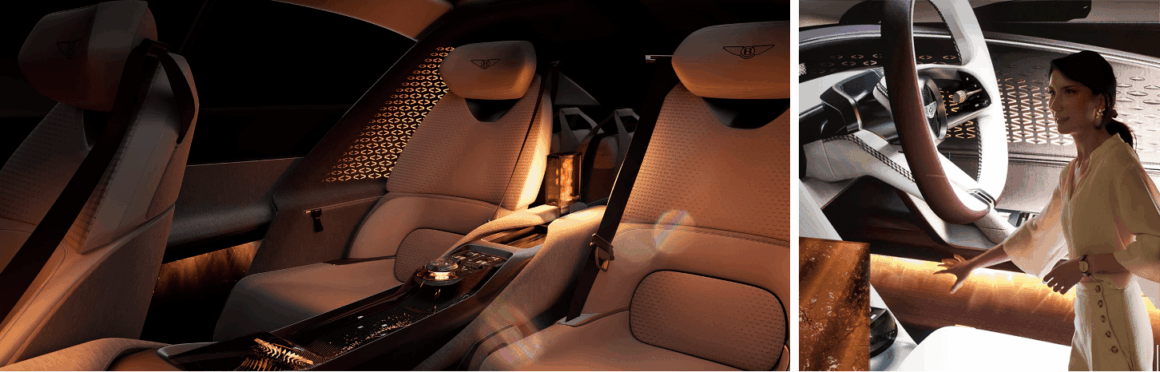
This ambiance features a ‘detox mode’ to help reduce motion sickness, as well as a sport mode that adapts dynamically to your driving style. Bentley use independent research, expert insight, and academic studies to assess driver distraction and enhancement levels. The work is grounded in a scientific understanding of how people perceive and interact with the world, as well as direct customer feedback.
As a visual coding tool, TouchDesigner enables R&D to embed code directly into Bentley’s bespoke ECU. This bridges the gap between design and implementation, expanding the creative vocabulary of both designers and engineers. This way of working marks a milestone in the automotive industry, and Bentley – as a low volume luxury brand – are uniquely positioned to work outside of silos.

Bentley used the same principle in designing the illuminated exterior grille on the EXP15. A light sculpture created in collaboration with light artist Moritz Waldemeyer, it makes the interaction between the car and user tangible. As shown below, when you approach the sculpture, it picks up the colour you are wearing and responds with a bespoke welcome sequence. Imagine the infinite possibilities you can generate with such a system!

Speaking of exterior design, the EXP15 was inspired by the 1930 Bentley Speed Six Gurney Nutting Sportsman coupé, often known as the ‘Blue Train’. The rear lamp uses similar shapes to the deck lid of the 1930 car, for example (sketch by Abuzar Modi).

The front face also pays homage to the ‘Blue Train’ design; its version of the iconic Bentley grille (as a new EV design with illuminated crystals) and LED headlamps designed with a nod to the brackets of the 1930 car’s headlamp housing supports (sketch by Nigel Ratcliffe).

A testimonial to Bentley’s timeless design philosophy is that 90 per cent of Bentleys produced are still on the road. When you design a Bentley, you need to design for the century.
The EXP15’s interior UX reflects a timeless harmony between analogue craftsmanship and digital precision. “For us, technology should feel intuitive, calming, and timeless, never overwhelming.” says T. Jon Mayer, as Head of UX Design.
The Mechanical Marvel represents an illuminated moving crystal piece augmented with a transparent display. It plays with the handover of soft functions and high-resolution precise information, offering only the level of information you need at the time.
It tells a story of seamlessly blending materials: glass, light and veneer. In full transparency, the moving crystal mechanics behind the screen are revealed. Fully opaque, only high-resolution information remains. At partial transparency, a beautiful interplay emerges between the physical art piece and the graphics that augment it.

As a luxury brand, Bentley’s customers expect world-class functionality, connectivity, and digital content, as well as exceptional artistry, craftsmanship, and innovations that resonate on a deeper, emotional level. Software drives movement and light.
The day at Bentley illuminated far more than a new design studio. It revealed a fundamental shift in how luxury is created, where disciplines dissolve, and designers, engineers and software developers craft experiences together, in real time.
This new space is not just an architectural expansion, but a reflection of a new mindset: one that enables cross-functional collaboration, accelerates innovation, and redefines what craftsmanship means in the digital age. At Bentley, light is no longer just a feature, it is the fourth material. Driven by algorithms, inspired by nature, and refined through human intuition, it transforms the car into something living, responsive, emotional, and deeply personal.
As mentioned in a lot of DVN articles and events, lighting is not only a commodity component. It is a complete experience, and it signals where the industry is heading next.


