By Paul-Henri Matha
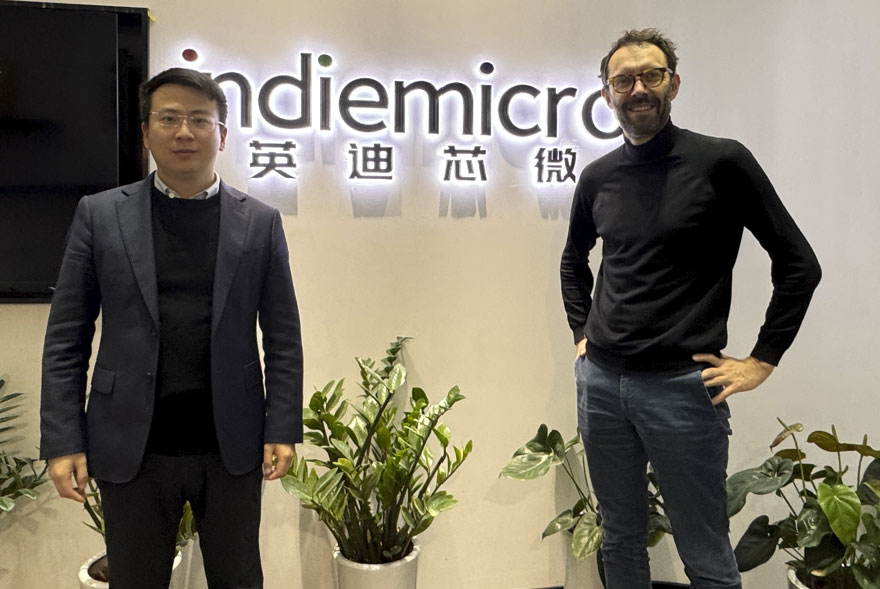
I had the chance to visit Indiemicro’s office in Pudong during my last trip to Shanghai, where I met with Jim Zhuang. He’s Indimicro’s Head of Product Marketing.
Indiemicro was founded in Wuxi in 2017, and have expanded R&D now in Suzhou, Shanghai (Minhang and Zhangjiang) on top of Wuxi. There are over 100 R&D personnel, and two sales and technical support centres in Beijing and Shenzhen.

Their automotive portfolio is focused on ICs for lighting, motor controls, and smart sensors.

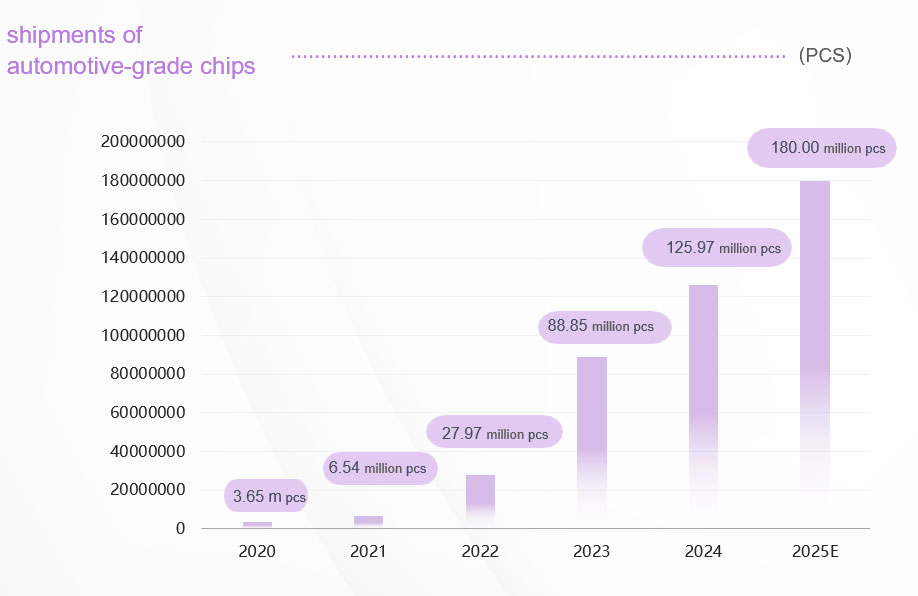
Indimicro are growing fast in the hyperdynamic Chinese automotive market—that applies particularly in lighting there, which has soared from 250,000 pieces delivered in 2019 to an estimated 126 million pieces in 2024 (estimated revenue USD $90m).
Indiemicro are a fabless company, working with Global Foundry in Singapore, Xfab in Germany,and Huahong Grace in China. They supply a great many of the major tier-1s, including Valeo, Forvia, Keboda, Koito, Marelli, Yanfeng, Hasco, and Antolin, and their products are found in vehicles from almost all the world’s OEMs.
Indie have developed a complete set of ICs for vehicle lighting applications:
- SoC (system on chip) including LIN transceiver, MCU, and LED IC
- Touch SoC with LIN or CAN interface

Indimicro also are proposing their own bus for smart RGB leds—ELINS, based on UART over CAN.

This protocol can be used also for MCU less application from zone controller for exterior lighting application

Indiemicro are the current market leader in China for interior LED ICs with significant share, especially based on LIN or CAN RGB applications.
Smart RGB and sequential exterior LED activation including ELINS bus are already in the market on cars like the Changan CS 75 and Avatr with Marelli exterior lighting, GAC MPV with Hasco exterior including LDM, and interior lighting on the Avatr 07.
Their main competitors are Texas Instruments, Infineon, NXP, Elmos, and Melexis. Newcomers are entering the business from consumer display application—Macroblock and Raffar, for example—with a different approach based on SPI interface.


