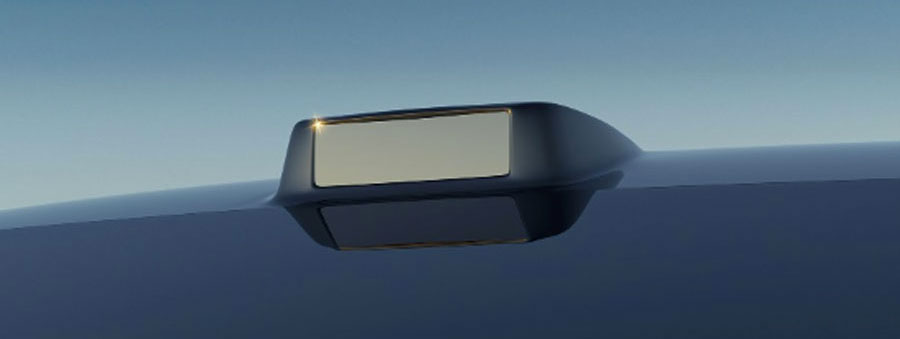
RoboSense unveiled their latest M Platform line of sensors at CES 2024, including the M2 “ultimate midrange lidar” and the M3, the M Platform’s first long-range lidar.
The M3 uses the 940-nm wavelength to achieve better performance, Robosense says, than a 1,550-nm lidar. It delivers a range of 300 m at 10-per-cent reflectivity, and 0.05° × 0.05° angular resolution within the region of interest to detect smaller objects at longer distances.
It has a modular design to enable performance improvement and cost reduction of next-generation models while maintaining form factor, interface, and scanning technology. This way, customers can upgrade their lidar sensors seamlessly without any design.
It’s built around mature and highly reliable technology developed in house. The M3 is primarily designed to for L3 or higher systems. The M3’s ability to detect long-distance objects can meet L3 functionality needs at up to 120km/h.
Robosense is the first lidar company to build their own chip technology, including MEMS, and the earliest to achieve mass production of automotive-grade solid-state lidar. As of December 2023, RoboSense has obtained 62 vehicle model design wins and successfully assisted 12 automakers and tier-1s in starting the mass production delivery of 24 models. In Q4 2023, the company’s sales volume of lidar products reached approximately 147,500 sensors for ADAS (240,000 sensors over the whole year 2023).
DVN comment
Robosense enhances the performance of their M lidar family. The increased angular resolution is a good way to allow detections of small objects on roads, one of the main advantages the lidar can have in comparison with other kinds of sensors.


