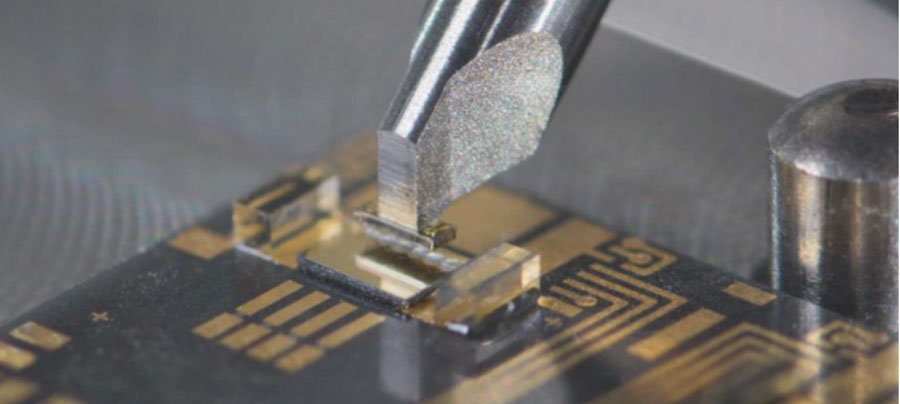
The automotive sector is undergoing two, maybe three major transitions at the same time: the electrification of the drive system, the implementation of automatic safety systems based on vicinity and hazard awareness, and ultimately the introduction of autonomous vehicles at various levels of transport.
Near-term, sensing systems are being integrated in much greater numbers into vehicles. These feed into the many driver assistance and safety systems now available—gesture sensing, pending hazard assessment, object recognition systems, automatic lighting adjustment, rangefinders for active cruise control, and more.
Many of these devices are photonics-based; they use detectors, cameras, optics, LEDs, and lasers. They contribute vital interior and exterior ‘awareness’ data as well as environmental information not only to the vehicle, but also to the building database of knowledge required for the development of autonomous vehicle systems. At the same time, these devices must be readily integrable to vehicles without significantly disrupting vehicle manufacture or crowding out a vehicle’s principal features—cost, space, range, and the like—so they must also be light, compact, and efficient.
Ficontec’s machines already provide the full gamut of capabilities required to assemble, package and test such devices, wich capabilities including:
- photonic device assembly for camera modules and emitter-detector devices
- LED array and laser module assembly for exterior lights and sensor systems
- hybrid device assembly for VCSEL and fiber optic array coupling
- combined electro-optical mixed signal testing
- diode laser and photonic device characterization and verification
These increasingly complex and miniaturized photonic devices and integrated circuits perform advanced optical functions, such as routing, (de)multiplexing switching of optical signals, sensing, and data communications. Devices include silicon photonics components, 3D sensor and lidar assemblies, photonics-enabled medtech devices, MEMS/MOEMS, miniature lasers, HPLDs and fiber pump modules, hybrid assemblies, LED print heads, high-power LEDs, optical communication devices, and many more.
The system checks to see if full optoelectronic functionality meets specifications. The accumulated data is written to an SQL database, providing the user with the necessary statistical analysis and feedback so that, for example, yield can be tracked and improved. The system allows full component tracking and sorting when equipped with a handling system.
DVN comments
Automated assembly and testing of optical systems offers many benefits, including increased productivity, reduced costs and improved quality of finished products. This also allows greater flexibility in the design and manufacturing.


