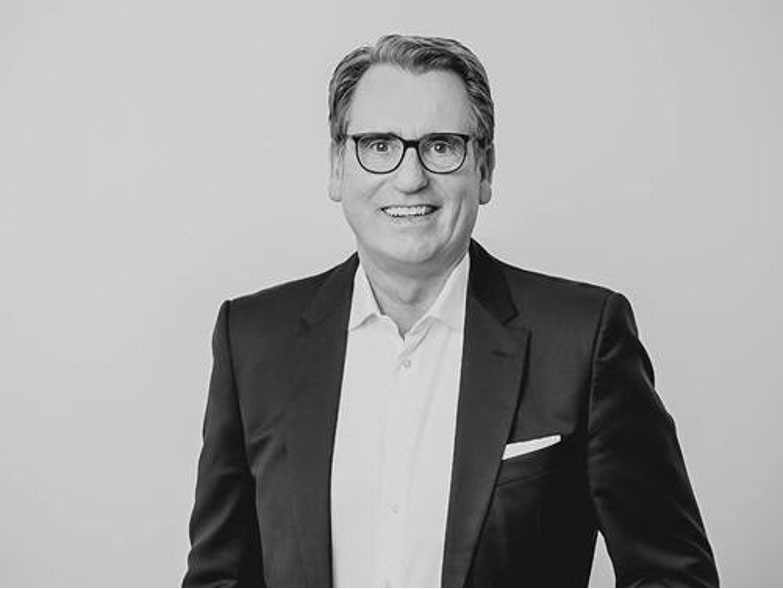
Recticel Automotive is now Ascorium Industries. Based in Königswinter, near Bonn, Germany, they make premium polyurethane interior surfaces. DVN Interior general editor Philippe Aumont met Ascorium CEO Christoph Laeis at their headquarters shortly ago; here are the thoughts Mr. Laeis shared with us:
DVN-Interior: Tell us about the origin of Ascorium.
Christoph Laeis: Recticel had been looking already several years to find a partner to hand over automotive business to focus on key business. Admetos is a private equity and is looking for companies with this size and growth potentials.
DVN-I: What was the Recticel strategy? Is this a spin-off?
CL: Recticel wanted to focus on their key business—technical foam and insulation. Automotive was only a smaller division and not key target.
DVN-I: What were the main challenges when you took leadership of Ascorium?
CL: Move a minor division from a big chemical company with their structure to an independent, flexible, agile, and automotive-focused company.
DVN-I: Now, six months after your arrival, how’s the company doing?
CL: Ascorium is making big steps forward. A lot of automakers and tier-1s appreciate the new focus of customer orientation and automotive focus. Also, several new developments are getting very good feedback.
DVN-I: What do you see as the company’s strengths and challenges?
CL: Strength is definitely the flexibility to react on customer demands in automotive. Currently automotive business has a lot of challenges with CO2 reduction, use of sustainable materials, raw material prices, and autonomous driving. Ascorium is adopting quickly their product and innovation portfolio to these challenges.
DVN-I: Who are your customers?
CL: In general, Ascorium is a tier-2 and delivering to tier-1. But we have a special and unique technology which needs parallel an intensive contact to automakers’ engineering and design departments. The possibilities in geometries, in the reproduction of grains and colors, in modular production, etc, need to be constantly and repeatedly communicated to the automakers’ key decision makers.
DVN-I: There are several big tier-1s in the interior business—like Faurecia, Yanfeng, and Boshoku. How do you position Ascorium in this landscape?
CL: As mentioned Ascorium is a tier-2, and the big tier-1s are our customers where we already have good contacts which will be intensified now in Ascorium.
DVN-I: Are you working directly with automakers, and how?
CL: With our specific and unique technology, we have direct contact with automakers’ engineering and design to place all our potentials and advantages of our product in the early phases of the design of a part. Ascorium cooperates and in some cases co-develops together with those departments.
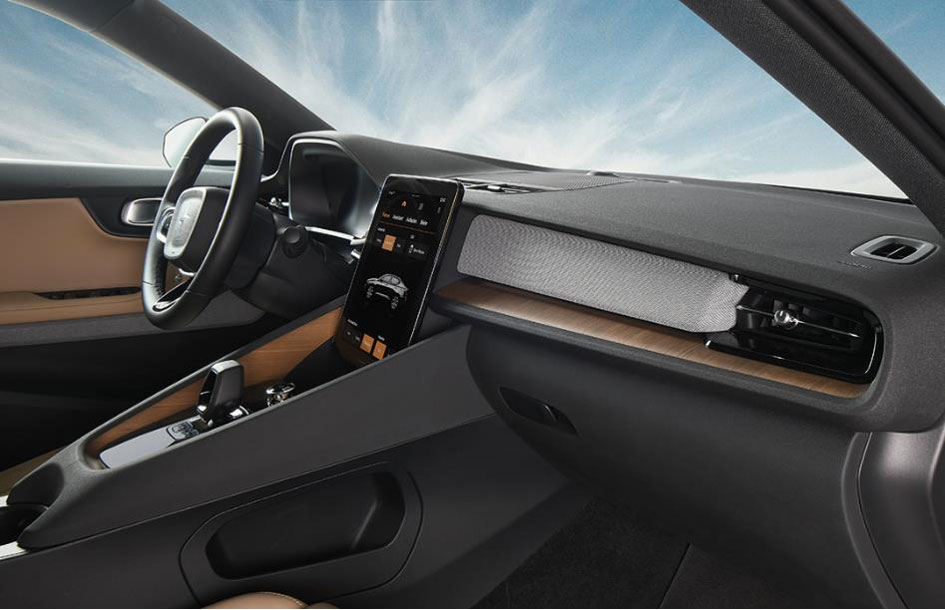
DVN-I: As the car is getting to more and more digital technologies, what are the new prospects you see for functional surfaces, as part of the HMI?
CL: We have been working already for years on integration of electronics in our products. Our technology has a lot of advantages compared to conventional products when it comes to a.o. temperatures and pressures during the production processes to which electronics can resist. Due to our new shareholders, we also got good contacts to electronic partners, with whom Ascorium has already developed interesting potential future concepts of smart surfaces. Also other functionalities, e.g. antibacterial properties, can be offered.
DVN-I: How do you handle sustainability and carbon neutrality?
CL: Sustainability and carbon neutrality is for Ascorium a key focus. Our technology is already less energy consuming than some competitive materials, and our current products already contribute to sustainability thanks to their low weight—the Colo-Sense X-Lite is the best example here. The molds used last a whole project life time and beyond without having to change due to wear or cracking. Additionally, our innovations are focused on the use of more sustainable materials. Operation-wise, Ascorium will make further steps in the use of alternative energy sources where appropriate.
DVN-I: How do you see PU skin recycling possibilities?
CL: Recently a lot of companies and organizations have increased their efforts in finding more efficient ways to recycle polyurethanes, mechanically as well as chemically. Ascorium has several contacts in that field, and is screening different possibilities as a key point in the innovation portfolio, with the aim to lower the carbon footprint of the products.
DVN-I: Can you talk about your latest innovations?
CL: As mentioned, sustainability is the common denominator through the innovation portfolio. Use of more sustainable and renewable raw materials in combination with recycled materials on the chemical side, while new processes are being developed to reduce the number of steps and amount of material needed to come to a final product, without loss of the key features of the Ascorium surfaces.
Composite materials based on natural fibers in combination with a more sustainable polyurethane are also in focus; the next generation of CompoLite is being prepared. Furthermore, Ascorium wants to evolve in the direction of supplying modules, offering more integrated solutions to the customers.
DVN-I: How is your innovation management organized? Is it program-driven, or ahead of programs?
CL: Innovation is ahead of programs. Due to close contact with the automakers, we are detecting quite early new demands and trends.
DVN-I: Will there be big changes at Ascorium over the next years, do you think?
CL: Ascorium has several new and sustainable products in the innovation pipeline, of which a few will be ready for market introduction quite soon. The operational footprint is under review and some consolidation is not to be excluded in the near future. Where Ascorium was purely focused on automotive until now, we are convinced that the possibilities of our products can also create value in non-automotive applications, a world we are starting to explore.
DVN-I: Thanks so much for talking with us! Do you have some closing thoughts?
CL: The automotive business has always been a special environment with many positive and sometimes quite problematic challenges. Ascorium with its very innovative products paired with convincing flexibility and speed, adapts to the new developments. The interior changes in design but never in demand. With our clever modular tool technology; sustainable materials and processes, we meet the challenges. Our new developments show that we recognize the trends at an early stage. In addition, we will continue to increase horizontal and vertical integration and thus significantly expand our product portfolio.


