Special to DVN Interior by Dr. Eneka Idiart Barsoum, Senior Expert on Photonics
Photonics is the science of detecting, collecting, transmitting, amplifying, modifying, and generally mastering light. It is considered a Key Enabling Technology by the European Commission. It touches numerous areas of modern life—communications, life sciences, health, power generation, automotive, aeronautics, defense and security, precision agriculture, quantum computing, displays—and it provides solutions opening up new horizons.
The global photonics market is estimated around €525bn in 2020. The top producer is China (displays, photovoltaics); Europe is № 2 with 16% of global market share, then Japan and North America. 80% of European companies—about 5,000 of them—are SMEs (small and midsize enterprises), and 40% of them have been in business less than 10 years.

Source: Matmatch
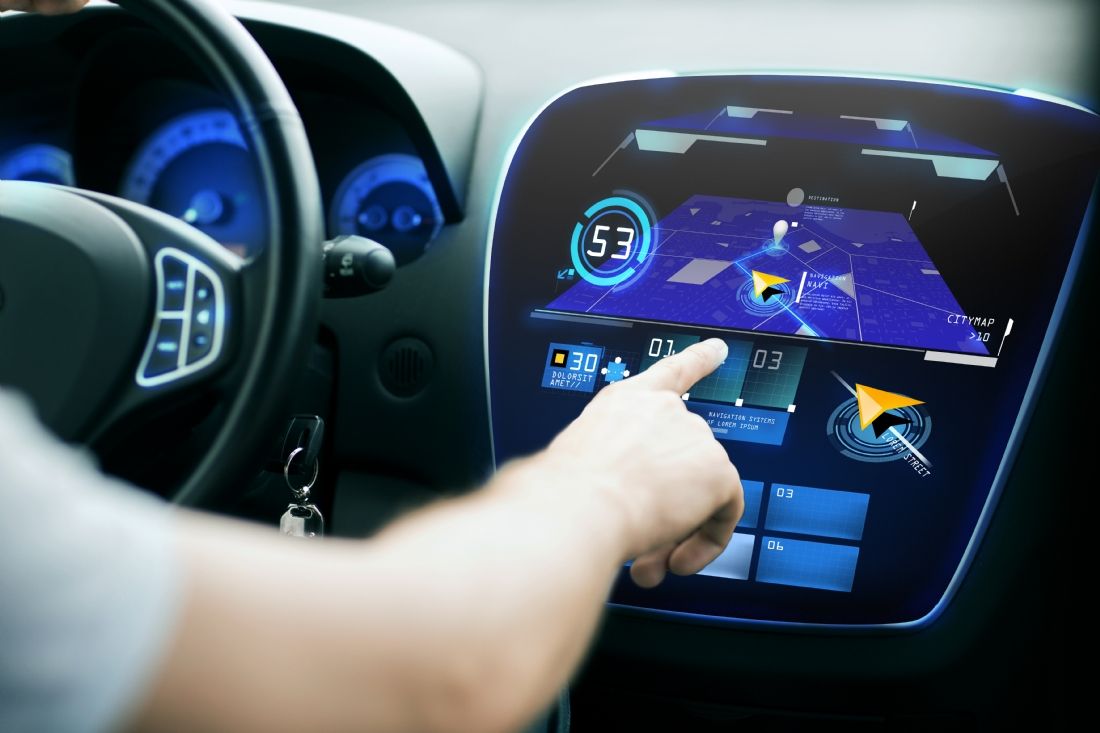
What are the main areas in the cockpit, which could be impacted by photonics?
Reinforcement of safety and security, decision assistance, connectivity and communication for driver and passengers, personalization, comfort, wellbeing, health, entertainment, air quality and sanitary safety—the list seems to have no end!
The large volume of data that will be generated from autonomous driving requires high-capacity data links with extreme low-latency where photonic and THz technologies can play an important role.

To realize these capacities practically, the main technical functions are:
– Autonomous vehicle security: quantum-optics cryptography, enhanced by AI.
– ADAS
– Connectivity by LiFi, geolocation
– Optical high rate communications
– Head up displays
– Augmented reality
– Glazing and surface treatments
– Physiological parameter measurement
– Physical effects of lighting: wellbeing, emotional occupant monitoring, state of alertness, surface and air sterilization (UV lighting), etc.
In Europe two main organizations have been representing for 15 years the Photonics ecosystem: The Photonics 21 platform, the role of which is to influence the European Commission strategy on photonics market, and thus the European collaborative projects (Horizon 2020 and Horizon Europe ICT). Photonics 21 has a variety of working groups; for two years there has been an emerging one in Automotive and Transport.
The second organization is EPIC (European Photonics Industry Consortium), which is the main photonics industry affiliation group worldwide with more than 500 industrial members, and connections with analogous American and Asian organizations.
Some companies of interest in automotive are for instance Lumibird, Obeo, Laser Components, Osram, Amplitude, Vixar, NIT, Hamamatsu, LG, Panasonic and others. It is increasingly apparent that participants in the display, telecom, and defense and security markets have technologies that could be transferred to the automotive realm, in particular for AVs and EVs.
Some highlights from Photonics 21 automotive working group analysis (2019): Main advances can be classified as Advanced HMI.

That means:
– Enhanced physiological effects of light in automated vehicles cockpits (HMI)
– Image quality enhancement in automated mode by using high rate communications
– Volume/packaging reduction
– Augmented reality solutions
– Novel types of smart displays (transparent, conformable, 3D—e.g., holographic)
– New strategies for virtual displays
– Multimodal interaction strategies
– Functional coatings on windows, windshield, interfaces, sensors
Photonics technologies are really key enabling technologies, that are moving fast to expand capacities inside the vehicle cockpit. A lot of SMEs in Europe are providing these photonics technologies. The main challenge, besides automotive integration, is to support these SMEs to ramp up their production, in order for them to achieve automotive volumes.
Dr. Eneka Idiart Barsoum is in charge of Eneka Consulting is an innovation consulting firm dedicated to Photonics technologies. It provides services in technologies expertise, innovation strategy and management, collaborative projects, photonics and innovation ecosystems intelligence. It covers applied industrial markets as automotive, defense and security, communications, quantum technologies, digital health,
Some industrial references: Ariane Group, Thales, Safran, Corning, Valeo, Schneider Electric, Sanofi, Orange.


