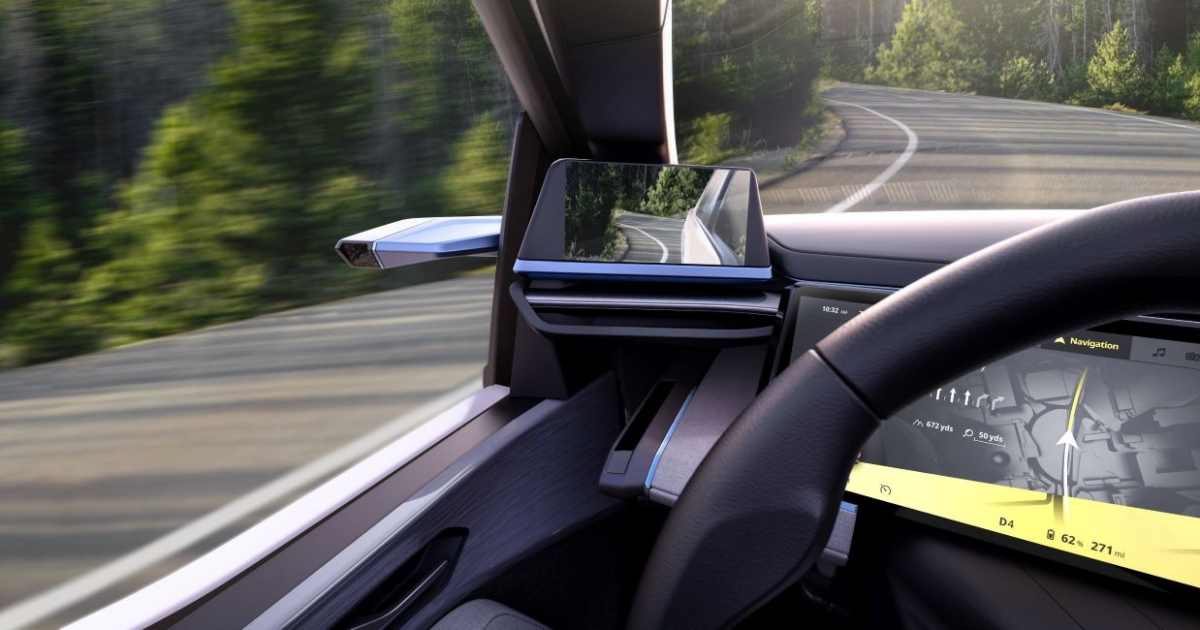
Under the umbrella of the Cockpit of the Future, Faurecia has integrated electronic mirrors (camera outside, display inside) in what they say are hopes of reducing driver cognitive load and enhancing safety and comfort, by improving situational awareness.
An e-mirror replaces the traditional exterior door mirror with a camera designed to bring a better view of the surrounding environment into the cabin for the driver. It has a wider field of vision, enhances visibility in poor weather or lighting conditions, and also provides important safety warnings. Its light weight and streamlined shape also help reduce aerodynamic drag, lowering CO2 emissions—especially when they replace giant outside mirrors on the likes of SUVs and commercial vehicles.
Faurecia is working on this e-mirror project in China with new mobility company Human Horizons. It will be integrated into two new electric sedan and SUV models slated for launch in 2022 and 2023. Human Horizons, created in 2017, develops smart transportation technologies and energy-intelligent vehicles. They began distributing their HiPhi X SUV this year, and they’re working on more smart electric vehicle models, all designed around a highly-connected mobility experience. Typically, an e-mirror system consists of two cameras, display screens inside the cockpit, and an ECU (which is also coming from Faurecia, for the Human Horizons vehicles). The ECU processes the feed from the exterior cameras and can superimpose warnings about lanekeeping, blind spots, and potential obstacles, as demonstrated in a video posted online.


