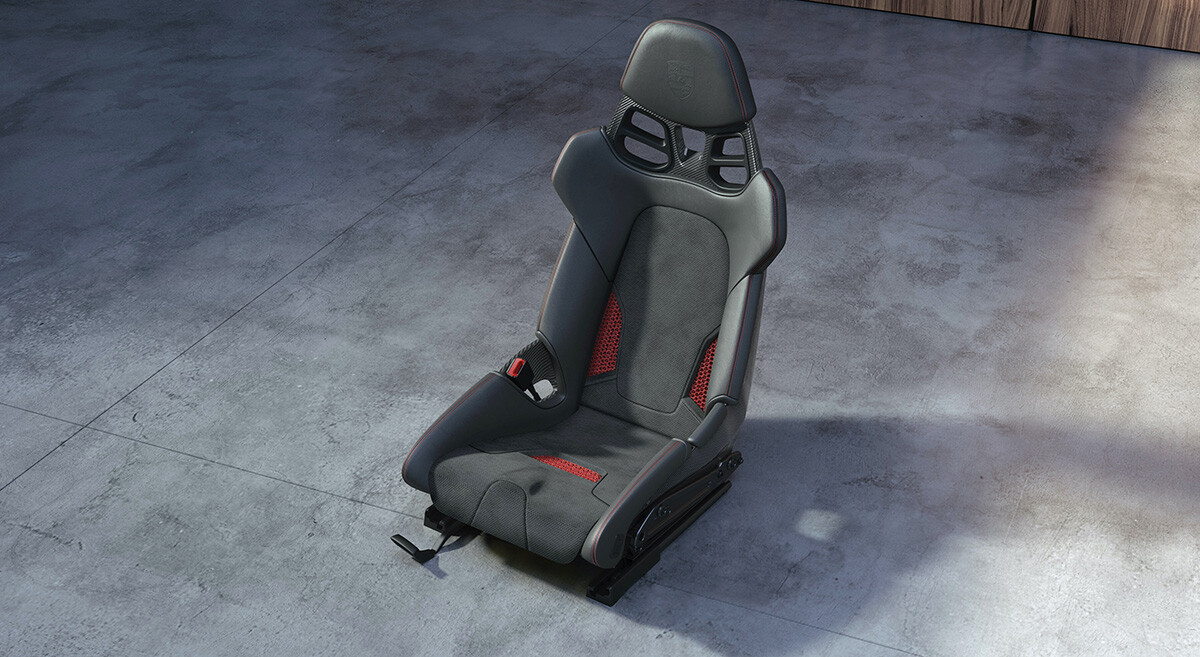
Unveiled last year, Porsche’s new 3D-printed seating is based around the design of their existing bucket seats, with the same sandwich-like construction. Although the seat’s base layer is composed of standard polypropylene, this is now bonded to a breathable comfort layer consisting of a mixture of polyurethane-based 3D printed materials.
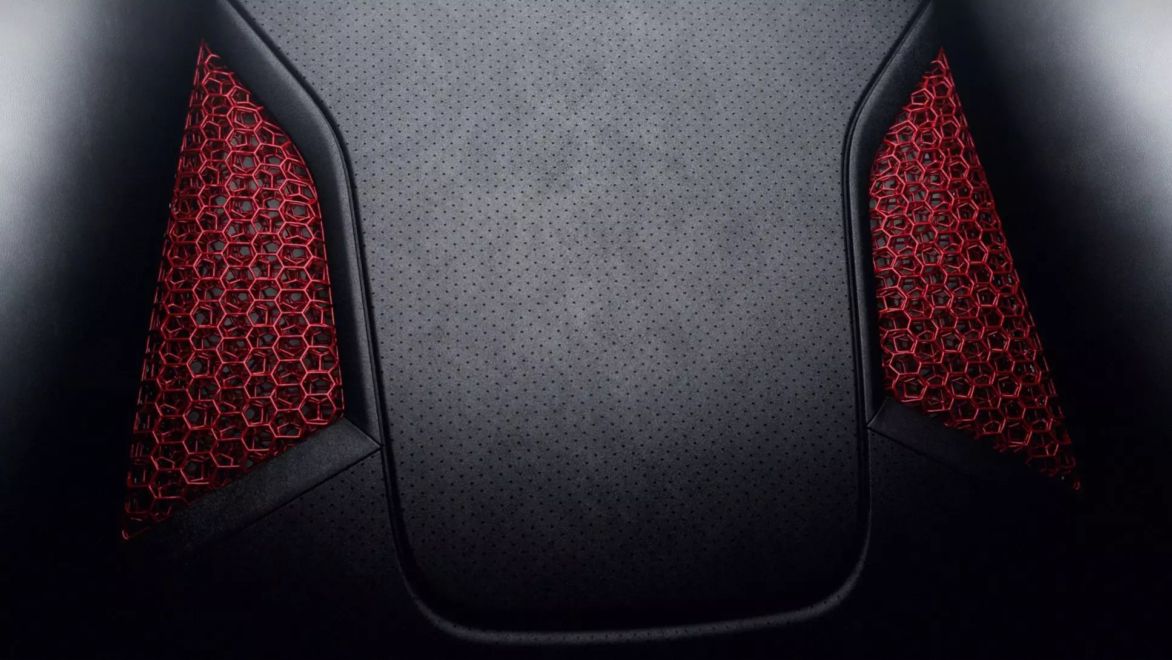
Similarly, the seating’s exterior may be made from track-ready nonslip Race-Tex, but its windowlike panels also show full-color sections of its 3D printed lattice-shaped internals.
This middle section is also customizable, allowing customers to choose their comfort, and how firm they want their seat to be, while the structure’s overall weight reduction of 8 per cent, ergonomics and passive climate control are designed to provide users with a level of comfort similar to that of a professional racing driver’s custom-fitted seat.
Porsche tested the new seats at the Nürburgring Nordschleife circuit, and gained valuable customer feedback which enabled them to make the final adjustments and ready the product for a full launch. This 3D-printed seat is now available for most of Porsche’s racing product range. It was also presented at the last IAA for the Mission R concept car, where 3D-printed parts are also used in body construction.
We expect 3D printing and additive manufacturing in general to continue gaining traction for all sorts of parts in all kinds of production vehicles.


