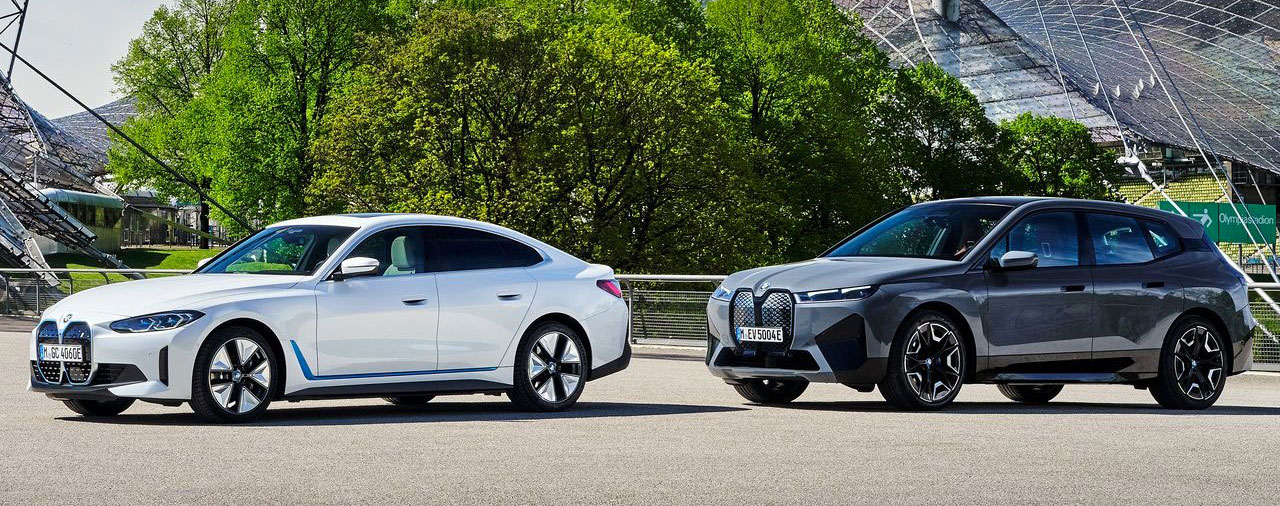
BMW has just introduced their latest battery electric vehicles based on the CLAR platform (covering the D, E, F -segment ICE cars, sports cars and SUVs). The i4 sedan, and iX SUV are entirely new, completely removed (although utilizing some advanced aluminum and carbon composite construction) from the previous i3 and now discontinued i8 vehicles.
Oddly, BMW has chosen to not incorporate a front trunk, or ‘frunk’ into either of these vehicles.


Looking at both interiors, there is one element that ties them together: the large, curved horizontal display unit along with the associated HUD.
With the rest of the i4 interior, it’s based as a 4-door sedan version of the recently introduced i4 coupé. The lower instrument panel, tunnel console, seats, and doors panels have not been further developed thematically.
Interestingly, BMW has chosen to not evolve the exposed ‘natural-fiber’ materials that showcased its sustainable material usage in the i3 and i8; instead they’re highlighting the use of animal-free (vegan) material with discreet logos on the surfaces.


These displays allow the elimination of the traditional cluster binnacle or cowl, and open the upper instrument panel area for a more modern, airy feeling.

The ICE i4 coupe and new BEV i4 sedan share the same seating and trim themes…

… while the iX uses a new design first was seen in their concept vehicle bearing the same name.
This quilted look is reminiscent of recent Citroën DS ‘wristwatch’ designs.

The rear seating trim covers expand this quilted look to the entire width of the interior. Notice how this is incorporated into the lower pillar trim panels, which wrap into the doors.

Another feature in the iX is the use of an electronic sunshade integrated into the roof glass. By eliminating the traditional fabric covered panel, an air of high-tech ambiance is created.


Finally, looking at how the rear cargo is executed, the iX has a very simple hatch opening and cargo bay. Notice how they have integrated auxiliary rear lights behind the hatch opening, in accord with legal requirements that the lights either be on a fixed body component or be duplicated so as to remain visible even with the hatch open.
Next week, we’ll look at how design detailing and craftsmanship (perceived quality) have evolved, and what makes these factors succeed or fail.


