3D‑knit technologies for seat upholstery have been gaining traction. Initially confined to concept vehicles and design studies, for partial areas or decorative elements, now they are showing up in series production. Advantages include seamless manufacturing, design flexibility, material efficiency, and they facilitate fully-recyclable, monomaterial upholstery.
The technology does exert high demands on machinery, software, and QC, and is becoming more economically attractive with increasing maturity and production volumes.
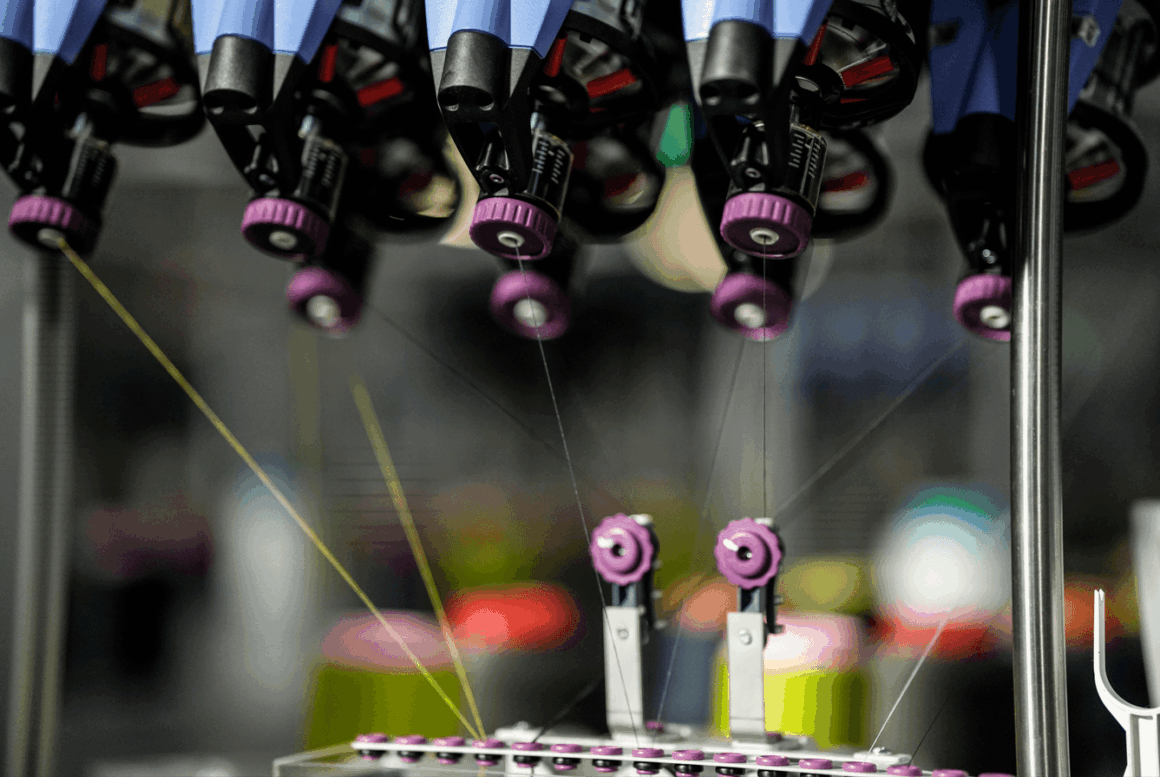
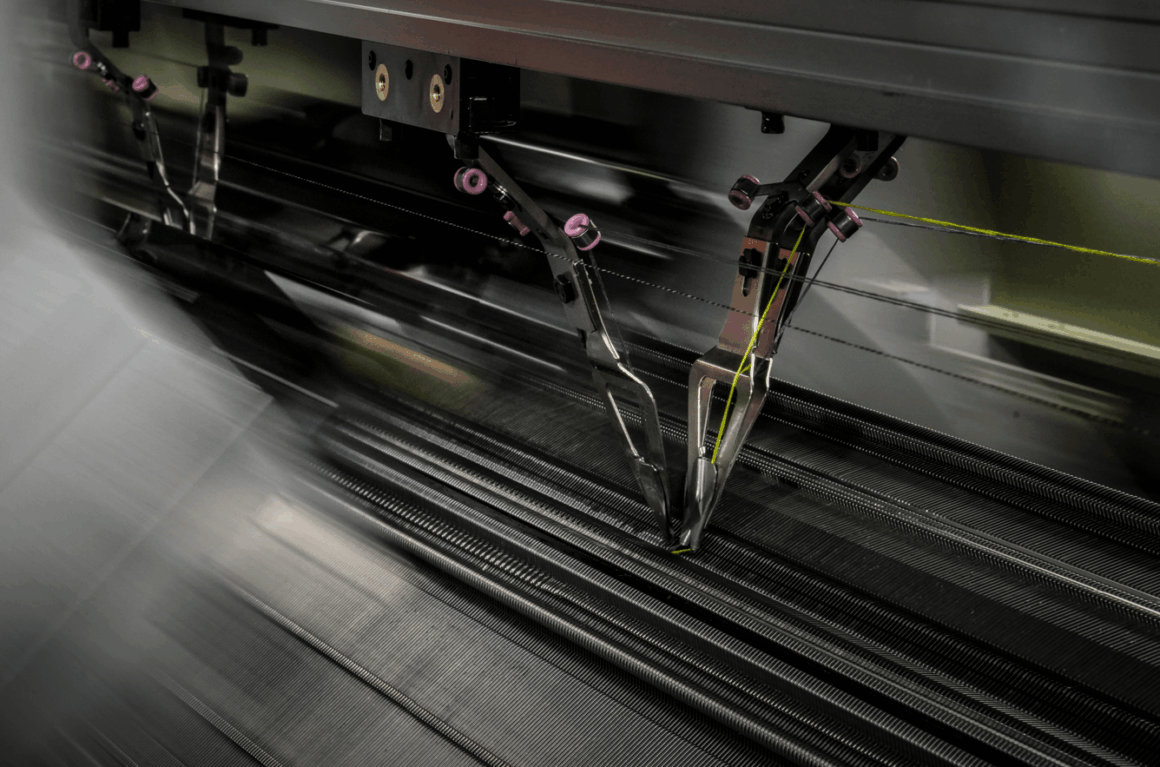
The Cupra Raval is the first production vehicle to use a 3D‑knit whole seat cover from Tesca, whose process differs to conventional manufacturing methods. Instead of being made up of multiple cut and sewn individual pieces, the cover is produced in a single pass on a knitting machine. The result is a seamless, precisely-fitting cover tailored exactly to the contours of the seat.
This relatively costly, technically complex new upholstery is exclusive to the higher‑end seat variant in the Raval, which Cupra calls the ‘CUP Bucket Seat’. It is a sportily-contoured seat with enhanced body support – not a motorsport‑grade full bucket seat, but noticeably more sculpted than the base version. The Raval’s base seats use conventional multi-piece, cut-and-sewn fabric covers.
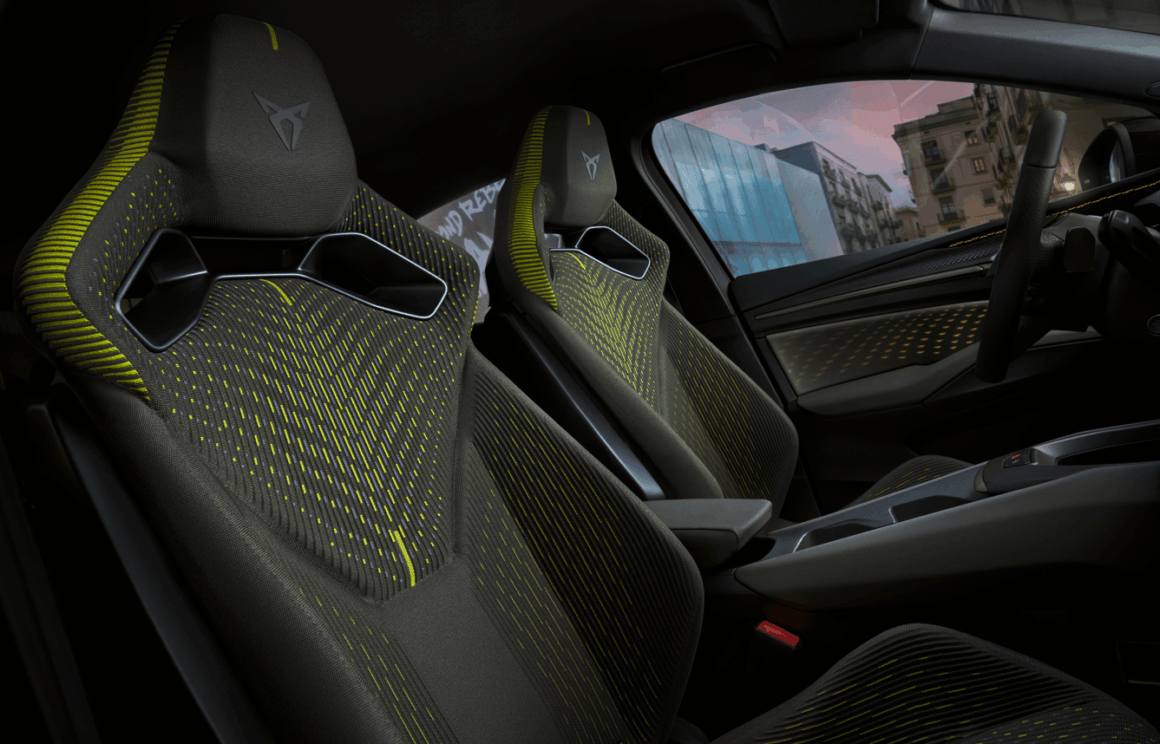
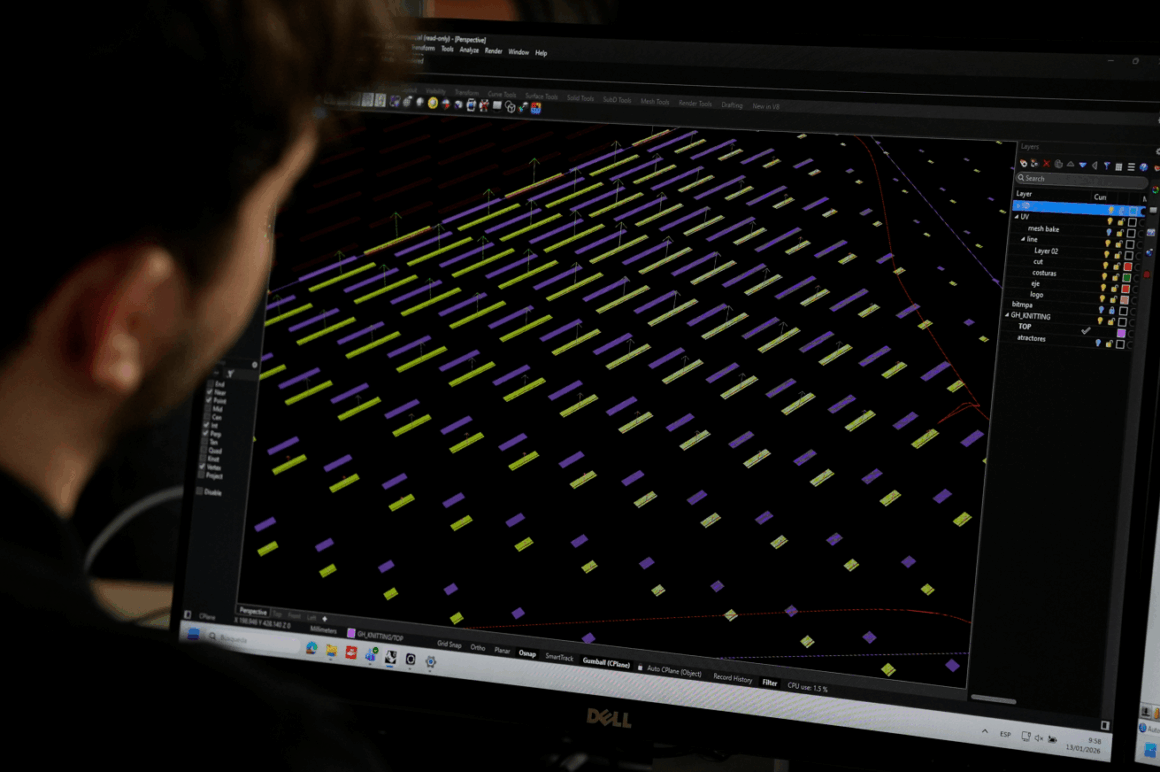
Cupra’s Colour & Trim department has previously explored parametric design and additive manufacturing techniques, and elements of these approaches appeared in such show cars as the DarkRebel and the Tindaya. For the Raval, the concept has been refined for application to a production vehicle. The knitting machines process thousands of data points to integrate patterns, structures, functional elements and attachment points directly into the fabric. This eliminates the need to combine different materials and cuts down on manufacturing steps, making the process more consistent and efficient.
The yarn used for the new upholstery is made out of recycled plastics collected from the Mediterranean Sea, processed in facilities located close to Tesca so as to reduce transport distances. Because the covers are produced without material offcuts and are fully recyclable, the process suits circular‑economy priorities. Production is carried out on demand, within a regionally limited radius of around 100 kilometres from the vehicle’s manufacturing site.
Independent of the manufacturing technology, the Raval is equipped with seats designed to meet diverse needs. The standard seat has a sporty orientation but a conventional construction. Higher equipment levels include heated front seats and pneumatically adjustable lumbar support. The driver’s seat can also be equipped with electric adjustment and a memory function.


