Dajac’s work in vehicle lighting has traditionally focused on validating optical performance – beam pattern, intensity, aim, and colour. As lighting systems have become more electronics-driven, validation has expanded beyond the optical level. It now includes additional layers of testing and integration to ensure products meet performance and compliance requirements.
Dajac Automation extends this by developing systems that support functional testing, part inspection, and process integration within lighting environments. This can include validating how components behave under real operating conditions, integrating logistics and traceability into production workflows, and supporting lab-based testing of lighting components. Communication with lighting electronics through protocols such as CAN and LIN can also be incorporated, allowing systems to interact directly with the devices being tested. Dajac Automation believes that productivity is much more than just testing intensity, it’s about creating a well oiled system that accounts for everything.
Rather than focusing only on optical output, these systems provide visibility into how the product and the surrounding process are performing as a whole. This reduces the need for separate systems and manual checks, while making it easier to identify where issues originate and how they impact final performance. This becomes especially relevant at the PCBA level, where performance is first defined. This means quicker, more accurate testing that customers you money and decreases idle downtime.
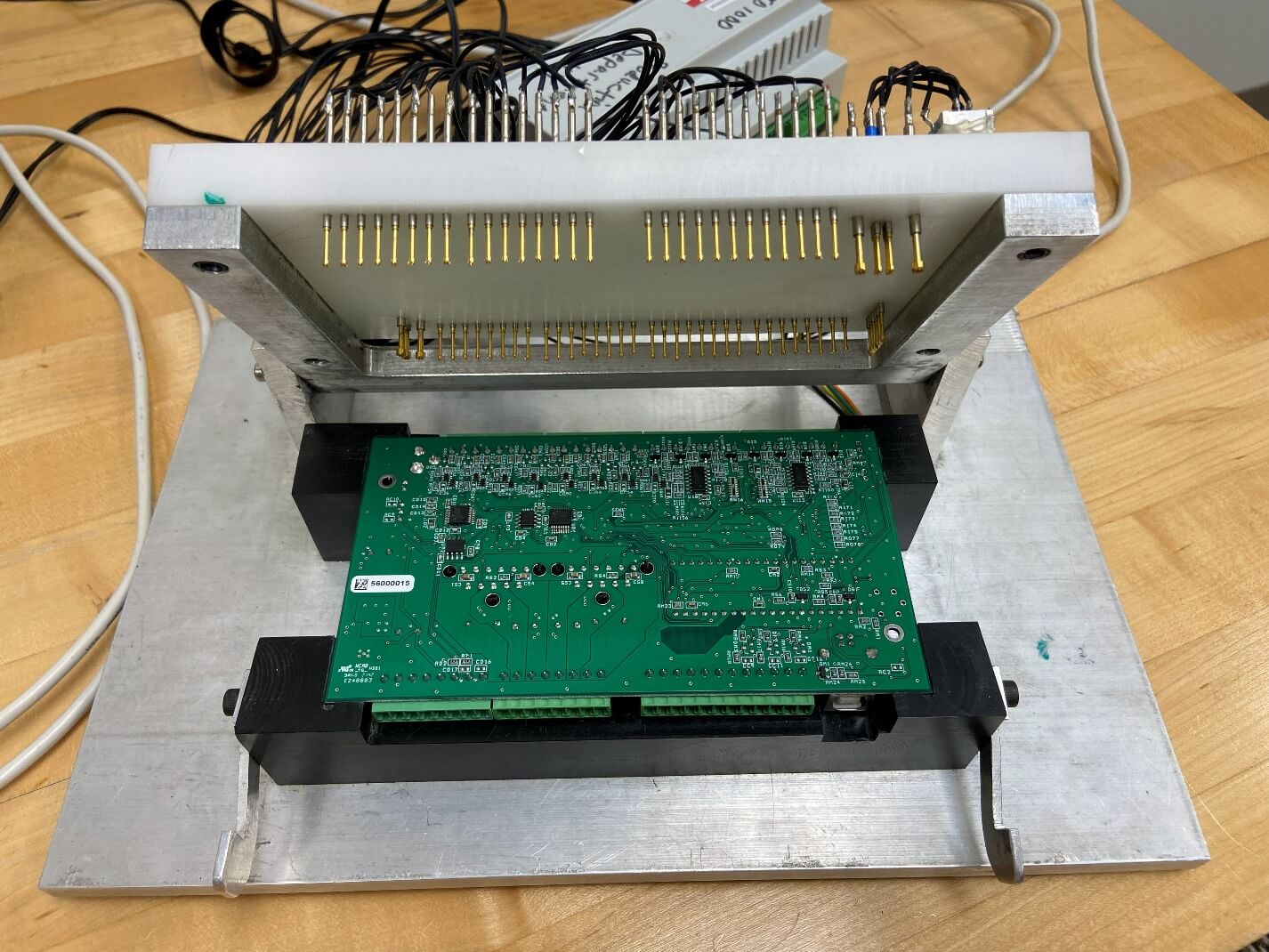
In the context of PCBA testing, Dajac Automation focuses on functional validation. Rather than identifying individual assembly defects, the goal is to evaluate how the board performs in operation. This includes monitoring signal behavior, current draw, and overall response under defined conditions, particularly where those factors influence final light output.
These systems are developed to connect with the existing production environment. Equipment such as cameras, scanners, printers, and other devices can be integrated into a single sequence, allowing testing, data collection, and traceability to operate together. Additional steps can be introduced or adjusted without requiring the process to be restructured.
This approach builds on Dajac’s experience in optical validation by extending visibility into earlier stages of production. Rather than relying only on final light testing, performance can be evaluated at the component and subsystem level, with results carried forward through the process.


