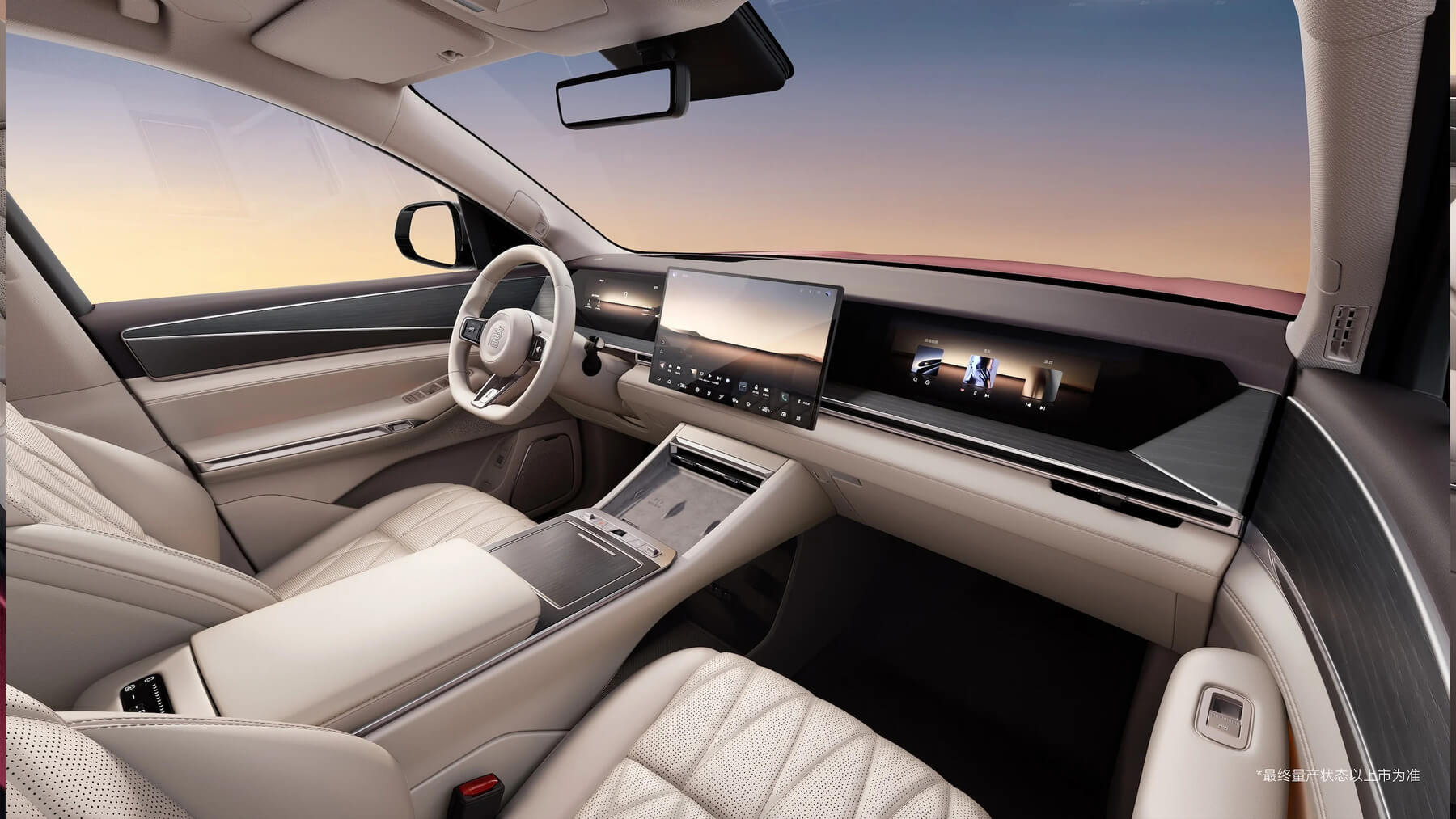


The Great Tang exemplifies how the large Chinese SUV is evolving: it is no longer conceived primarily as a driver-led vehicle, but as an onboard cohabitation architecture. The 2+2+3 layout, four screens, second-row captain’s chairs, roof-mounted rear display, and comfort features for rear passengers all show that the product promise is based on a clear segmentation of interior roles. Each cabin zone carries its own functional identity and, implicitly, its own design value.
What matters here is not simply the abundance of features. It is the way BYD is pushing a distributed cockpit logic in which the experience is no longer centred around one cluster and one dominant screen. The challenge, of course, will be UX orchestration. Beyond a certain level of complexity, the relevant question is no longer how many screens but how well are they choreographed. A well-executed multi-zone cockpit becomes a premium experience. Poorly calibrated, it quickly turns into consumer electronics on wheels with an overinflated opinion of itself, tech stuff for its own sake rather than to meet needs and wants.


