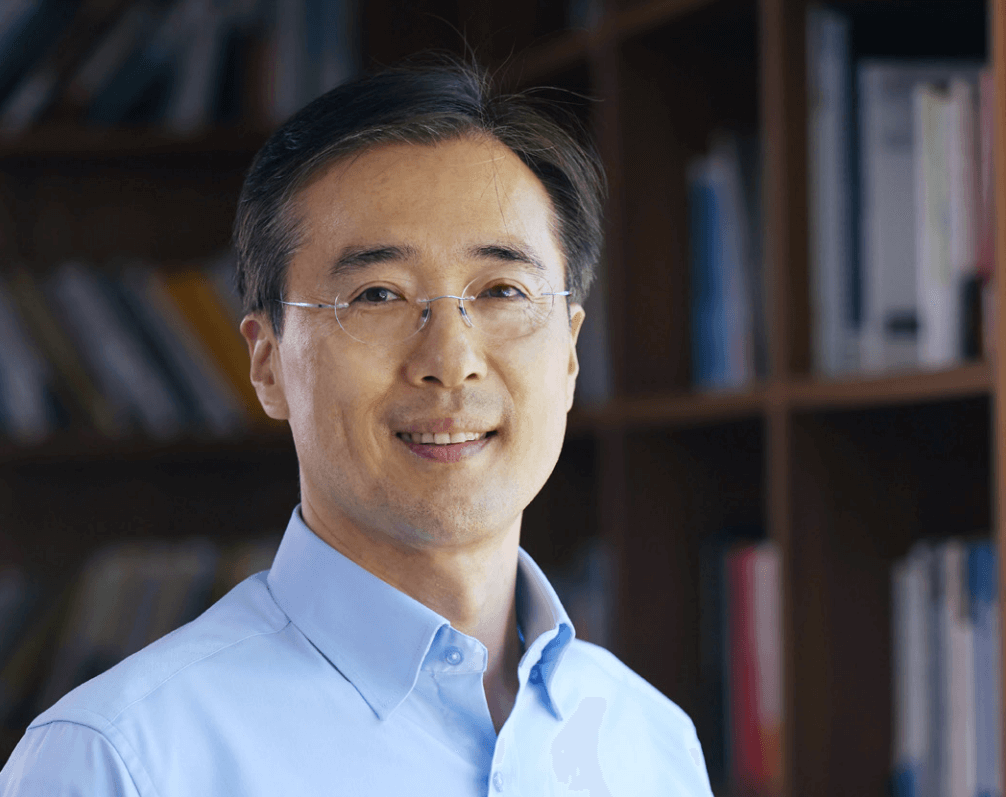
During DVN’s visit to SL last November, Hans Joaquim Schwabe and Paul-Henri Matha talked and listened with Sungyup Lee, Vice Chairman and CEO of SL Corporation, about the automotive landscape in Korea and worldwide, and more specifically about lighting.
DVN: How do you view the current automotive landscape in Korea?
Sungyup Lee: Currently two main trends are shaping the actual situation. On one side, the tariff discussion mainly with USA impacted export volumes significantly, plus a strong trend towards electrification on domestic market (also export volumes). First half of 2025 saw a growth of 2.8 per cent year-on-year. Out of that, eco-friendly cars (EV and hybrid) rose by 23.8 per cent. 77 per cent of total eco-cars are hybrid platforms. But exports declined by 4.1 per cent, partly due to US tariff impact. There is a significant shift against the trend with export shipments of hybrid vehicles (including plug-in), growing at 8.8 per cent. So, Korea is quickly adapting by utilizing new trends and shifting to global manufacturing to stay competitive.
DVN: What are Korean automotive trends? Simplification and function vs design and styling?
Mr. Lee: Both elements are critical to achieve high performance. Functionality demonstrates efficiency and safety, whereas design conveys brand image and emotions. In particular, the ‘two-line signature’ of Genesis platform is a perfect example of matching both targets simultaneously. Also, by leveraging advanced optical technologies – MLA (microlens array) and IFS (intelligent front lighting system) – we achieve precise light control and a sophisticated design.

DVN: Automotive supply chain in Korea – how to secure critical supply situations?
Mr. Lee: SL is continuously expanding domestic supplier network to optimize operational efficiency in consideration of logistic cost and product specifics. Also, for wiring and modules, a global supply chain has been established (e.g., Vietnam). Nevertheless, dual sourcing and inventory buffers for critical components have been built up. This also includes critical semiconductors where collaboration and supplier alternatives with prequalification have been realized.
DVN: What is the ADB trend in Korea? Is it driving new innovation cycles?
Mr. Lee: As Korea is characterized by full traffic and very bright street lighting, ADB is not yet in the mindset of consumers. Nevertheless, SL introduced ADB with Genesis BH in 2011 and developed it across all Genesis models and expanded to mid-size SUV (Hyundai Tucson). Also, regarding global markets, SL is developing algorithms for optimizing performance under any driving conditions.

DVN: Is SDV (software-defined vehicles) a topic for Korean OEMs?
Mr. Lee: Indeed, SDV is the most critical topic in automotive landscape currently. Again, Hyundai Motor Group is leading the trend with ‘PLEOS’, a consolidation of multiple controllers into a unified architecture enabling vehicle control and evolution through OTA updates. So, cars will be based on upgradable digital platforms. SL is internalizing SW-developments and system level integrations by process and organizational innovation.

DVN: What is the Korean status about circular economy (sustainability) for lamps?
Mr. Lee: Sustainability is a key target at SL. Therefore, SL is advancing its own target to be carbon-neutral in 2045 already. A 20-per-cent reduction of greenhouse gas is part of three core strategies at SL. We focus on eco-friendly material development and activities to use recycled and bio-based materials. The Genesis G90 Headlamp with MLA process is a perfect example with a clear focus on miniaturization, low-weight and improved resource efficiency.
DVN: Regarding regional markets like US, EU, and China: how do you adapt?
Mr. Lee: As you can imagine SL has developed different strategies to adapt as we are facing varying challenges and situations. The US, being extremely important for major customers like Hyundai Motor Group and GM, is critical according to the current tariff discussion. So, strengthening local competitiveness by a new plant in Mexico (realized in 2025) is reinforcing flexibility and cost competitiveness. Also, EV adjustments have to be realized due to changing tax credits. China is extremely demanding in speed and cost. Also, SDV plays a major role there. To follow 12-month development cycles, SL has adopted agile organizational structure for rapid decisions and is proactively integrating our efforts for design and manufacturing. Local supply chains have to support cost structures, and collaboration with IT giants (e.g., Huawei) is driving smart car innovation. As Europe has been entered recently as premium OEM market, importance is growing rapidly. Also, ESG regulations there are most stringent, driving low weight and low power. More than ever, differentiated solutions have to be addressed here with technical excellence.
(Note: SL’s 2024 regional revenue breakdown is Korea 46 per cent, North America 34 per cent, India 12 per cent, Europe 2 per cent, and South America 1 per cent; 2025 data has not yet been publicly released.)
DVN: SL have four US manufacturing plants. How else are you managing the situation with US tariffs?
Mr. Lee: Unfortunately, the previous tariff of 0 per cent has changed now to 25 per cent for parts. (Update: 15 per cent as of the end of Oct. 2025) Short-term activities are trying to receive 3.75-per-cent rebates from the US Government for automotive products, but strengthening localization is mandatory (e.g., Mexico plant).
DVN: How about in Europe; is your plant in Poland becoming more important?
Mr. Lee: The European market is key for achieving global technical excellence and cost-competitiveness. As in-region supply chain is accelerating by European OEMs, Poland is a key pillar for global production and technology. Experience with premium OEM in that region is mandatory to achieve global technology leadership.
DVN: How do you approach Chinese OEMs directly? What’s the competitive situation?
Mr. Lee: Collaboration with local OEMs in China is a prerequisite to stay globally competitive. Nevertheless, competing with local suppliers is a significant challenge. SL has started activities to review everything in cost, quality, and technology to be qualified. But China being the spearhead in EVs, autonomous driving and user experience (UX) must be regarded as extremely important to remain globally competitive. We also have initiated a cost reduction program of 25 per cent to be prepared for further moves.
(Note: SL have seven manufacturing plants in China: for lighting at Beijing Samlip, Yantai Samlip, Hubei Samlip, Dongfeng Samlip, and Jinchuan Samlip, and electrification and mirror products are made at Shanghai Samlip and Tri-Ring Samlip.)
DVN: What trends in China stand out to you?
Mr. Lee: China is definitely the centre of SDVs, and this also triggers innovation in UX. From their point of view, cars are no longer static hardware but transforming light into a dynamic digital interface. Also, the trend to have interactive technologies like displays and road projection systems are highlighting this conversion. As Korean automakers are facing strong headwinds in China currently, competition is intensifying globally. SL is preparing for that change by developing further software and partnerships with local IT companies.
DVN: Is interior lighting and V2X communication very important for you?
Mr. Lee: For sure, interior technology is becoming attractive as a shift from basic illumination to innovative UX technology. Personalized features, interactivity, and flexible lighting scenarios are becoming mandatory and aligned with mobility trends. The expertise from SL with precision optical design and system integration from exterior lamps will support synergies and experience with regard to interior electrification unlocking new opportunities. As V2X is developing fast, SL is working on embedded communication capabilities including display lamps and HD-resolution ADB (e.g., DMD) to project external signals and information.
DVN: Lighting innovations over 20 years: what are the main contributions from SL?
Mr. Lee: Being involved early in the process of LEDification of cars from the beginning, SL has been pioneering lighting innovations over the last 20 years. SL were 2nd in the world to mass-produce full LED headlamps in 2009 with the Hyundai Equus Limousine. Also, with hidden lighting rear lamp, SL marked with the Hyundai Palisade a top innovation in 2018. And we introduced the first ultra-slim headlamp using MLA (microlens array) technology in the Genesis G90 in 2021. SL aims to become a trusted one-and-only partner for global premium OEMs by deepening optical expertise, material and thermal development with advanced control systems.

DVN: What are your key principles of development for OEM business?
Mr. Lee: Under the Customer Intimacy strategy, SL is not merely a supplier, but a partner deeply engaged in co-creation from the early stages through experience innovation and technical optimization. Collaboration from the earliest beginning on is key followed by flawless new program execution, managing cost and quality in parallel. Also, ESG-driven management and sustainability are substantial drivers of success.
DVN: What is your main vision at SL?
Mr. Lee: As already mentioned, Premium Value Innovation© is SL’s unique and trademarked vision to generate continuous value and experience in a dynamic world. Value to the customer should not be delivered solely through new products, but also through unprecedented experiences enabled by differentiated design and outstanding performance. Two parallel goals have to be achieved: innovation in value (performance and user experience) plus innovation in capability (enhanced value at competitive price).
DVN: Can you please introduce yourself and your milestones personally with SL?
Mr. Lee: Being part of history with SL we have focused on three pillars of strength to develop further. Our management principle always follows the People-First Philosophy, prioritizing people over technology and trust over results. It is a unique culture with respect for each other and growing together. Our second driver is Customer Intimacy, becoming a close member with customers along the full journey by listening, responding and collaborating sustainably. And again, with our vision of Premium Value Innovation©,SL will continue to grow as a company that puts people first, works closely with customers, and drives innovation to create a sustainable future.


