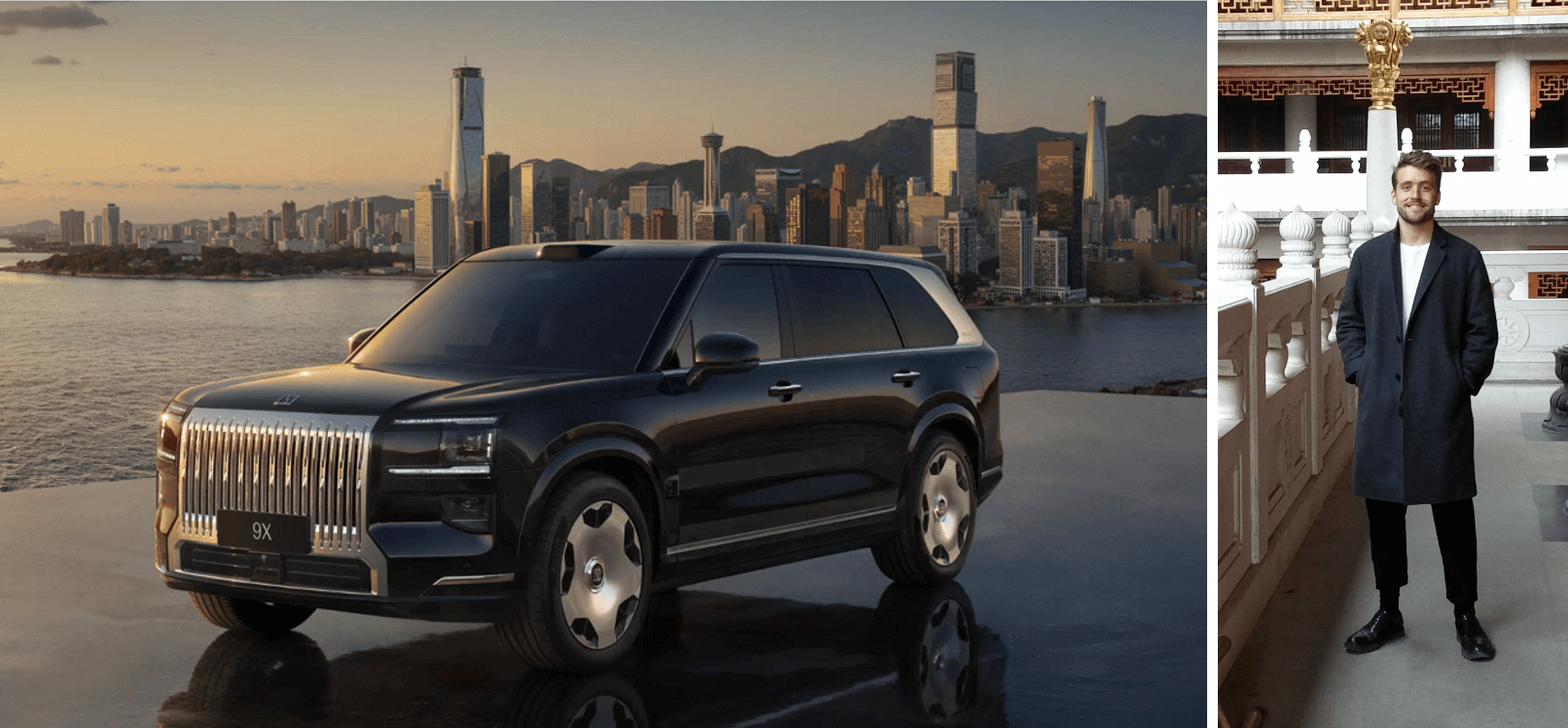
DVN met with Zeekr Interior Design Expert Charles Trelogan, and talked with him about his craft as Lead Interior Designer for the new 9X.
DVN Interior (Andreas Friedrich): Hi, Charles. Will you tell us about your background?
Charles Trelogan: I studied transportation design at Coventry University from 2006 to 2010 as a BA. For my degree show I did a Tata mini car, a cute little thing that said a lot about my taste, now and then, for cars. After school I got an interview with Tata and thought it was a position in the UK and I got the job, but it turned out it was in Pune, India. I was in India until March 2014, and then I got an opportunity with Geely Design in Gothenburg in August 2014 and I have been there since then.
Just to put some more context to my time at Tata, when I was there, my first project was to do a facelift of the Tata Nano. I was a junior designer back then doing a bit of everything, but our proposal for the facelift got chosen, and I’m intensely proud to have been part of that, as popular a car as it was.
DVN-I: Yes, that’s when we crossed paths the first time.
C.T.: Yes, I moved to an unknown car brand in Sweden. The first month I was thrown into the deep: a competition for a C-segment sedan interior and I was extremely happy to win that competition. That proposal became the interior for the Lynk & Co 03 and 02, in that order. So that took up a lot of my time, and looking back, it’s unbelievable that a young guy 25-26 years old was able to get that responsibility. There was a great belief in the team and an entrepreneurial spirit that was extremely valuable. I had good people around me. Car design means good people around you and I was fortunate to have the late Peter Horbury around, approachable and on site. A lot of time with Peter…!
DVN-I: I guess the Lynk & Co interior of the 01 was first and you took some inspiration from that?
C.T.: Yes, it was quite subtle. I think, due to the engineers with Volvo heritage, it felt a bit more [like] Volvo DNA, which is understandable and no bad thing at all. I think the form language was referenced but certainly not a carryover strategy. So, we used a sort of generous form language with quite big panels a lot of pump in the parts and you see a family resemblance between the 01 and 03/02.
DVN-I: Are there other memorable projects you’d like to mention?
C.T.: Because I had the experience from the 03 I got the task to look at the 03+. We had this tie-in with Cyan Racing and did a sporty car with an extremely bold approach and made it for production. So we brought a lot of sports car DNA, but with a digital more ‘young person’ vibe – not traditional racing look. We went more playful and digital straightaway, and I think we were a bit ahead of our time there. If you look at Hyundai today they have a more playful approach to sportiness, but we were doing that in 2017-18 and that became a success. We are still selling that car. It was a fun project! Then I was involved in the facelift of the 03 together with Victoria Gadzhieva, a whole new interior.
DVN-I: That was your time with Lynk, how about Zeekr?
C.T.: I got the opportunity to work on our flagship SUV which became the 9X, must have been around 2022. Charlie Wang was chief designer under the leadership of Sergio Laureiro da Silva, and my role was Design Expert as we call it – basically lead designer for the interior. We had really good people on seats, components, ambient light, doors and so on.

DVN-I: What is special about this project?
C.T.: In China there was an intense rivalry to make this kind of car. We were not the first out, but the ambition within Zeekr was to make it absolutely the best! It was extremely clear from day one and they didn’t stop putting the pressure on us and on themselves for us to be the absolutely the best, no doubt in terms of content quality. There is a lot of competition in that segment but I think the sales reaction shows…I think that we are the best.
DVN-I: That’s cool. It seems like it’s an incredible Interior in terms of solutions?
C.T.: Yes, in terms of richness, content, complexity and value proposition – yeah, it’s strong.

DVN-I: Looking at the pictures, it’s 3 rows with 2 separate seats in the middle that swivel ? And a bench seat in the rear for 2 or 3 people ?

C.T.: For 2 people, the third row is special. I worked intensely on the 3rd row as I placed a lot of value on this space. I had a huge benchmarking document, and the aim was to make it better than any competition. The challenge was to make the third row feel as it was not just a part of the luggage, and I think we managed pretty well with that. Maybe the first car to give the same amount of love and attention as we normally give to the rest of the car. And I hope we now are on top of other designers’ benchmark list.

DVN-I: Are there other 9X features you want to mention?
C.T.: Maybe the rotating 2nd row seats that Delphine Macé and team did. From 0 to 180 degrees rotating outboards. With 90 degrees rotation including automatic door opening to allow for easy ingress. And they are zero gravity seats. This isn’t done anywhere else…..it sounds arrogant, but we made it look relatively easy. We built the car around that feature and I think we nailed it. We also have sliding beam systems for screens in the roof and all kinds of infotainment that works in all seating positions. Robert Striedick helped us to develop an extremely subtle but elegant lighting landscape for the car. All of that is a design project in itself.
DVN-I: Fantastic!
C.T.: And my role was help to bring them all together, even though we have a lot of features, to present it in a way to make it more relaxed. Rich yet calm, that’s the message.
DVN-I: That’s a good statement. I saw in the pictures that the second row recline really nicely, have you tried them?
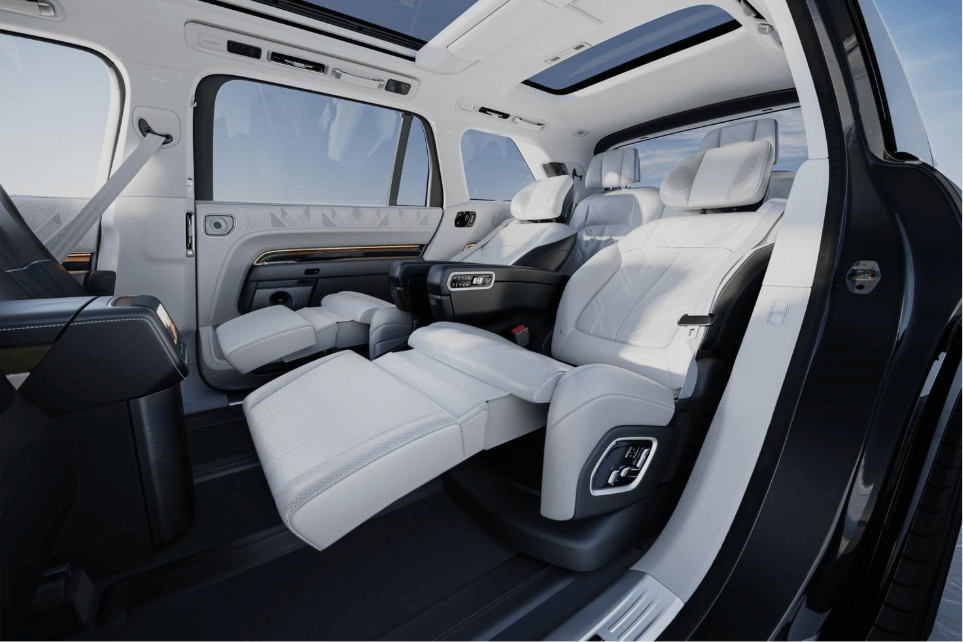
C.T.: Only an early prototype here in Sweden. I would like to go to China soon to try them in the real car. It’s like a dentist chair without all the plastics, but heated, with massage, ventilated and next to an incredible sound system.
DVN-I: So I guess there is sound in the seats?
C.T.: Yes, we worked with Naim to make the sound system (previous DVN coverage here) and we did those fancy speaker patterns that are intensely rich and detailed. Chinese customers want to see layer after layer after layer of detail. I’m very proud of the general layout and the design language where we managed to make a good foundation with surfaces like a canvas to put all these details on. I think it takes a mature design team to achieve that.

DVN-I: Are there any other highlights or things you are extra proud of?
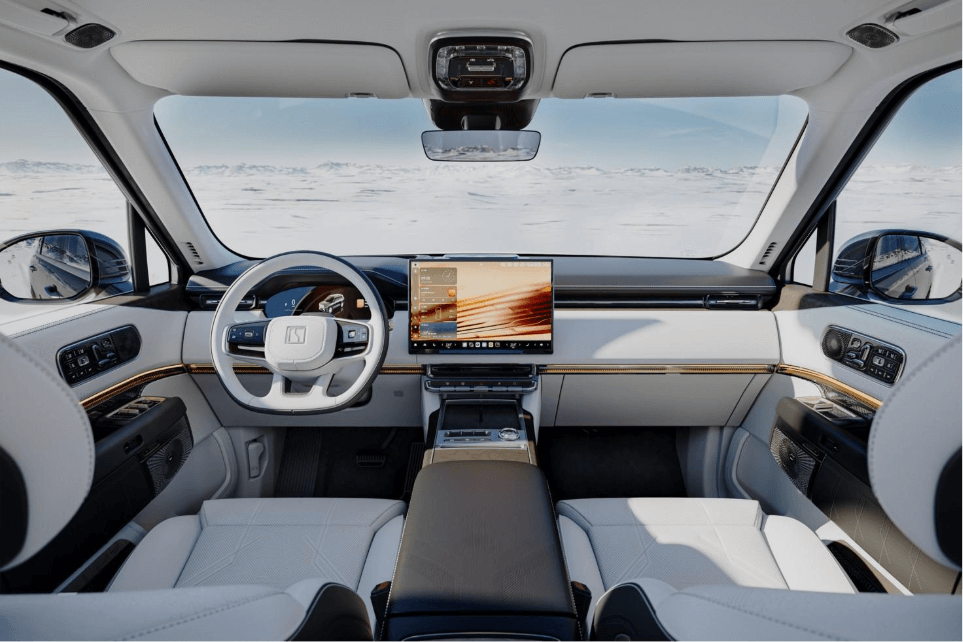
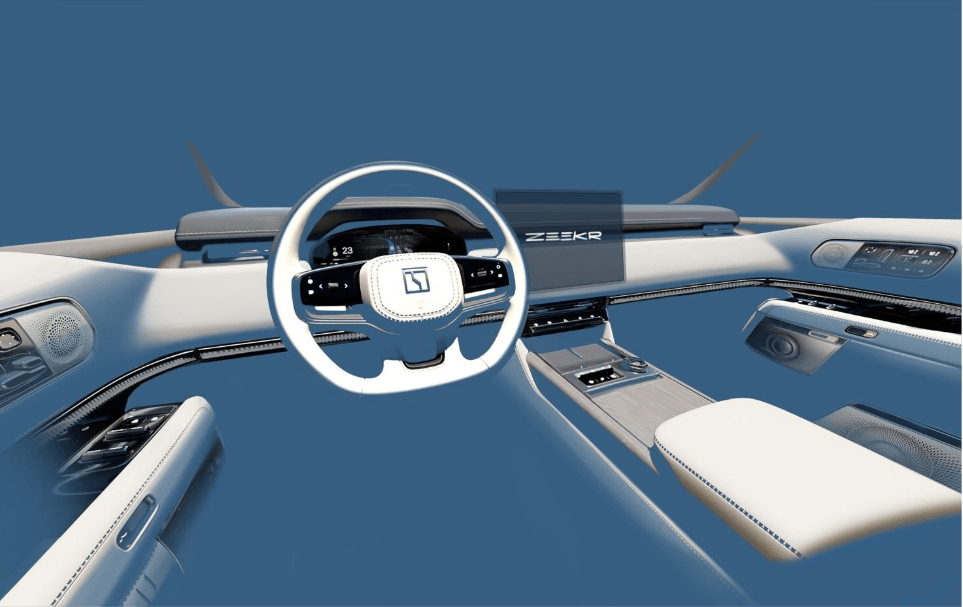
C.T.: I’m proud of how we approached the balance of the design. I talk about my parts specifically, and as you know we had other people on the doors, seats, details, etc. But the door to instrument panel transition is something special. Since we have more and more large screens in the middle of the IP the storytelling or richness in front of the driver gets difficult and we have to attend the parts next to them.
If the IP is hidden behind a ‘wall’ it’s difficult to do anything about it. So we focused right from the beginning to push the richness, the interest, out to the corners. Which is good, because you are close to that transition of the door top to IP and can experience the drama. That is the main theme – putting the attention out there.
DVN-I: You succeeded well!
C.T.: It’s innovative, too. The way we’ve used the wood, the graphics and the volume as well. Everything is really chunky, super solid, but pumped. So, it’s not domineering. It is dominant, it’s confident. It gives the personality of the car, it’s that bank vault kind of feeling. Whilst you know, being tactile and rich, as we said, then it’s a good canvas to put perforation, light and switchgear on top to balance all of that.
The sculpture, that is old school car design. It’s the sculpture, it’s the reflection, it’s the movements of surfaces. It’s how we do it and this car takes a different approach.

DVN-I: It’s like poetry, hearing you talk about the design! Do you have a third highlight?
C.T.: I could talk just about the surfacing, I wanted to keep things clear and concise.
DVN-I: You mentioned in the beginning the ambition was to be best-in-class and top-of-line.
C.T.: Yes, no room for being shy here. I think it is subtle, but the drama, the proportion, the way we’ve approached the surfacing is bold, it’s big, it’s the actual bones of the car. It had to be the perfect partner to all the stuff going on in that car and it’s a lot.
DVN-I: How do you see cockpit layout could evolve in the future?
C.T: In the short term screens are still here, they offer too much. But I have my opinions about them, the fact that they hide too much of the IP is a downside. It’s not about having the biggest screens in the future it’s more what the screens can do for you. Some brands still believe it’s about having the biggest screens. In the future it will be other types of displays or information sharing, I think. I’m all in for innovation and I love newness in a cars. In fact, I’d like to have “No Retro” written on my gravestone.
I hope we will see better integration of technology in the future, so we can get back to more human, soft and charming interiors. I think we are a little bit in an intrusive and slightly aggressive, spiky relationship with our cars at the moment. I’d like to see us move away from that in both design and in technology.
DVN-I: Soft, human and charming – I like that!
C.T.: I see a future where there’s two kind of cars. There’s a car that’s extremely low tech; there’s nothing in it. it’s a piece of equipment and that’s great. I love that, would make me very excited, something for the enthusiast. And then a car that has no driving whatsoever. It’s a transportation device. There’s no steering wheel. It’s more a living space than a driving space.
DVN-I: We did an article about the Dacia Hipster recently, that is kind of the first type of car you mention. But ‘No Retro’? I happen to know you’re fond of French vintage cars, no?
C.T.: Don’t get me wrong, it’s the unusualness that attracts me. They are the exotic bird, why have something dull when you can have a parrot? You know, with lots of colors and a crazy hairdo.
I love them precisely because they are so enthusiastic, optimistic, naive in some way, but that just makes them feel more human. The fact that they have flaws is a huge part of the appeal and the design. I don’t think until fairly recently, Citroën were in the business of looking backwards. I think that’s a new phenomenon. I don’t like it. The Citroën SM tribute thing…if you actually know anything about the SM it’s an insult to the SM. I consider myself extremely lucky that I was able to take care of [an old SM] for so many years. It was the message of the SM, it was so clear and uniquely delivered that I can’t help getting a tingle or a goosebumps from thinking about certain aspects of particularly Citroën’s interior design. As an interior designer, you have to be fascinated by Citroën interiors. You have to be!
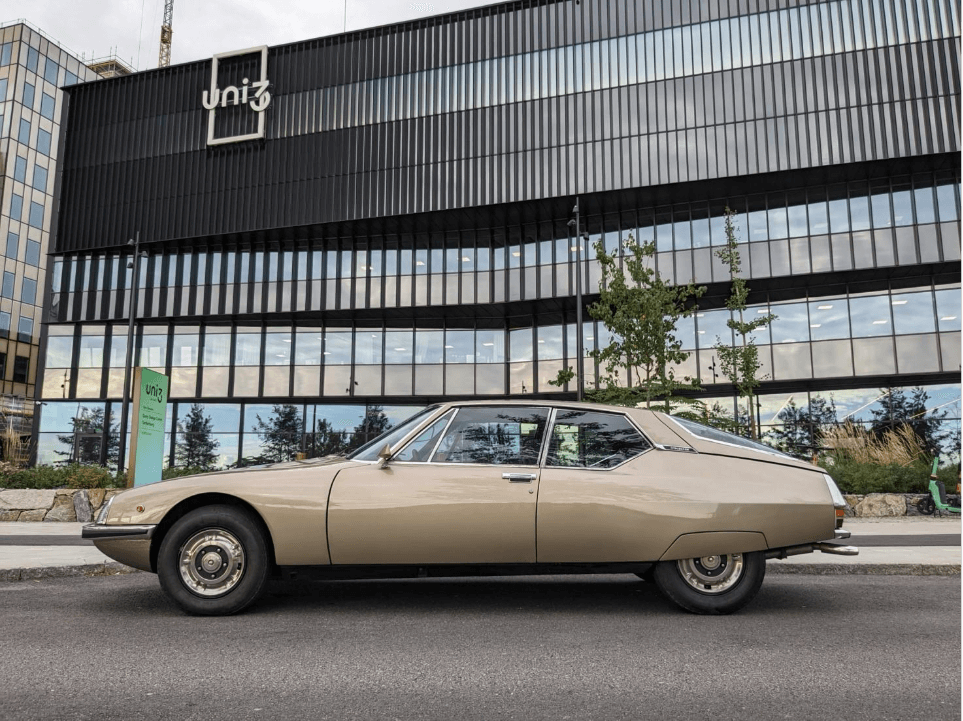
DVN-I: I’ve seen a lot of pictures of your SM on social media through the years.
C.T.: I spoke with my wife about the car the other week and realized I have no picture of me with the car – I’ll have to Photoshop myself in.
DVN-I: So, the future will have less screens?
C.T.: Yeah, it’s the lifeless part of the car. It’s the only bit that I feel doesn’t have a soul.
This goes back to what I was saying that there will not be a cockpit. Frankly, you’ll have a space in which you can sit until you get to where you want to go and there won’t be a focus. If you imagine a living room, if you took the TV out of it, where does all your furniture point? It’s a space where you can sit around and talk and do other stuff, we know it’s coming. But the fact that you don’t need a space where the controller sits to steer the machine makes it a different space. I hope it means that the interior becomes more important than the exterior.
DVN-I: So, an autonomous shared vehicle of some kind?
C.T.: Yes, a simple machine that drives you. I hope the design would tend towards simplicity, not too agricultural, not too military – which is the only way you seem to be able to sell a car that has physical controls these days. If you look at certain robotic lawn movers, they look like a piece of military equipment, designed so aggressively…unwholesomely.

DVN-I: I agree..
C.T.: It’s quite depressing, just because you are operating a piece of equipment, it doesn’t have to be unfriendly! My father-in-law has a Honda robotic lawnmower. It’s basically a white dome, with a black bumper and a smile. On top there is a big red button. It has a name, you interact with it, it’s referred to as a pet. It’s not a stealth design that needs to survive a bomb or looks like it’s going to attack the neighborhood.
DVN-I: You really have a fantastic humanistic approach to design.
C.T.: We are humans, yeah. If you’re not designing for humans, then what are you designing for?
DVN-I: And however simple or autonomous the transport in the future will be, it still needs to be designed by designers because it is products that will be used by humans.
C.T.: Yes, and we need the very human people that understand humans.


