By Paul-Henri Matha
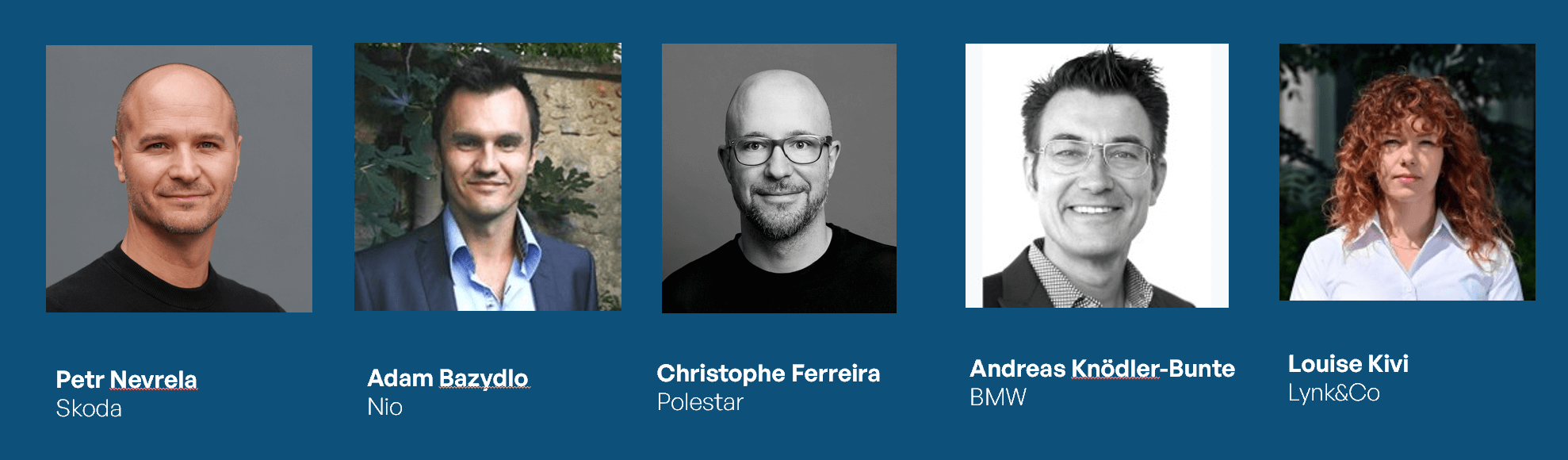
During the DVN Munich lighting event, we started discussions with automotive designers about importance of exterior lighting technology. Škoda Lead Exterior Lighting Designer Petr Nevrela, Nio Head of Design Strategy Adam Badydlo, Polestar Exterior Components Design Manager Christophe Ferreira, BMW Lighting Design Innovation Director Andreas Knoeder-Bunte, and Lynk & Co Chief HMI & UX Designer Louise Kivi participated, supported by Lynk & Co Exterior Designer Tom Hardman.
We decided at the end of the panel discussion to continue the talk around some important questions for our vehicle lighting community. It took me time to write the synthesis, but I did it. Thank you to all for your contributions. Really interesting to see your different approaches!
Paul-Henri Matha: When do you start to work on a new project? At which step of the project?
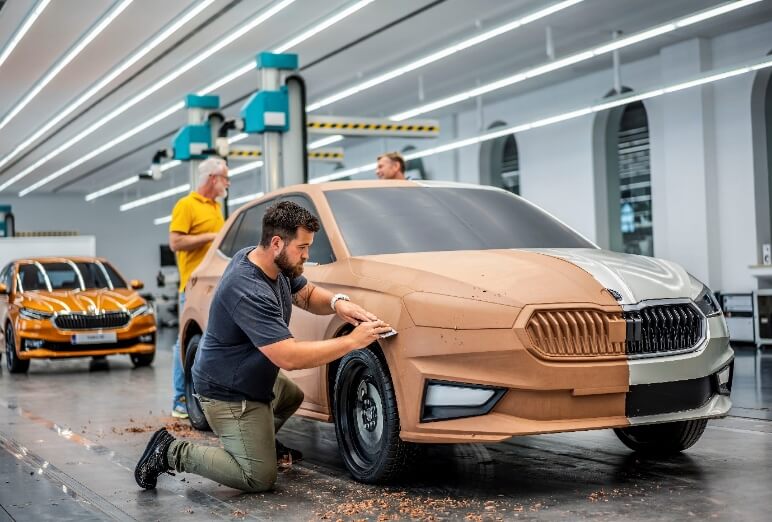
Tom Hardman (Lynk & Co): The work really starts before any official project start date. We have a vision of where automotive lighting is going, an understanding of the latest technologies being offered by suppliers and a small library of past ideas that haven’t quite fit in previous projects. So, when the sketching does start, we already have a good idea of what we will push for.
Petr Nevrela (Škoda): We start immediately together with exterior designers when the project starts. That means we parallel develop creative ideas for the lamps and at the same time we follow design strategy.
Christophe Ferreira (Polestar): On my side, since I am the main person responsible of exterior components, I am working from advance / concept car to production, so a lot of excitement and responsibilities.
To read more, you need to log in as a DVN Lighting member.
Not a DVN member yet? Contact us now to join the DVN Community!
Paul-Henri Matha: Louise, is it similar for you as a UX designer? Do you work in parallel with physical design, or do you start when first design is ready? How do you integrate the UX part, is it part of the design brief to exterior designer, lighting designer and UX designer?
Louise Kivi (Lynk & Co): Yes, we work in parallel with physical design, although with a smaller team in the early phases. The idea is to collaborate as closely as possible—especially between form design and light & communication so we can build on each other’s ideas. When we join in, the design isn’t finished, but it has usually matured enough to exist in 3D. That gives us a clear direction to explore how the experience can come to life around it.
In terms of the brief, Exterior Experience are typically included, but usually on a very high level. We have the space to interpret and evaluate what kind of product we want to create. This includes looking at what competitors are doing, but also thinking ahead about where we want to go next. We’ve also conducted a few user tests, so we come in with real insights and can identify opportunities or challenges that might shape how we solve certain interactions. It is a continuous evolution.
Paul-Henri Matha: When do you start sketches? Do you still do manual sketches with a pen, or do you go directly to virtual sketches?

Christophe Ferreira (Polestar): I usually do doodles or pen sketches just to quickly create some concepts, for myself, but then I quickly sketch virtually to show it to other people.
Tom Hardman (Lynk & Co): Physical sketching is still an important skill, but it’s gradually becoming replaced by faster methods of illustrating ideas. Digital sketching and digital sketch modelling are now the mainstay. It’s all about finding the fastest, most impactful way of selling your ideas, and supporting the design process of the whole vehicle.
Petr Nevrela (Škoda): Hand sketches are still the fastest tool for instant explanation on working level and for the initial ideation. But for design decisions, you need a perfect digital presentation consisting of virtual sketches and 3D data.
Paul-Henri Matha: Louise, sketch is something we understand. What about UX? do you have something equivalent to sketches?
Louise Kivi (Lynk & Co): Yes, we do – our sketches just take a different form. We work with things like storyboards, interaction flows and animated light behaviours. Since we’re designing experiences, we also use tools like VR and simulations to test ideas early. This helps us understand how a sequence feels and how users interpret it. Even small changes in timing or rhythm can really shift the perception.
We also work closely with our EE architecture engineers to make sure we can support the features we design. That means verifying the system has the right signals, timing triggers, and hardware to support the software. It’s a very collaborative process, and aligning early makes a big difference in what we can actually deliver.
Paul-Henri Matha: For front signature, we just see DRLs on all your vehicles. Low beam seems not to be any longer the eyes of the car; you hide them in a black area in the headlamp, or in the bumper. Am I correct?

Petr Nevrela (Škoda): Yes and no. Depends how much ‘human touch’ you want to express in your design and what architecture of the front you want to work with. That’s why you can sometimes put priority to independent signature and achieve very advanced expression, and another time you design it as a natural part of main functions.
Tom Hardman (Lynk & Co): To a certain extent yes. The distinctive light signature is no longer always connected to the headlamps. I think this is simply for the reason that DRL/position has more design freedom than the headlamps which are more generic, functional shapes.
Christophe Ferreira (Polestar): There are two trends. One would be to showcase the modules with nice bezels and details, and the other would be to hide them. It’s true that the main trend these days is to hide it and put all the focus on the DRL that is the identity of the brand, so the focus is on DRL/PL homogeneity and optimized packaging, I am more into this second trend.
Paul-Henri Matha: None of you proposes full-width DRL / front lamps. Can you explain why?
Louise Kivi (Lynk & Co): From a UX and light animation perspective we do see a lot of value in a ‘coast-to-coast’ front lamp, especially when it comes to immersive lighting experiences. A continuous light band gives us a great canvas for expressive animations, allowing us to create a strong sense of movement, rhythm, and intent. It can also visually enhance the width and stance of the car, which helps reinforce the vehicle’s character and presence on the road.
Another important aspect is interaction with the surroundings, which is currently a big focus area in markets like China. Because of the physical distance to side-users like pedestrians or cyclists, it actually takes quite a bit of space to communicate clearly across the full width of the vehicle. A coast-to-coast solution gives us that room to create lighting cues that are noticeable from different angles, not just head-on.
However, it might not fit well on all types of cars, form designs and target users and that is always the core when we are deciding what hardware to go for.
Petr Nevrela (Škoda): Our Elroq and new Enyaq are perfect example how we want to design that direction. We combine stronger elements in outer areas of the front and the connection between them is made by secondary effect of the illuminated pattern.

Paul-Henri Matha: Rear lamp signature: band or no band? How do you decide?

Petr Nevrela (Škoda): We see that the rear band is a clear trend in exterior design, which influences important proportions of the car. But the way you work with light in the band is our interest. We focus on authenticity.
Christophe Ferreira (Polestar): Yes, it should be considered as brand image as it is for the front. On Polestar it is the ‘box’: a strong, graphical, and recognizable light signature that emphasizes the corners and the width of the car.
Louise Kivi (Lynk & Co): It’s quite similar to the front. A light band is great for immersive animations and clear communication. But whether we use it depends on the form design and the target user.
Paul-Henri Matha: Why does everybody agree for a band on the rear, but not on the front?
Tom Hardman (Lynk & Co): For Lynk & Co we quite often have a band on the front as well as the rear. But I would say the difference is the question of having a use case that would require it (in our case UX communication), and the motivation to overcome the crash/pedestrian-protection implications, obviously not a problem for the rear lamp.
Petr Nevrela (Škoda): I think that people still somehow perceive the front of the car as a human face. So, when comparing it to the back, they consider whether they want to keep that impression or accept the ‘technoid’ look.
Paul-Henri Matha: Looking at these three great examples of lighting details, can you tell us about their history?

Tom Hardman (Lynk & Co): Good design innovation often comes from a need, and a desire to solve a problem. In the case of Lynk & Co’s ‘Tech Totem’, it came from a desire to amalgamate the many technology components that inhabit this region of the car, which would otherwise be a mess of lumps and bumps, into one clean, elegant feature, creating really a unique design feature for Lynk & Co cars.
Paul-Henri Matha: Petr, you mentioned during the conference a minimum size for a logo, 180 cm2. Can you explain? Is it something you are working on at Škoda design, for front and rear?
Petr Nevrela (Škoda): It’s related to the size of our rear wordmark škoda. Especially on our big SUVs, we need certain size of it to have right proportions. So, if we want to illuminate the logo on the trunk in right size, we would need 180 cm2 minimum.
Paul-Henri Matha: Why don’t we see more use of the battery state-of-charge light to create design around it, like on the Renault 5?
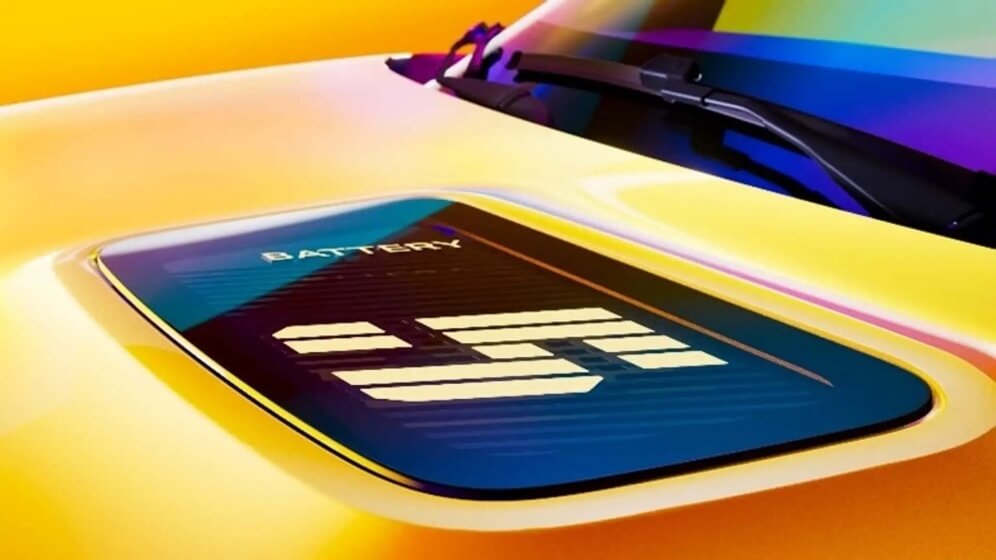
Christophe Ferreira (Polestar): On the Polestar 5 we have a feature on the D-pillar, a small light that pulses faster or slower depending on the charging status. It’s really cool, and I am looking forward to showing it to you when the car will be presented at the Munich autoshow this year.
Petr Nevrela (Škoda): It is an interesting, funky feature for communication. We keep simple ways of these features. Light spot indicates only charging, and all detailed information you have in your mobile phone.
Louise Kivi (Lynk & Co): At Lynk & Co, we always aim to design multipurpose solutions – making sure each component adds as much value as possible, both in placement and function, while also considering cost. When it comes to charging, we see a clear use case for showing state of charge externally, not just on interior displays. It can be done in a smart, elegant way that supports both user clarity and overall experience.
Paul-Henri Matha: UX lighting design is something new. Louise, can you explain your daily job and why it is important?
Louise Kivi (Lynk & Co): My role focuses on how lighting contributes to the overall user experience; how we use it to communicate, guide, and create emotion. In China, this is especially important. Users are digital-first, and they expect products to feel intelligent, responsive, and seamless. We work to connect the exterior with the interior, to provide a truly coherent experience.
A big part of our process is looking at everything from the user’s perspective. How do they interpret the lighting? Is it clear? Does it feel good? We try to validate these questions through user testing, which helps us fine-tune not just the look and feel, but the purpose behind each light interaction. Now that we’re starting to use exterior lamps to communicate with the surroundings, especially as we prepare for autonomous driving, we’re entering a new era with new demands, where misinterpretation could have serious consequences.
Technically, things have evolved a lot. Lamps aren’t just light anymore, they’re digital interfaces. The animations are no longer just visual effects; they’re integrated features that connect to signals, system states, and even behaviours. I work closely with the software and EE teams to make sure we have the right hardware, signals, and platform support to actually run what we design. It’s a complex but exciting challenge.
And finally, from a brand perspective, lighting is a huge part of how we stand out. There’s a growing demand for personalization, especially in China, and lighting gives us a flexible but controlled way to respond to that. The goal is always to keep the brand identity consistent, while still allowing room for the user to feel seen and in control.
Paul-Henri: What about UX lighting? How do you see this trend, and what about gaming?
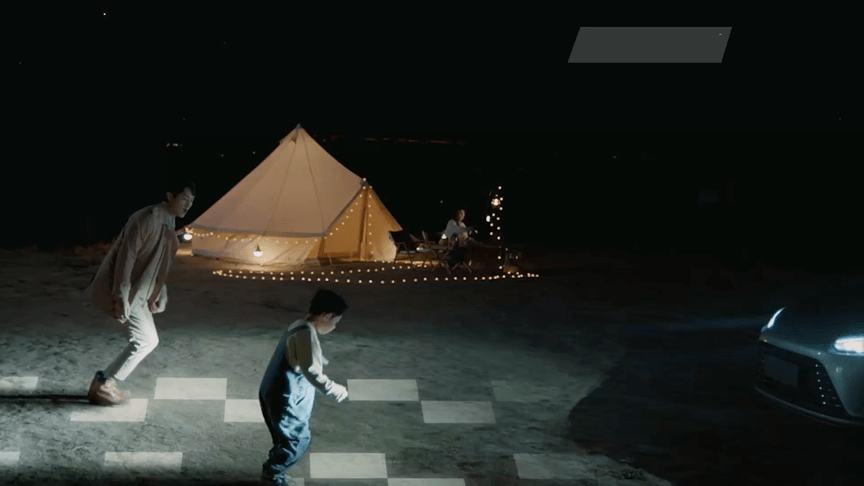
Petr Nevrela (Škoda): We as a volume brand will keep the simplicity. We have a long successful story with our ‘simply clever’ features which makes every day more comfortable for our customers. So, why not to do it in UX lighting design as well? I believe we will deliver the same experience in the future.
Louise Kivi (Lynk & Co): The way people use their cars, and what they expect, differs a lot between China and Europe, and that’s something we’re very aware of and take into account in our design work. In Europe, brand loyalty tends to be stronger, while in China, buyers are more attracted by newness, tech features, and personal expression.
I do think there’s room for more playful and emotional experiences in Europe as well, but it needs to be approached differently. Here, there’s often a stronger focus on sustainability, and users are generally less eager to stand out in public. So, while something like exterior gaming might gain traction in China, I don’t personally see it becoming a big success in Europe – at least not right now.
That said, I really hope to see more functional, high-tech, and thoughtful lighting solutions entering the European market. Things that enhance the experience without feeling too flashy or forced.
Christophe Ferreira (Polestar): for Polestar we are using UX in the lighting to create a link with the customer and make the car ‘alive’, during the welcoming sequence for example, but we will not create gimmicks or extra features like gaming, it would not fit with our DNA.
Paul-Henri Matha: Back to lighting component design: pixel or no pixel? Can you explain your design philosophy? How are the choices made at OEMs?

Petr Nevrela (Škoda): Our digital interpretation of lighting design is based on precise lasered pattern of the front mask which we call Tech-Deck Face. We don’t use it for the messages, its appearance is a natural part of our design DNA.
Louise Kivi (Lynk & Co): At Lynk & Co, we use both pixel and non-pixel technologies; we’re not locked into one solution. Instead, we focus on what’s most suitable for the specific car and its experience goals.
When it comes to UX and light animation, the choice depends heavily on the intended focus of the vehicle. Are we prioritizing communication with the surroundings? Driver interaction? Or evolving emotional expression? Each of these goals comes with different technical and expressive requirements, and that’s what guides our decision. We always try to find the solution that best supports the story we want the car to tell.
Paul-Henri Matha: Faster development is a strong request in our industry. What do you need from the lighting supply chain? Do you have the correct tools to do your job?

Tom Hardman (Lynk & Co): From my standpoint it would be great to have more of an ongoing dialogue between designers and lighting suppliers about future product direction. In the era of ‘China-speed’ we often find that many suppliers are offering outdated-looking lighting solutions, or inflexible formats, and there isn’t sufficient time to develop bespoke solutions.
Petr Nevrela (Škoda): Faster development cycles mean faster overall development. That’s why we welcome all these inputs. At the same time, however, milestones with physical samples are essential. So, it’s still useful to produce a full-quality mock-up even faster.
Louise Kivi (Lynk & Co): From the UX and light animation side, one of the biggest needs is better access to physical prototypes, especially getting them to our Sweden office in a timely way. As both the design and technology evolve throughout the project, we need to test and fine-tune our work on the actual hardware, because that’s the reality it will live in.
Having access to the latest builds helps us ensure visual quality, interaction timing, and overall experience are as good as possible on the final setup. So, to support faster development, keeping that prototype loop tight and up-to-date is really key.
Paul-Henri Matha: Can you explain how you work with your R&D and lighting suppliers? Are you happy with the workflow?
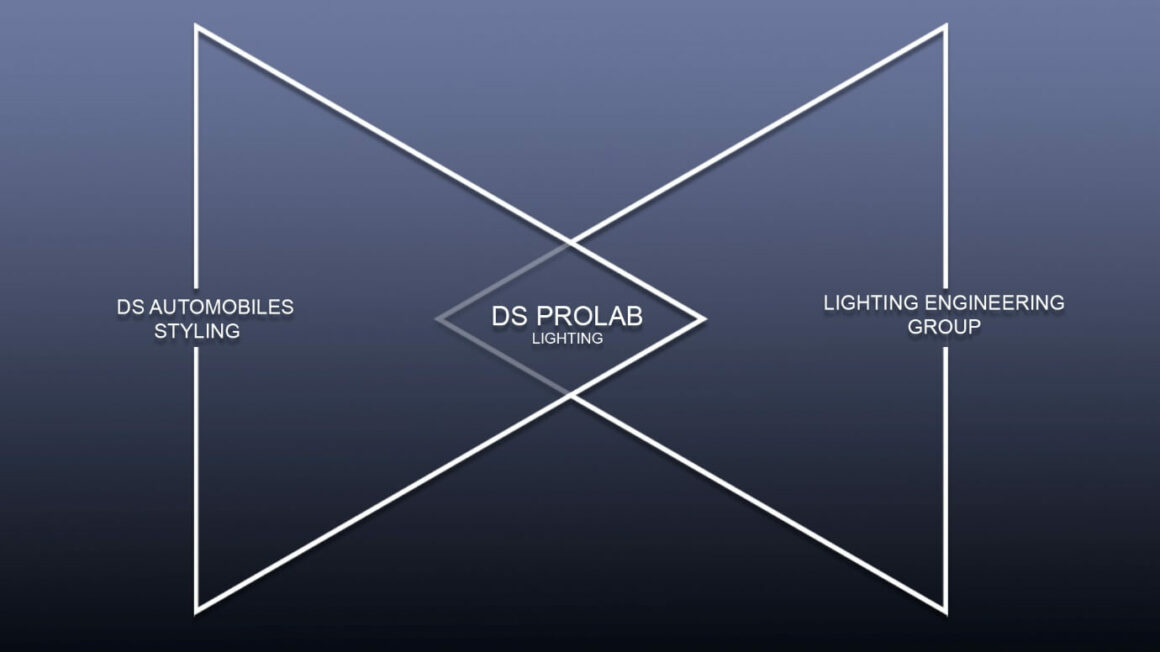
Christophe Ferreira (Polestar): With Andrea, my studio engineer, we are in direct contact with lighting supplier and it’s really helpful and inspiring for us. Suppliers are visiting us and are sharing their latest innovations and it feeds our creativity for the future projects and for our lighting strategy.
When it comes to R&D work, it depends on the platform. If it’s a Polestar platform, then we would talk to our R&D in UK, and if it’s a Geely or Volvo platform, then we talk to their R&D.
Tom Hardman (Lynk & Co): So much of what we do is about pre-work. Talking to R&D and potential suppliers in the early phases so that they can support the design journey, before we have frozen designs and surface data.
Once we get over that milestone, the in-depth ‘millimetre’ work can begin. Weekly online meetings with suppliers, and almost daily meetings with R&D colleagues. Crunch visits to our R&D base in Hangzhou Bay, China, fuelled by caffeine and tight deadline pressure. This sounds awful but actually is a really rewarding part of my job, when you make breakthroughs, and along the way, form a strong working bond with our Chinese colleagues.
Louise Kivi (Lynk & Co): When it comes to light animations or LED matrix deliveries, we try to align early with both R&D and the supplier to agree on a workflow, the design constraints and delivery format that supports smooth implementation. That early setup is really important to make sure our intent carries through all the way to production.
Petr Nevrela (Škoda): We are constantly looking for faster ways to speed up the development process. Faster supplier inputs, AI implementation, faster data loops, all these improvements bring better inputs for faster decisions. One real-world example is the development of our own software plugin for instant designing and testing of lighting animations with the ability to directly export data for mass production. This has significantly accelerated our process in this regard.
Paul-Henri Matha: How to bring innovation into vehicles is not an easy topic. How do you deal with it? BMW laser lamp is one of the good examples.

Louise Kivi (Lynk & Co): I think events like DVN are really valuable. Not just to learn about new technologies, but also to see different approaches and perspectives, which can be a big source of inspiration. Of course, there’s innovation happening in hardware, but I’m more focused on the software side, where topics like integration, personalization, and new functionality are really driving change. A lot of our work starts by looking at things from the user’s perspective, finding pain points or gaps in the experience. Sometimes, the most impactful innovations aren’t the most complex. Just finding a simple, smart solution to a real user need can make a big difference.
Petr Nevrela (Škoda): We build our innovation on combining affordable technologies with surprising design, this means that we want to pleasantly surprise our customers with a smart combination of technology and the value of proposed design.
Paul-Henri Matha: At the DVN Munich event, a long session addressed sustainability. Some brands show recycling materials; some brands reduce the power consumptions of their lamps. Some brands use exchangeable light sources; others not. What do you think? Should we show it at lamp level? I have not yet seen it.

Tom Hardman (Lynk & Co): As a designer it is an intriguing thought that is just beginning to resonate with our core customer base. From my point of view, I would love to see independent benchmarking of energy usage, lifetime energy consumption, recycled material content and recyclability. Like a ‘Sustainability NCAP’ which would empower customers to make better informed decisions and create real competition in the marketplace for sustainability.
Petr Nevrela (Škoda): It is natural to focus on sustainability. We fulfil upcoming requirements with some models already now. The best example in our portfolio is the headlamp of the Karoq, which uses 50 per cent post-consumer recyclates in its housing. I’m sure it will be natural part of all lamp parts in the future.
Paul-Henri Matha: From a UX perspective, what would be a definition for a sustainable design?
Louise Kivi (Lynk & Co): For us, sustainable design in UX goes beyond just saving energy or reducing material use. It’s about creating smart, human-centered experiences that support responsible behaviour, like promoting calmer driving, improving pedestrian safety, or helping users better understand what the car is doing through clear communication.
We also consider the ethical use of light, making sure animations aren’t distracting or overwhelming in different contexts. It’s about being purposeful and respectful in how we design interactions.
Another important part is keeping the experience relevant over time. Through continuous software updates, we can keep the car feeling fresh, useful, and even improved – helping avoid unnecessary product changes just because something feels outdated or boring. That kind of longevity is also a key aspect of sustainable UX.
Petr Nevrela (Škoda): For us, it is a mixture of eco-friendly materials, efficient digital interfaces which minimize energy consumption, informing the users about more sustainable ways of using the car and lot of other aspects. We simply want to create a holistic UX which considers the environmental impact throughout the entire lifecycle of the car.


